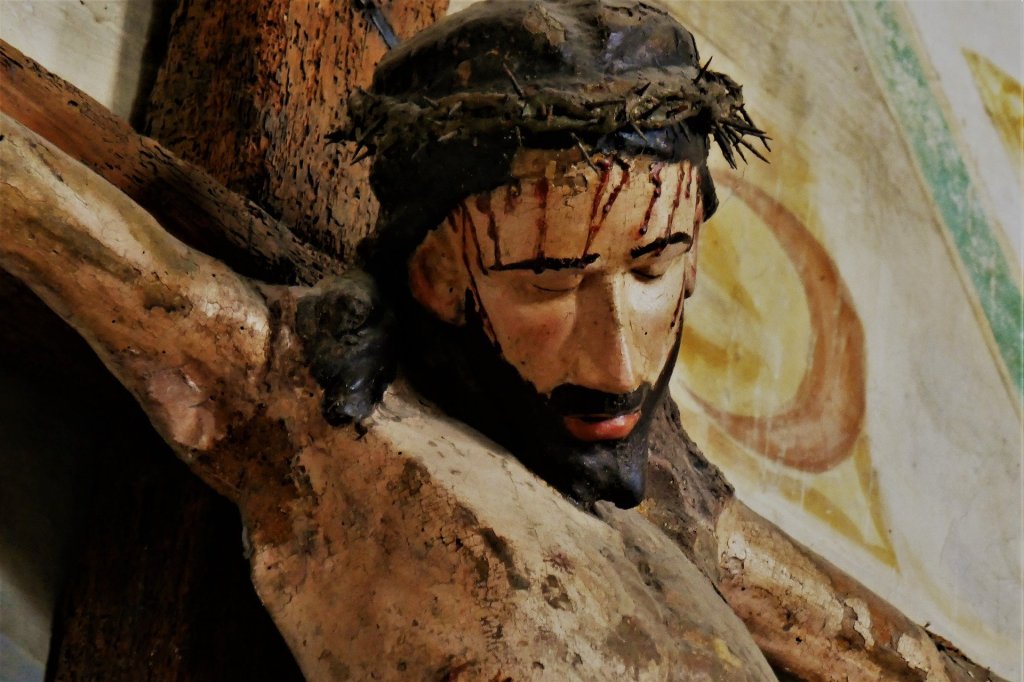
Mark 6: 45 – 56 Jesus walks on the water

Mark 6: 45 – 56 Jesus walks on the water

Immediately Jesus made his disciples get into the boat and go on ahead of him to Bethsaida, while he dismissed the crowd. After leaving them, he went up on a mountainside to pray.

Later that night, the boat was in the middle of the lake, and he was alone on land. He saw the disciples straining at the oars, because the wind was against them. Shortly before dawn he went out to them, walking on the lake. He was about to pass by them, but when they saw him walking on the lake, they thought he was a ghost. They cried out, because they all saw him and were terrified.

Immediately he spoke to them and said, ‘Take courage! It is I. Don’t be afraid.’ Then he climbed into the boat with them, and the wind died down. They were completely amazed, for they had not understood about the loaves; their hearts were hardened.

When they had crossed over, they landed at Gennesaret and anchored there. As soon as they got out of the boat, people recognised Jesus. They ran throughout that whole region and carried those who were ill on mats to wherever they heard he was. And wherever he went – into villages, towns or countryside – they placed those who were ill in the market-places. They begged him to let them touch even the edge of his cloak, and all who touched it were healed.

*       *       *

As well as this passage in Mark’s gospel, this story appears in two of the other three gospels, in Matthew 14: 22 – 32 (this account adds that Peter, too, walked on water with Jesus’ encouragement), and in John 6: 16 – 24. It doesn’t appear in St Luke’s gospel.

All three writers – John, Matthew and Mark – place the story immediately after the feeding of the five thousand.

It’s significant that this story appears in John’s gospel, because the emphasis of that gospel is different from the other three. While Matthew, Mark and Luke are primarily concerned to tell us what happened in the life of Jesus, John, in his gospel, is setting down his understanding of the significance of Jesus. He chooses the miracles that he recounts very carefully to shed light on the nature and identity of Jesus.

Click here for my post on John’s account of the miracle

Mark’s account is very straightforward.

Jesus is very much in charge. He sends the disciples away in the boat; he dismisses the crowd of 5000 people; he prays in solitude; he walks across the lake – on the water; he calms the fears of the disciples; and when they arrive at Gennesaret, Jesus heals a multitude of sick people.

The disciples, on the other hand, struggle to row against the wind; are terrified when they see Jesus walking on the water; and are amazed when Jesus climbs into the boat and the wind dies down. Mark adds, ‘for they had not understood about the loaves; their hearts were hardened.’

This miracle almost seems frivolous, doesn’t it? I mean, if you’re going to set aside the way the world normally works, why not do it comprehensively? Just go from where you are to where you want to be without any tedious walking – on water, or anything else.

And, unlike the healings, which were too many to count, walking on water happened only once.

This uniqueness is, I think, the clue to what the passage is all about. It is one of a handful of events that happened only once, (the others are turning water into wine, the transfiguration, and the calming of the storm), and it happened for the disciples alone. These are events that are dramatically supernatural.

It was necessary for those who were to bear witness to Jesus after his death and resurrection that their hearts should be prepared to believe that Jesus truly is the Son of God. They had just seen Jesus feed five thousand people with five loaves and two fish, and yet, when they saw him walking on the water, they were terrified. “…for they had not understood about the loaves; their hearts were hardened.” They trusted Jesus. They obeyed him. But he was still only their teacher and their leader, not their God.

When they saw Jesus walking on the water, they cried out. Grown men, tough fishermen, cried out in fear. And Jesus immediately called to them: “ ‘Take courage! It is I. Don’t be afraid.’ Then he climbed into the boat with them, and the wind died down. They were completely amazed.”

They had just seen Jesus in control of the physical world. He had just done something completely impossible. Only someone supernatural would have the power to walk on water.

And yet, they had been with Jesus night and day. They knew he was a man. They’d seen him exhausted, they’d seen him hungry, they’d seen him at table. They knew, beyond any doubt, that Jesus was a man.

It’s not surprising the disciples hadn’t understood the feeding of the five thousand. Their hearts were hardened by the difficulty of believing that a man could wield the power of God.

Where do I stand on this miracle?

Now that I understand the significance of this miracle, that it is a sign, a pointer to the divine Jesus, I believe it completely. It’s true, literally true.

While reading about this passage, I came across two separate comments that really spoke in my heart. These were: 

  • Jesus is Lord of the elements because he is clothed with the very power of God. Jesus is not only a teacher whom the disciples follow but also the Son of God to whom they prostrate themselves.
  • Perfect love casts out all fear.  This is the only perfection for which we should all be striving.  To love Jesus more deeply and trust him more completely with our lives.

The first speaks to my increasing desire to kneel in church when we’re worshipping Jesus. The second describes my growing experience of Jesus as he deepens my love for him.

Prayer

Heavenly Father

Thank you so much for your blessed son, Jesus. Thank you for drawing me closer to him.

In Jesus name, Amen
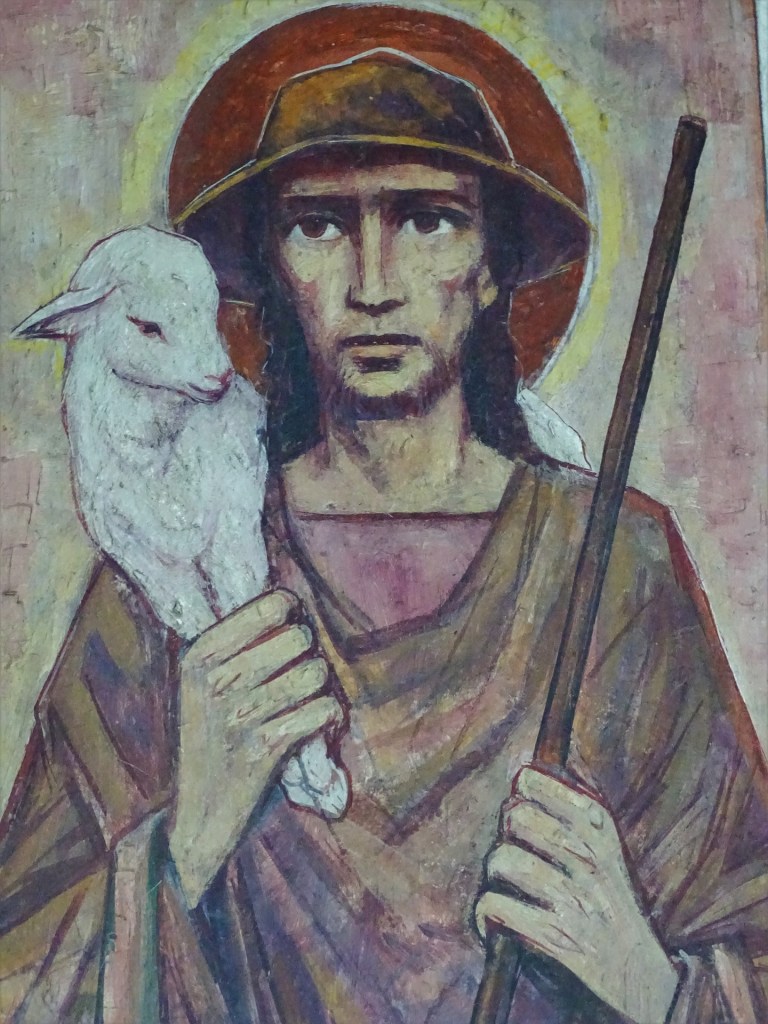
Mark 6: 30 – 44 Jesus feeds the five thousand

Mark 6: 30 – 44 Jesus feeds the five thousand

The apostles gathered round Jesus and reported to him all they had done and taught. Then, because so many people were coming and going that they did not even have a chance to eat, he said to them, ‘Come with me by yourselves to a quiet place and get some rest.’

So they went away by themselves in a boat to a solitary place. But many who saw them leaving recognised them and ran on foot from all the towns and got there ahead of them. When Jesus landed and saw a large crowd, he had compassion on them, because they were like sheep without a shepherd. So he began teaching them many things.

By this time it was late in the day, so his disciples came to him. ‘This is a remote place,’ they said, ‘and it’s already very late. Send the people away so that they can go to the surrounding countryside and villages and buy themselves something to eat.’

But he answered, ‘You give them something to eat.’

They said to him, ‘That would take more than half a year’s wages! Are we to go and spend that much on bread and give it to them to eat?’

‘How many loaves do you have?’ he asked. ‘Go and see.’

When they found out, they said, ‘Five – and two fish.’

Then Jesus told them to make all the people sit down in groups on the green grass. So they sat down in groups of hundreds and fifties. Taking the five loaves and the two fish and looking up to heaven, he gave thanks and broke the loaves. Then he gave them to his disciples to distribute to the people. He also divided the two fish among them all. They all ate and were satisfied, and the disciples picked up twelve basketfuls of broken pieces of bread and fish. The number of the men who had eaten was five thousand.

*       *       *

It’s strange, isn’t it, how sometimes a phrase or sentence in the bible catches your attention? That happened to me this morning as I sat typing out today’s study passage.

“When Jesus landed and saw a large crowd, he had compassion on them, because they were like sheep without a shepherd. So he began teaching them many things.”

“Because they were like sheep without a shepherd.”

What made them sheep without a shepherd?

Mark gives us a compelling image of thousands of people running to be near Jesus – “But many who saw them leaving recognised them and ran on foot from all the towns and got there ahead of them” – but it’s far from the whole story.

The people were there for many different reasons. Some were looking for healing. Some were looking for meaning in their lives. Some were sensation-seekers, hoping to see a miracle. They were wandering without clear direction.

Now these people, the Israelites, were God’s chosen people. They had the Mosaic law, and the prophets. Their society was run by religious men who were intimately acquainted with the law. They had a priesthood who could intervene with God for the sins of the people. And yet they were wandering.

Over and over again we read about the hypocrisy and self-seeking of the religious leaders. They used the law to profit at the expense of those who were unlearned. Far from protecting Israel’s unique moral heritage, they formed an unholy alliance with the Romans. Even the temple was no longer a refuge from the worldly; the outer court had become a market where money could be changed and animals could be bought for sacrifice.

The shepherds of Israel, the chief priests and doctors of the law, were too busy making money and guarding their status to look after their flock.

Society had become corrupt from top to bottom.

Jesus would have been aware of this, I’m sure, but something about this huge gathering of people, thousands of them, seems to have affected him deeply. “He had compassion on them,” and “He began teaching them many things.” The people were lost, and Jesus took on the duty of being their shepherd.

Are there parallels today? There certainly seems to be corruption and self-serving from our leaders, whatever their political affiliation. But now we know where to turn, and who to listen to, because Jesus is the Good Shepherd for the world. His message is constant: ‘Repent, for the kingdom of heaven is near.’

Repent – turn to God in obedience. Love God with all your heart, soul, mind and strength; and love your neighbour as yourself.

Prayer

Heavenly Father

Please help me to love you with all my heart, soul, mind and strength. Help me to love my neighbour as myself.

In Jesus name, Amen

Mark 6: 14 – 29 John the Baptist beheaded

Mark 6: 14 – 29 John the Baptist beheaded

King Herod heard about this, for Jesus’ name had become well known. Some were saying, ‘John the Baptist has been raised from the dead, and that is why miraculous powers are at work in him.’

Others said, ‘He is Elijah.’

And still others claimed, ‘He is a prophet, like one of the prophets of long ago.’

But when Herod heard this, he said, ‘John, whom I beheaded, has been raised from the dead!’

For Herod himself had given orders to have John arrested, and he had him bound and put in prison. He did this because of Herodias, his brother Philip’s wife, whom he had married. For John had been saying to Herod, ‘It is not lawful for you to have your brother’s wife.’ So Herodias nursed a grudge against John and wanted to kill him. But she was not able to, because Herod feared John and protected him, knowing him to be a righteous and holy man. When Herod heard John, he was greatly puzzled; yet he liked to listen to him.

Finally the opportune time came. On his birthday Herod gave a banquet for his high officials and military commanders and the leading men of Galilee. When the daughter of Herodias came in and danced, she pleased Herod and his dinner guests.

The king said to the girl, ‘Ask me for anything you want, and I’ll give it to you.’ And he promised her with an oath, ‘Whatever you ask I will give you, up to half my kingdom.’

She went out and said to her mother, ‘What shall I ask for?’

‘The head of John the Baptist,’ she answered.

At once the girl hurried in to the king with the request: ‘I want you to give me right now the head of John the Baptist on a dish.’

The king was greatly distressed, but because of his oaths and his dinner guests, he did not want to refuse her. So he immediately sent an executioner with orders to bring John’s head. The man went, beheaded John in the prison, and brought back his head on a dish. He presented it to the girl, and she gave it to her mother. On hearing of this, John’s disciples came and took his body and laid it in a tomb.

*       *       *

The first thing that strikes me about this passage is how cruel and arbitrary John’s execution was. There was no judicial process, just a brutal decapitation followed by the display of his head in front of the most important people of Galilee.

It’s disquieting to imagine the malice of Herodias, who was so ready to seize the moment and get John killed. And think what her daughter could have asked on her own behalf; a grand house? Jewels? The income from a productive estate?

Perhaps even more disquieting is that nobody was shocked. The girl looks at the head on the dish, and hands it to her mother. She appears to have no worries at having brought about John the Baptist’s death. There is no record of protests from the guests, rather, it was their presence that sealed John’s fate. They were all agog to see whether Herod would keep his rash vow.

This was the society in which Jesus lived. Rulers had almost absolute power, and they had no hesitation or moral qualms about using it.

If Jesus had any doubts about the risk of his ministry, John’s execution will have dispelled them.

Why does Mark tell us this story about John the Baptist, when the gospel he is writing is about Jesus?

In the first place, John the Baptist and Jesus are linked. They are cousins. John is the forerunner, the ‘Voice crying in the wilderness’, preparing the way for Jesus. Both John and Jesus preached the need for repentance.

In the second place, the story of John’s martyrdom foreshadows the death of Jesus. Mark is showing us in the most graphic way what can happen when somebody is steadfast in proclaiming God’s commandments.

In the third place, Mark is putting a question to every disciple: ‘Would you have been like John standing firm against Herod, or would you have kept quiet about Herod’s sin?’ In modern times that might translate into ‘Do you stand up against injustice? Are you prepared to suffer for your stand?’

Prayer

Heavenly Father

Please be with all those in prison, especially those who are in prison for being your disciples. Please help me to be more aware of how I can best show your love to them.

In Jesus’ name, Amen

Mark 6: 7 – 13 Jesus sends out the Twelve

Mark 6: 7 – 13 Jesus send out the Twelve

Then Jesus went around teaching from village to village. Calling the Twelve to him, he began to send them out two by two and gave them authority over impure spirits.

These were his instructions: ‘Take nothing for the journey except a staff – no bread, no bag, no money in your belts. Wear sandals but not an extra shirt. Whenever you enter a house, stay there until you leave that town. And if any place will not welcome you or listen to you, leave that place and shake the dust off your feet as a testimony against them.’

They went out and preached that people should repent. They drove out many demons and anointed with oil many people who were ill and healed them.

*       *       *

Jesus sent out his twelve closest followers in pairs to spread the news of the kingdom of God. He gave them stringent and precise instructions. They were to take nothing with them other than what they stood up in. They were to take no food, no bag, and no money. They were allowed to wear sandals, but not to wear an extra shirt.

In every village, they were to stay with the same host for the duration of their visit. This may seem a little odd, but it was very much in line with Jesus’ other instructions to them. If they moved from house to house, it could seem that they were looking for the best hospitality. It would look as though they were profiting from their preaching; as though they were earning their living from it.

Instead of profiting from their teaching, their lives were to reflect it. They had to demonstrate a radical dependence on God for all their daily needs. Their lives had to contrast as sharply as possible with those of the people around them.

Why?

Because they were preaching repentance. Their message was that people needed to stop living by worldly wisdom and start living according to God’s wisdom. Worldly wisdom motivated people to look to their own resources, to try to accumulate money, power and status. God’s wisdom taught the opposite; we are to rely on God to supply what we need. The Twelve were sent out to tell people this, and to show them what it meant.

As well as living lives that showed total dependence on God, the Twelve were given another ‘visual aid’. They were given the gift of healing both mental and physical illness. “They drove out many demons and anointed with oil many people who were ill and healed them.”

As well as providing for our daily needs, God gives wholeness. This is both spiritual and physical. The healing miracles performed by the Twelve showed this provision. The whole of this mission was a living demonstration that God wishes to give both spiritual and physical wholeness to those who rely on him, and who turn to him to meet their needs.

Prayer

Heavenly Father

Thank you for providing all my needs. Please help me to rely on you more and more.

In Jesus’ name, Amen

Mark 6: 1 – 6 A prophet without honour

Mark 6: 1 – 6 A prophet without honour

Jesus left there and went to his home town, accompanied by his disciples. When the Sabbath came, he began to teach in the synagogue, and many who heard him were amazed.

‘Where did this man get these things?’ they asked. ‘What’s this wisdom that has been given him? What are these remarkable miracles he is performing? Isn’t this the carpenter? Isn’t this Mary’s son and the brother of James, Joseph, Judas and Simon? Aren’t his sisters here with us?’ And they took offence at him.

Jesus said to them, ‘A prophet is not without honour except in his own town, among his relatives and in his own home.’ He could not do any miracles there, except lay his hands on a few people who were ill and heal them. He was amazed at their lack of faith.

*       *       *

This is a fascinating and disturbing passage. Jesus seems to fail. His family and friends question the source of his wisdom and question the miracles he has performed. Why? Because they know him.

We’ve just read how Jesus calmed a storm, cured a man with severe mental illness, miraculously healed a woman who only needed to touch his cloak, and raised a girl from the dead. Now we’re told that the people who knew Jesus best didn’t believe in him.

In a way, this could be read as testimony against the truth of the gospel. Jesus’ life up until the time of his ministry did not lead people to believe there was anything special about him.

But is that a fair assessment? Jesus’ public ministry didn’t start until he was baptised by John the Baptist, at which point he “saw heaven being torn open and the Spirit descending on him like a dove. And a voice came from heaven: ‘You are my Son, whom I love; with you I am well pleased.’” (Mark 1: 10 – 11)

In fact, it’s not surprising that Jesus seemed completely normal to his neighbours. What this really emphasises is that Jesus was fully human. And this passage confirms his humanity in another way. We are told that “He was amazed at their lack of faith.” Jesus was not in possession of full knowledge of God’s plan. He was exactly like the rest of us; he had to rely on prayer and on the prompting of the Holy Spirit.

The failure in this passage is not on the part of Jesus; it is on the part of his family and friends. Their doubt – perhaps arising out of the very human pride that asks “Who does he think he is? What makes him think he’s better than me?” – almost stops Jesus from doing anything “except lay his hands on a few people who were ill and heal them.”

Perhaps we should take this as a lesson that we must never take Jesus for granted. Whatever we think we have learned about him, we actually know almost nothing. We must approach him in faith, seeking to be obedient, and ready to be astonished at the miracles he can work.

Prayer

Heavenly Father

Thank you for the life, death and resurrection of Jesus. Help me never to limit his work through my lack of faith.

In Jesus’ name, Amen

Mark 5: 21 – 43 Jesus raises a dead girl and heals a sick woman

Mark 5: 21 – 43 Jesus raises a dead girl and heals a sick woman

When Jesus had again crossed over by boat to the other side of the lake, a large crowd gathered round him while he was by the lake. Then one of the synagogue leaders, named Jairus, came, and when he saw Jesus, he fell at his feet. He pleaded earnestly with him, ‘My little daughter is dying. Please come and put your hands on her so that she will be healed and live.’ So Jesus went with him.

A large crowd followed and pressed round him. And a woman was there who had been subject to bleeding for twelve years. She had suffered a great deal under the care of many doctors and had spent all she had, yet instead of getting better she grew worse. When she heard about Jesus, she came up behind him in the crowd and touched his cloak, because she thought, ‘If I just touch his clothes, I will be healed.’ Immediately her bleeding stopped and she felt in her body that she was freed from her suffering.

At once Jesus realised that power had gone out from him. He turned round in the crowd and asked, ‘Who touched my clothes?’

‘You see the people crowding against you,’ his disciples answered, ‘and yet you can ask, “Who touched me?” ’

But Jesus kept looking around to see who had done it. Then the woman, knowing what had happened to her, came and fell at his feet and, trembling with fear, told him the whole truth. He said to her, ‘Daughter, your faith has healed you. Go in peace and be freed from your suffering.’

While Jesus was still speaking, some people came from the house of Jairus, the synagogue leader. ‘Your daughter is dead,’ they said. ‘Why bother the teacher anymore?’

Overhearing what they said, Jesus told him, ‘Don’t be afraid; just believe.’

He did not let anyone follow him except Peter, James and John the brother of James. When they came to the home of the synagogue leader, Jesus saw a commotion, with people crying and wailing loudly. He went in and said to them, ‘Why all this commotion and wailing? The child is not dead but asleep.’ But they laughed at him.

After he put them all out, he took the child’s father and mother and the disciples who were with him, and went in where the child was. He took her by the hand and said to her, ‘Talitha koum!’ (which means ‘Little girl, I say to you, get up!’). Immediately the girl stood up and began to walk around (she was twelve years old). At this they were completely astonished. He gave strict orders not to let anyone know about this, and told them to give her something to eat.

*       *       *

These two healings are part of a sequence of four examples that Mark gives of the power and authority of Jesus.

Firstly, we have the calming of the storm. With two simple commands Jesus stills a fierce squall on Lake Galilee, calming both wind and waves. There is no way that such a thing could be achieved by human means, then or now. (Mark 4: 35 – 41)

Secondly, we have the healing of the demon-possessed man, a man whose mental illness was so severe that he had to live as an outcast from society. A single encounter with Jesus restored him to normality. This could not have been done by human power then; I suspect that, for all our medical advances, we could do very little to ease the man’s distress even today in the 21st century. (Mark 5: 1 – 20)

Thirdly, we have the miraculous healing of the woman with a haemorrhage. She had spent all she had on treatment, but if anything had grown worse with time. Her illness was incurable by her contemporaries. The power flowing from Jesus was so great that all the woman had to do was to touch his cloak in faith. (Mark 5: 24 – 34)

Finally, we have the raising of a girl from the dead. Healing miracles don’t come bigger than that. Neither the 1st century nor the 21st century can do much to heal someone who is physically dead; and yet Jesus did it with a touch, and a brief command to the girl. (Mark 5: 21 – 24, 35 – 43)

Four miracles that cannot be done by humanity either at the time or now. Unless I’m prepared to argue that all these miracles are completely fictitious, it’s hard to see how I can ignore them.

Even more important, though, is the purpose behind each miracle, and its outcome. The miracles are not just wonders; they preserve and restore life and health. The disciples don’t drown in the story – their lives are saved. The demon-possessed man is restored to health and to normal life in society. The woman with a haemorrhage – whose disease made her ritually unclean and therefore unable to participate fully in daily life – is healed, and as a result cleansed of her impurity; she can now do everything that other people do. Jairus’s daughter is literally restored to life.

These miracles show that not only is Jesus powerful, but that his every action is to heal broken humanity.

Praise God!

Prayer

Heavenly Father

Thank you that Jesus came to restore humanity and make us whole. Help each one of us to play our part in that restoration.

In Jesus’ name, Amen

To see my thoughts on the equivalent passage in Luke, click here

Mark 5: 1 – 20 Jesus restores a demon-possessed man

Mark 5: 1 – 20 Jesus restores a demon-possessed man

They went across the lake to the region of the Gerasenes. When Jesus got out of the boat, a man with an impure spirit came from the tombs to meet him. This man lived in the tombs, and no one could bind him anymore, not even with a chain. For he had often been chained hand and foot, but he tore the chains apart and broke the irons on his feet. No one was strong enough to subdue him. Night and day among the tombs and in the hills he would cry out and cut himself with stones.

When he saw Jesus from a distance, he ran and fell on his knees in front of him. He shouted at the top of his voice, ‘What do you want with me, Jesus, Son of the Most High God? In God’s name don’t torture me!’ For Jesus had said to him, ‘Come out of this man you impure spirit!’

Then Jesus asked him, ‘What is your name?’

‘My name is Legion,’ he replied, ‘for we are many.’ And he begged Jesus again and again not to send them out of the area.

A large herd of pigs was feeding on the nearby hillside. The demons begged Jesus, ‘Send us among the pigs; allow us to go into them.’ He gave them permission, and the impure spirits came out and went into the pigs. The herd, about two thousand in number, rushed down the steep bank into the lake and were drowned.

Those tending the pigs ran off and reported this in the town and countryside, and the people went out to see what had happened. When they came to Jesus they saw the man who had been possessed by the legion of demons, sitting there, dressed and in his right mind; and they were afraid. Those who had seen it told the people what had happened to the demon-possessed man – and told about the pigs as well. Then the people began to plead with Jesus to leave their region.

As Jesus was getting into the boat, the man who had been demon-possessed begged to go with him. Jesus did not let him, but said, ‘Go home to your own people and tell them how much the Lord has done for you, and how he has had mercy on you.’ So the man went away and began to tell in the Decapolis how much Jesus had done for him. And all the people were amazed.

*       *       *

This is the account of how Jesus healed a man whose mental illness was so severe that he was a feared outcast from society.

To my 21st century mind, the idea of demon possession is a symbolic way of talking about mental illness. It has to be said that our present day understanding of mental illness is very far from perfect. Still, we have at least some understanding of the causes of mental illness, and we know the illness arises from physical factors rather than supernatural ones.

Let’s look at the details of this passage in Mark’s gospel.

“This man lived in the tombs, and no one could bind him anymore, not even with a chain.”

The demon-possessed man was too strong to restrain. Even chains weren’t strong enough to hold him. Human power was inadequate to control him

“Night and day among the tombs and in the hills he would cry out and cut himself with stones.”

The man was in such a distressed condition that he may as well have been dead; indeed, he was dead to normal society.

“The demons begged Jesus, ‘Send us among the pigs; allow us to go into them.’ He gave them permission, and the impure spirits came out and went into the pigs. The herd, about two thousand in number, rushed down the steep bank into the lake and were drowned.”

Jesus dealt with the man’s illness by removing its causes in a controlled fashion. Jesus had complete control over what happened in this healing. The writer’s understanding of what happened to the man was that many demons were expelled from him and Jesus permitted them to enter the pigs. The pigs then stampeded into the lake and were drowned. The demons would never trouble the man again.

Our modern understanding might be to say that Jesus dealt in detail with the causes of the man’s mental illness and removed them entirely. We would think of the pigs as symbolic, although not necessarily an invention of the author. A large herd of pigs may well have stampeded; pigs will do that when they’re frightened. It’s easy to find reports of this on-line; I found one in the UK and one in Syria, without trying very hard. In the study passage, those tending the pigs ran away when Jesus healed the man. The fear they showed, their unexpected flight, would likely have been enough to trigger a stampede.

“As Jesus was getting into the boat, the man who had been demon-possessed begged to go with him. Jesus did not let him, but said, ‘Go home to your own people and tell them how much the Lord has done for you, and how he has had mercy on you.’ So the man went away and began to tell in the Decapolis how much Jesus had done for him. And all the people were amazed.”

This is the heart of the miracle, that an uncontrollable and outcast man was restored to normal society, and it’s an astonishing miracle. The man’s mind was healed and made normal.

The man’s mind wasn’t made perfect, it was made ‘normal’. I ask myself the question “What does normal mean?” And at least one facet of the meaning of normal is right there, in the text.

Whereas before his healing the man had been terrified by Jesus, now he was able to respond to him with love and obedience.

How absolutely wonderful that this is ‘normal’ for humankind!

Prayer

Heavenly Father

Thank you that you have created us all with the capacity to experience Jesus’ love and to respond to it. Thank you for the joy of worship and obedience.

In Jesus’ name, Amen  

Mark 4: 35 – 41 Jesus calms the storm

Mark 4: 35 – 41 Jesus calms the storm

That day when evening came, he said to his disciples, ‘Let us go over to the other side.’ Leaving the crowd behind, they took him along, just as he was, in the boat. There were also other boats with him. A furious squall came up, and the waves broke over the boat, so that it was nearly swamped. Jesus was in the stern, sleeping on a cushion. The disciples woke him and said to him, ‘Teacher, don’t you care if we drown?’

He got up, rebuked the wind and said to the waves, ‘Quiet! Be still!’ Then the wind died down and it was completely calm.

He said to his disciples, ‘Why are you so afraid? Do you still have no faith?’

They were terrified and asked each other, ‘Who is this? Even the wind and the waves obey him!’

*       *       *

Suppose time travel was possible. Suppose I could have been present, with all my 21st century knowledge and scepticism. How would I have felt?

There is no doubt that sudden violent squalls occur on Lake Galilee. Mark’s gospel doesn’t say who was sailing the boat, but why would it not have been Peter, James and John? They were, after all, his closest disciples. They were experienced sailors, fishermen. They would have been familiar with the lake since infancy.

These tough, competent men were afraid. They thought they were going to drown.

It must have been an exceptional storm.

Imagine. It’s dark. The waves are high; they are breaking over the boat. And Jesus is asleep.

I have a little faith. I can cope with facing the storm if Jesus is awake, if I can feel he’s taking care of me. But he’s asleep. “Wake up, Teacher! Wake up! We’re going to drown!”

Jesus gets up. That’s not easy in a small boat in a storm. And all he does is say to the wind and the waves, “Quiet! Be still!” The wind dies down and it’s completely calm.

What?

With my 21st century head on, I would have thought that the wind dying down could be coincidence. The waves, though, are another story. Once the wind stops blowing, it takes time for waves to abate. I would have looked around for some form of breakwater, whether manmade or natural.

But, you know what? That’s exactly what those experienced sailors would have been thinking – only earlier. While the storm tossed them, and the waves got bigger and bigger, they would have been steering for the nearest possible sheltered water. And what they said when the wind and the waves just stopped wasn’t, “Thank goodness we’ve reached shelter,” it was, ‘Who is this? Even the wind and the waves obey him!’

I really can’t avoid the conclusion that either this happened pretty much as described in the gospel – or it didn’t happen at all.

The disciples were terrified. How do I feel?

Challenged, is the best description of my feelings, I think. Have I really accepted Jesus as the Son of the Creator of the universe?

The answer, I find, is that yes, I have really accepted Jesus as God’s Son. However, for me, the supernatural signs are not the clincher. By sending Jesus, God has shown me that he is a God of love. He accepts me, just as I am, and helps me to live a better life. He wants the very best for me. He has shown me that love underpins everything that is necessary for human beings to live together harmoniously and joyfully. I want to do his will because he has shown me that it leads to a fulfilment that is uniquely satisfying.

I think there is one further thing I can draw from today’s study passage. The disciples were terrified, and they were terrified because they suddenly realised the astonishing authority of Jesus. They realised that he had a power that was beyond anything they could imagine; and they were in a boat with him, in the dark, and, basically, completely at his mercy.

We are, in one sense, in exactly the same position. Jesus has complete authority. Just like the terrified disciples, we are completely at Jesus’ mercy. But we see his authority with the perspective of the crucifixion and, above all, the resurrection. God so much wants us to be whole and fulfilled that Jesus was prepared to become like a slave, and suffer betrayal, unjust trial, torture, and death – and then God raised him from dead.

We know God loves us; he’s proved it.

 Prayer

Heavenly Father

Thank you that Jesus is with us in all the storms of life. Thank you for his life, death and resurrection.

In Jesus’ name, Amen

Mark 4: 26 – 34 The parable of the growing seed & The parable of the mustard seed

Mark 4: 26 – 34 The parable of the growing seed & The parable of the mustard seed

The parable of the growing seed

He also said, ‘This is what the kingdom of God is like. A man scatters seed on the ground. Night and day, whether he sleeps or gets up, the seed sprouts and grows, though he does not know how. All by itself the soil produces corn – first the stalk, then the ear, then the full grain in the ear. As soon as the corn is ripe, he puts the sickle to it, because the harvest has come.’

The parable of the mustard seed

Again he said, ‘What shall we say the kingdom of God is like, or what parable shall we use to describe it? It is like a mustard seed, which is the smallest of all seeds on earth. Yet when planted, it grows and becomes the largest of all garden plants, with such big branches that the birds can perch in its shade.’

With many similar parables Jesus spoke the word to them, as much as they could understand. He did not say anything to them without using a parable. But when he was alone with his own disciples, he explained everything.

*       *       *

When we sit down to consider the parable of the growing seed, we must remember that our perspective in the 21st century is different from a hearer at the time of Jesus. Our farmers constantly intervene to improve both the yield and the quality of the grain they produce. We use chemicals to control weeds; we use chemicals to control pests; we add fertiliser to improve yields.

Things were very different in 1st century Palestine. There were no weedkillers, no chemicals to kill pests. If there was any irrigation, it was by means of terracing and rain capture, requiring minimal intervention. They didn’t even try to remove weeds manually, because it was too easy to confuse young cereal plants with weeds. The farmer literally planted the seed, left it and harvested the crop when it was ripe.

And Jesus says that this can give a clue as to the kingdom of God.

One view of the parable may be that we have just two responsibilities in bringing about the kingdom of God; we must tell people about Jesus (sow the seed), and we must be ready to welcome people into the church when they come to faith in Jesus (harvest the crop). Everything else can, indeed must, be left up to God.

As regards sowing the seed, I am not very good at telling people about Jesus. In the light of this parable, that is a serious failing on my part. Without the seed being sown, there will be no harvest. With little seed sown, the harvest will be meagre. Lord Jesus, please help me to do better at telling others about you.

What about the harvest? Those who respond to Jesus have to be brought into a living relationship with him; they need to receive the Holy Spirit. From the earliest days this has been the responsibility of the community of believers. Does my church welcome newcomers? Do we welcome everybody, regardless of colour, race, sexuality, or any of the many ways in which human beings are diverse? Do we run events for new Christians? Do we support the weak? These are all part of bringing in God’s harvest.

It sounds like a busy programme, doesn’t it? And yet, we have the easy bit. The mysterious action of grace does the hard part of changing people’s hearts, whether the farmer “sleeps or gets up”. But we still have to sow the seed and bring in the harvest!

The parable of the mustard seed seems more straightforward. Jesus is the mustard seed. The planting of the seed symbolises his death. His resurrection is the germination of the seed, which then grows into a large shrub. The shrub represents the kingdom of God.

A point to remember, though, is that Jesus’ audience would have known nothing of his death and resurrection, for the excellent reason that they hadn’t happened yet. How would an early 1st century Jew have understood this parable?

The kingdom of God was not unexpected in 1st century Palestine. John the Baptist preached repentance and baptism, saying, “Repent, for the kingdom of heaven has come near.” (Matthew 3:2) We know that some of Jesus’ disciples came to him from John, and it’s reasonable to suppose that many of those who came to hear Jesus were aware of John’s preaching. Perhaps the message that they would have taken from the parable of the mustard seed is that they were seeing the start of the growth of the kingdom of God? Perhaps it was opening the minds of the listeners to the idea that Jesus might be the Messiah?

Prayer

Heavenly Father

Please help me to be better at telling those around me about Jesus. Please help me to express how I feel about him, and how much he loves me.

In Jesus’ name, Amen

Mark 4: 21 – 25 A lamp on a stand

Mark 4: 21 – 25 A lamp on a stand

He said to them, ‘Do you bring in a lamp to put it under a bowl or a bed? Instead, don’t you put it on its stand? For whatever is hidden is meant to be disclosed, and whatever is concealed is meant to be brought out into the open. If anyone has ears to hear, let them hear.’

‘Consider carefully what you hear,’ he continued. ‘With the measure you use, it will be measured to you – and even more. Whoever has will be given more; whoever does not have, even what they have will be taken from them.’

*       *       *

Both these tiny stories are parables.

No parable has a cut-and-dried meaning. They are intended to prompt the heart.

A useful approach to reading scripture is to consider the context of your reading. Today’s reading is set immediately after Jesus has explained the parable of the sower to the Twelve and other close disciples. The primary context of this paragraph is, therefore, teaching about the nature of parables.

‘Do you bring in a lamp to put it under a bowl or a bed? Instead, don’t you put it on its stand? For whatever is hidden is meant to be disclosed, and whatever is concealed is meant to be brought out into the open…’

What does the lamp represent in this parable? To be consistent with its context it probably means the word of God as preached by Jesus. The parable might mean that, if a disciple has listened to the word of God, they should allow it to illuminate their inner life. To do otherwise would be futile, because ‘whatever is hidden is meant to be disclosed, and whatever is concealed is meant to be brought out into the open.’ It would be like placing the lamp that should give light to the home under a bowl – plain daft!

Jesus then tells a second parable.

‘Consider carefully what you hear,’ he continued. ‘With the measure you use, it will be measured to you – and even more. Whoever has will be given more; whoever does not have, even what they have will be taken from them.’

One possible interpretation of this is that you have to be receptive to Jesus’ parables. The more you are prepared to study and think and – above all – pray, the more you will benefit from them. But if you can’t be bothered, you’ll find you gradually lose the wish to study them. Even what you have will be taken away. That is desolation.

I feel prompted here, to consider the story of Ananias and Sapphira, as recorded by Luke in Acts.

“Now a man named Ananias, together with his wife Sapphira, also sold a piece of property. With his wife’s full knowledge he kept back part of the money for himself, but brought the rest and put it at the apostles’ feet.

Then Peter said, ‘Ananias, how is it that Satan has so filled your heart that you have lied to the Holy Spirit and have kept for yourself some of the money you received for the land? Didn’t it belong to you before it was sold? And after it was sold, wasn’t the money at your disposal? What made you think of doing such a thing? You have not lied just to human beings but to God.’

When Ananias heard this, he fell down and died. And great fear seized all who heard what had happened. Then some young men came forward, wrapped up his body, and carried him out and buried him.

About three hours later his wife came in, not knowing what had happened. Peter asked her, ‘Tell me, is this the price you and Ananias got for the land?’

‘Yes,’ she said, ‘that is the price.’

Peter said to her, ‘How could you conspire to test the Spirit of the Lord? Listen! The feet of the men who buried your husband are at the door, and they will carry you out also.’

At that moment she fell down at his feet and died. Then the young men came in and, finding her dead, carried her out and buried her beside her husband. Great fear seized the whole church and all who heard about these events.” (Acts 5: 1 – 11)

If we read this story as a parable, it makes sense, and reinforces the message of today’s teaching. Ananias and Sapphira had received and accepted the light of God’s word. There was the lamp, on a stand, illuminating their inner life. But instead of an honest response, they moved the lamp a little. They didn’t deal with their greed, they hid the light that exposed it. They covered the lamp with a basin.

When God gives us his word, it is for a purpose; it is to help us become more as he wants us to be. We must treat it with the utmost seriousness. If we find we are called to a task that challenges us, we need to turn to God in earnest prayer, because to treat his word lightly is bad; and to respond to it dishonestly is potentially spiritually fatal.

Prayer

Heavenly Father

Thank you for your word, especially as brought to us by Jesus. Please help me to be completely honest in my response to it. Help me to trust in your mercy and love. You never want me to fail. I confess, though, that I often do. Please forgive me and strengthen me to do your will.

In Jesus’ name, Amen.

Click here for more on Ananias and Sapphira