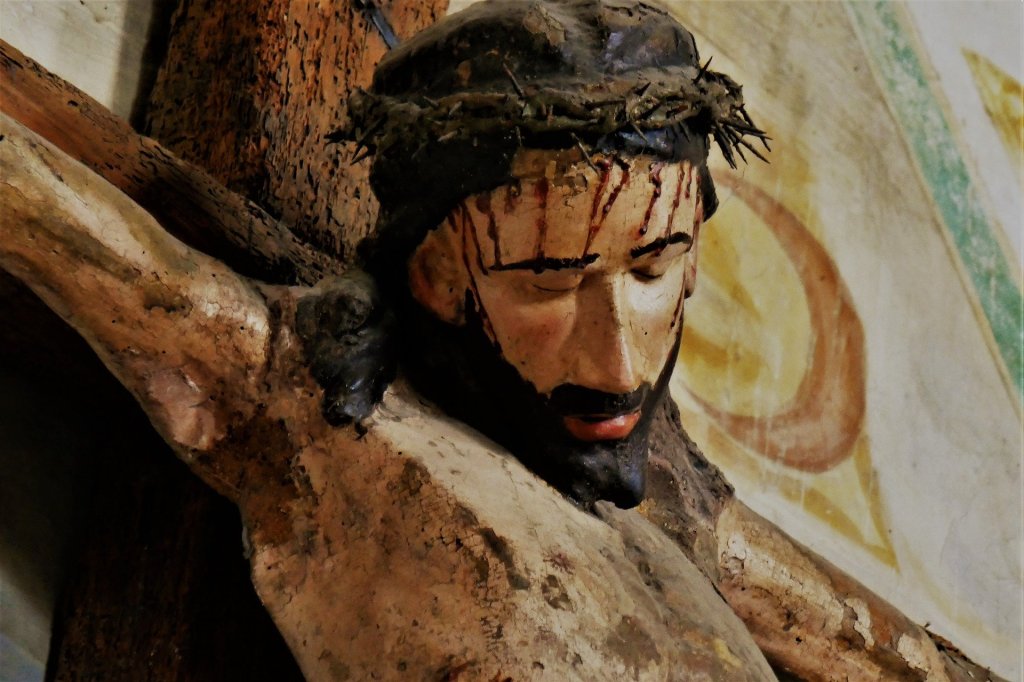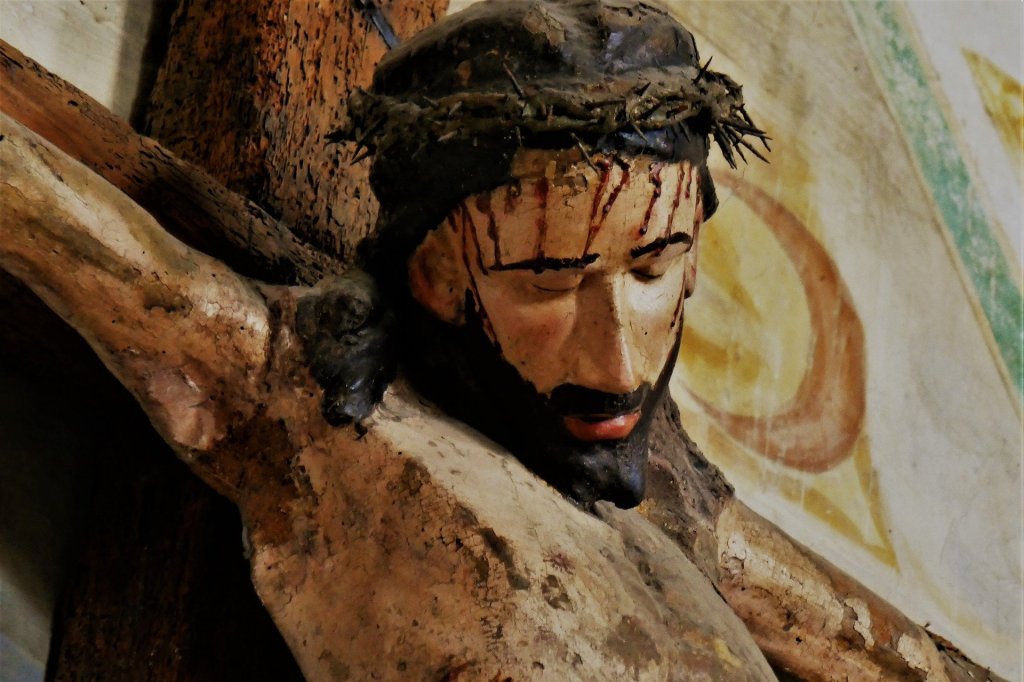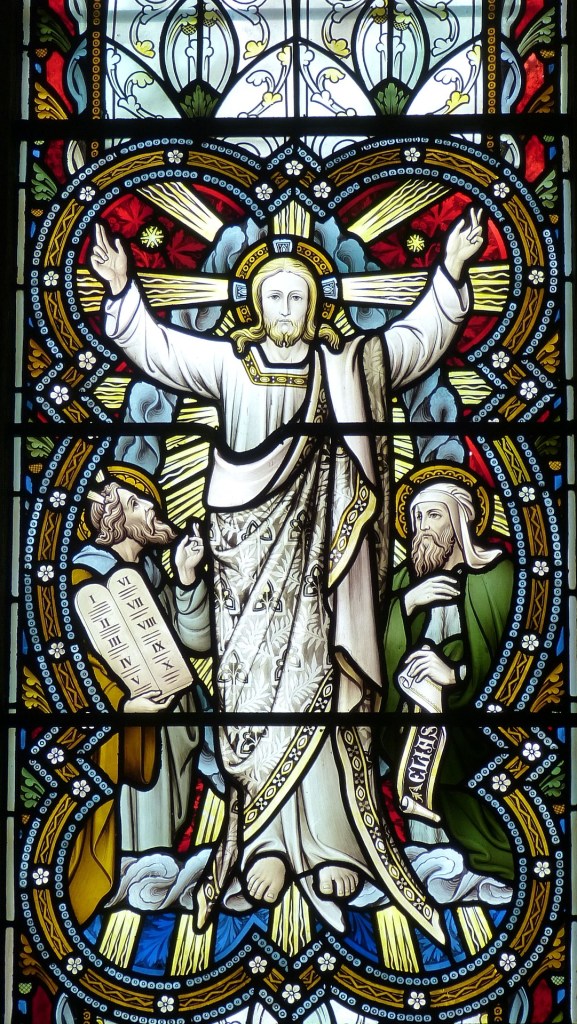
Mark 9: 2 – 13 The transfiguration

Mark 9: 2 – 13 The transfiguration

After six days Jesus took Peter, James and John with him and led them up a high mountain, where they were all alone. There he was transfigured before them. His clothes became dazzling white, whiter than anyone in the world could bleach them. And there appeared before them Elijah and Moses, who were talking with Jesus.

Peter said to Jesus, ‘Rabbi, it is good for us to be here. Let us put up three shelters – one for you, one for Moses and one for Elijah.’ (He did not know what to say, they were so frightened.)

Then a cloud appeared and covered them, and a voice came from the cloud: ‘This is my Son, whom I love. Listen to him!’

Suddenly, when they looked around, they no longer saw anyone with them except Jesus.

As they were coming down the mountain, Jesus gave them orders not to tell anyone what they had seen until the Son of Man had risen from the dead. They kept the matter to themselves, discussing what ‘rising from the dead’ meant.

And they asked him, ‘Why do the teachers of the law say that Elijah must come first?’

Jesus replied, ‘To be sure, Elijah does come first, and restores all things. Why then is it written that the Son of Man must suffer much and be rejected? But I tell you, Elijah has come, and they have done to him everything they wished, just as it is written about him.’

*       *       *

The Transfiguration is one of the key events in Jesus’ life. Matthew (Matthew 17: 1 – 13), Mark (Mark 9: 2 – 13) and Luke (Luke 9: 28 – 36) include detailed accounts in their gospels. The accounts agree.

In addition, Peter describes it from the point of view of an eyewitness in his second epistle (2 Peter 1: 16 – 18). “For we did not follow cleverly devised stories when we told you about the coming of our Lord Jesus Christ in power, but we were eyewitnesses of his majesty. He received honour and glory from God the Father when the voice came to him from the Majestic Glory, saying, ‘This is my Son, whom I love; with him I am well pleased.’ We ourselves heard this voice that came from heaven when we were with him on the sacred mountain.” (Note, though, that there is controversy as to whether this letter was actually written by Peter the apostle. Although the consensus among scholars seems to be that the epistle wasn’t written by Peter, there are some persuasive arguments in favour of Peter’s authorship.)

Finally, John is probably referring to it obliquely in his gospel. “The Word became flesh and made his dwelling among us. We have seen his glory, the glory of the one and only Son, who came from the Father, full of grace and truth.” (John 1:14)

Why is it so important?

The experience shook Peter, James and John to the core. Mark says, of Peter, “He did not know what to say, they were so frightened.” And yet, at the same time, Peter seems to have wanted to prolong the experience, saying ‘Rabbi, it is good for us to be here. Let us put up three shelters – one for you, one for Moses and one for Elijah.’  

The transfiguration revealed a little of the transcendent God to Peter, James and John. Peter, in his epistle, refers to this revelation as “the Majestic Glory”. It must have been awe-inspiring. It showed the reality of God beyond the physical world. Peter, James and John were given an experience of Jesus as he is in spiritual form. They saw him talking with his predecessors, Moses and Elijah, who symbolised the Law and the Prophets. They heard a voice from the cloud saying, ‘This is my Son, whom I love. Listen to him!’

What Peter, James and John saw, what they remembered, what they caused to be written down in the gospels, was Jesus as he exists beyond our material world.

On the way down the mountain Jesus ordered them not to tell anyone about what they had seen until after he had risen from the dead. Why did he do this?

The disciples were finding it very difficult to understand that Jesus was going to suffer and die. We saw in Mark 8: 31 – 33, for example, how Peter was rebuked by Jesus because he rejected Jesus’ teaching that the Son of Man must be put to death.

I suspect that Peter, James and John needed time to think about what they had seen and experienced. By adding “until the Son of Man has risen from the dead” to his order not to tell anyone, Jesus linked the transfiguration with the resurrection in the minds of Peter, James and John, and that helped them make sense of the events of Holy Week. The vision of Jesus in power would have helped sustain them during the horror of the crucifixion and the mingled joy and terror of the resurrection.

We, too, can experience something of the reality of God’s power displayed in Jesus, through the in-dwelling Holy Spirit. We just have to ask, listen and obey. The Holy Spirit will lead us into all truth – including the truth of God’s power displayed in Jesus. I once experienced the shadow of a reflection of the “Majestic Glory,” and it was breathtakingly wonderful.

Still, perhaps the best explanation of the importance of the Transfiguration is from John.

“The Word became flesh and made his dwelling among us. We have seen his glory, the glory of the one and only Son, who came from the Father, full of grace and truth.”

Prayer

Heavenly Father

Thank you for sending Jesus to us. Thank you for revealing him as he is eternally, in power with you. Please, through the power of your Holy Spirit, allow your present-day disciples to glimpse Jesus transfigured and in power.

In Jesus’ name, Amen
Mark 8: 34 – 38, 9:1 The way of the cross

Mark 8: 34 – 38, 9:1 The way of the cross

Then he called the crowd to him along with his disciples and said, ‘Whoever wants to be my disciple must deny themselves and take up their cross and follow me. For whoever wants to save their life will lose it, but whoever loses their life for me and for the gospel will save it. What good is it for someone to gain the whole world, yet forfeit their soul? Or what can anyone give in exchange for their soul? If anyone is ashamed of me and my words in this adulterous and sinful generation, the Son of Man will be ashamed of them when he comes in his Father’s glory with the holy angels.’

9  And he said to them, ‘Truly I tell you, some who are standing here will not taste death before they see that the kingdom of God has come with power.’

*       *       *

This is an astonishing challenge. I need to analyse its different elements if I am to even begin to appreciate what it is calling me to do.

“Then he called the crowd to him along with his disciples”

This teaching wasn’t given in private to the disciples. Jesus made sure he had the attention of the whole crowd before he spoke. That suggests to me that the teaching is not meant only for those closest to Jesus; it is meant for every single human who wishes to follow him.

“ ‘Whoever wants to be my disciple must deny themselves…’ ”

The first essential of following Jesus is that we must deny ourselves. Our entire lives need to be focussed on doing the will of God, just as Jesus’ life was.

“ ‘Whoever wants to be my disciple must … take up their cross and follow me.’ ”

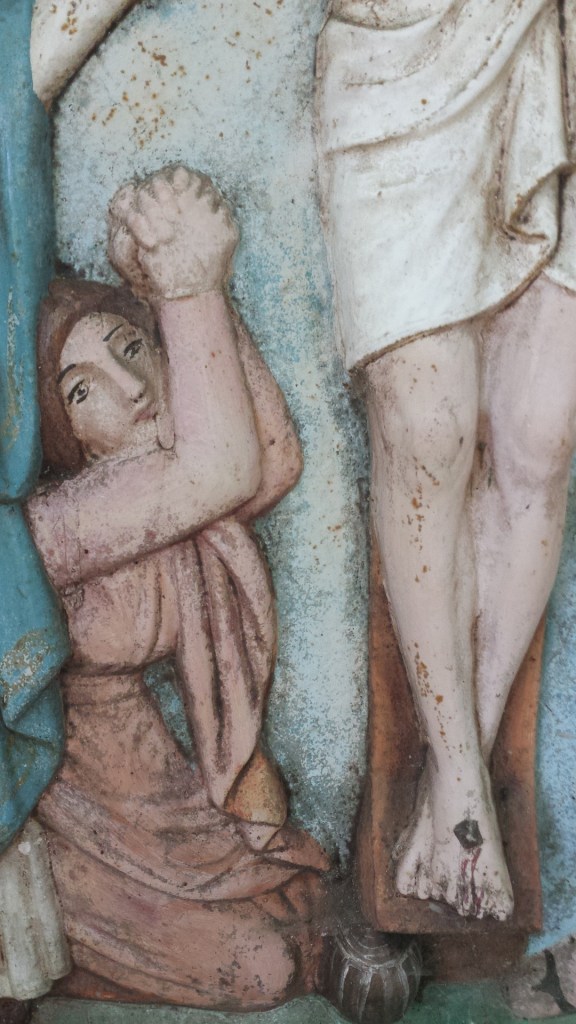
This passage is often interpreted figuratively, and that’s fair enough. Not everybody is called to martyrdom, after all. Even in the early church, martyrdom was the exception rather than the rule. However, if we are to appreciate this teaching of Jesus, we need to have some idea of what he meant when he spoke of taking up the cross and following him. Remember, Jesus was talking to people who were familiar with crucifixion, and who knew what it involved. They would have been under no illusions about its horror.

Crucifixion was a Roman form of capital punishment, reserved for slaves and foreigners; Roman citizens were exempt from crucifixion because it was deemed too dreadful. It involved complete humiliation and extreme pain prolonged for many hours.

And Jesus says “ ‘Whoever wants to be my disciple must … take up their cross and follow me.’ ”

That’s the cost of being a disciple of Jesus, and there’s no getting round it.

He spells it out even more explicitly. “ ‘For whoever wants to save their life will lose it, but whoever loses their life for me and for the gospel will save it. What good is it for someone to gain the whole world, yet forfeit their soul? Or what can anyone give in exchange for their soul?’ ”

Why does he say this?

Well, it’s not because God makes this a condition of salvation. Salvation is a free gift from God; it is unconditional.

This teaching is a dramatic way of pointing out how being a disciple should affect our lives. We must put God’s will first. His will challenges human power structures because they are unjust, and rely on the oppression of the poor. As we learn to hear and do his will, it is inevitable that we will speak and act in a way that exposes the falsity of the world’s values, because all our actions will be based on love. There is no room in love for oppression or exploitation of others.

When our lives are seen to be governed by love, some people will find this attractive. However, there are others who will think we are eccentric, or worse, a threat to their interests. They may attack us, harm us, even, under some circumstances, kill us.

Jesus is warning us about this in advance; when we live life God’s way we will find ourselves in conflict with humanity’s greed, ruthlessness, lust and hypocrisy. While for most of us that will mean no more than ridicule, for some it will cost them their job, some will be imprisoned, some will even be killed.

But those of us who suffer little from opposition, nevertheless pay a cost. Following God’s will means subordinating our own will, and that can hurt. Indeed, we must be ready to accept only the opportunities that God sends us, which can – in worldly terms – be costly indeed. And remember the yardstick Jesus uses in his teaching; the yardstick of the cross. That is what it can cost us.

But there is another way this teaching can be framed. God’s will for each of us is that we should become the very best people that we can be. The challenges we face in obeying his word are training towards that objective. When Jesus says, ‘…whoever loses their life for me and for the gospel will save it,’ he is making a promise. By losing our life, by willingly surrendering everything that obstructs God’s will for us, we gain our souls; we gain our true selves; we become the very best that we can be.

Prayer

Heavenly Father

Thank you for Jesus, for his love for us, and for the teaching he gives us. Please help me to be ready to give up everything in order to do your will.

In Jesus’ name, Amen

Mark 8: 31 – 33 Jesus predicts his death

Mark 8: 31 – 33 Jesus predicts his death

He then began to teach them that the Son of Man must suffer many things and be rejected by the elders, the chief priests and the teachers of the law, and that he must be killed and after three days rise again. He spoke plainly about this, and Peter took him aside and began to rebuke him.

But when Jesus turned and looked at his disciples, he rebuked Peter. ‘Get behind me, Satan!’ he said. ‘You do not have in mind the concerns of God, but merely human concerns.’

*       *       *

“He spoke plainly about this”

Jesus’ teaching up until this point had been in the form of parables. Now, with just his disciples present, he tells them exactly what is to happen to him.

They must have been shattered.

They had watched Jesus heal people. They had seen how crowds had flocked around him They had seen him calm a storm and feed a multitude. They’d heard him speak, over and over again, about the kingdom of heaven. Above all, they had lived with him day and night. They thought they knew him, and they had given him their allegiance.

And now this.

“He then began to teach them that the Son of Man must suffer many things and be rejected by the elders, the chief priests and the teachers of the law, and that he must be killed and after three days rise again.”

The Jewish leaders weren’t going to accept him as Messiah. Quite the reverse. They were going to reject him and kill him.

All the preconceived ideas of the disciples were challenged. They couldn’t believe that the authorities would kill Jesus; but if they did…what would they do to the disciples?

Peter acted on impulse. He couldn’t bear what Jesus was saying. From Jesus’ response, I imagine that Peter was telling Jesus that he mustn’t say things about dying, and being rejected. He would put people off. “How can you save the world if you’re dead?” he might have asked.

I wonder if Jesus felt sadness at Peter’s intervention? Peter had just had the insight to see that Jesus was the Messiah, and here he was, subverting Jesus’ mission. Jesus rebuked Peter sternly. “…he rebuked Peter. ‘Get behind me, Satan!’ he said. ‘You do not have in mind the concerns of God, but merely human concerns.’ ”

Peter and the other disciples weren’t used to listening to God, whereas for Jesus listening to God was second nature. He often withdrew to pray in solitude. Jesus knew that it was vital that he did exactly what the Father required of him. He wasn’t on earth to work out a clever plan to restore Israel. He wasn’t on earth to display God’s power in spectacular miracles. He was here to do the will of God.

That wasn’t the most important thing; it was the only important thing.

How does that apply to us? Should we be similarly focused on doing God’s will? How much do we listen to God? Have we practised listening to the way the Holy Spirit guides us?

I find this a deeply challenging passage. It calls for a level of commitment that creates real problems for my hypocrisy and selfishness. All I can do is trust in Jesus.

Prayer

Heavenly Father,

You are God, Creator and Sustainer. I confess that I am weak, selfish and a hypocrite. I’m sorry for failing to do your will. I put my trust in Jesus, to help me do better.

Thank you, Jesus, in your name I pray.

Amen.

Mark 8: 27 – 30 Peter declares that Jesus is the Messiah

Mark 8: 27 – 30 Peter declares that Jesus is the Messiah

Jesus and his disciples went on to the villages around Caesarea Philippi. On the way he asked them, ‘Who do people say I am?’

They replied, ‘Some say John the Baptist; others say Elijah; and still others, one of the prophets.’

‘But what about you?’ he asked. ‘Who do you say I am?’

Peter answered, ‘You are the Messiah.’

Jesus warned them not to tell anyone about him.

*       *       *

Although Jesus was the Messiah and the Son of God, during his earthly life he was fully human. He needed prayer, just as we do. “But Jesus often withdrew to lonely places and prayed” (Luke 5:16). He did this so that he knew what the Father wanted him to do. I don’t think that Jesus had a ‘road map’ of his life in advance; that really wouldn’t be human, would it? I think that as he prayed and acted in obedience to the Father’s will, his course became steadily clearer.

And then Peter recognised him as the Messiah.

I believe Peter’s confession of faith was very significant for Jesus. Suddenly, the pieces fell into place. Yes, he truly was the Messiah. This would certainly lead him into conflict with the Jewish leaders. Rather than accept him as Messiah, they would seek to discredit him. The best way to do that would be to hand him over to the Roman authorities. The Jewish leaders thought that when the crowds saw him arrested, tried and crucified, they would reject him, because he quite plainly wasn’t victorious.

There is a great difference between knowing intellectually that something terrifying is to happen, and living with the certainty that it will happen soon and is inescapable. I believe Jesus experienced that feeling as Peter answered, ‘You are the Messiah.’

Suddenly it was real. The Father really was going to ask him to do this. He was going to die in agony on a Roman cross, publicly humiliated, and abandoned by his disciples.

Everything we study in Mark’s gospel from now on must be seen in the light of this knowledge.

For today, it is enough to remember the sheer courage it must have taken for Jesus to stay true to his mission, and to remember the limitless love he showed towards all humanity.

Thank you, Lord, thank you!

Prayer

Heavenly Father

Thank you for the love shown by Jesus. Thank you for opening my heart to feel his love. Please help me to respond with gratitude and obedience.

In Jesus’ name, Amen

Mark 8: 22 – 26 Jesus heals a blind man at Bethsaida

Mark 8: 22 – 26 Jesus heals a blind man at Bethsaida

They came to Bethsaida, and some people brought a blind man and begged Jesus to touch him. He took the blind man by the hand and led him outside the village. When he had spat on the man’s eyes and put his hands on him, Jesus asked, ‘Do you see anything?’

He looked up and said, ‘I see people; they look like trees walking around.’

Once more Jesus put his hands on the man’s eyes. Then his eyes were opened, his sight was restored, and he saw everything clearly. Jesus sent him home, saying, ‘Don’t even go into the village.’

*       *       *

On a first reading this is a straightforward account of a miraculous healing. It has, though, some slightly unusual features.

“…some people brought a blind man and begged Jesus to touch him.”

This, in itself, isn’t unusual, but the way Jesus responds is:

“He took the blind man by the hand and led him outside the village.”

Why? Why would Jesus take the man outside the village?

“When he had spat on the man’s eyes and put his hands on him…”

Why did the man who could walk on water, and miraculously feed thousands, why did that man need to resort to a showman’s tricks? Surely a word would have been sufficient?

“Jesus asked, ‘Do you see anything?’

He looked up and said, ‘I see people; they look like trees walking around.’ ”

It seems as though the healing took time, or perhaps happened in two stages. The man could see again, but his vision was distorted.

Jesus sent him home, saying, ‘Don’t even go into the village.’

Why should he not go into the village? It was a hallmark of Jesus’ healing ministry that he restored people to wholeness, including their role in society.

Context. Let’s put this in context.

Immediately before today’s passage we have the parable of the yeast of the Pharisees. Before that we have the feeding of the four thousand, and before that, the healing of a deaf mute.

None of these seems terribly helpful in understanding today’s passage, so let’s look ahead. The next passage is “Peter declares that Jesus is the Messiah. The next after that is “Jesus predicts his death” and after that “The way of the cross”.

Jesus’ ministry is fast approaching a critical phase.

Jesus was fully human, and, just like the rest of us, he had to turn to God for guidance. We see this need in the way he would withdraw to find solitude for prayer. At this critical time in his ministry Jesus would have been acutely aware of the need to hear clearly what the Father wanted him to do. The last thing he wanted was to be at the centre of huge crowds of people. Jesus doesn’t tell the man never to visit the village again, he just sends him home so that news of the healing doesn’t cause crowds to assemble before Jesus and the disciples can move on. And I guess it was the same reason that prompted Jesus to take the man out of the village; there would have been fewer witnesses.

But what about the slow healing, and the showmanship?

Notice that the man was brought by others. Perhaps his own faith was weak?

It takes power to heal. When the woman with a haemorrhage touched Jesus’ cloak, he knew that power had gone out of him (Mark 5:30). Sometimes it takes prayer, as in the healing of the boy possessed by an impure spirit (Mark 9: 28 – 29).

Maybe the blind man needed a symbol that would arouse his faith, and his expectation? I can imagine how hope and faith would have flared up in him when Jesus asked him ‘Do you see anything?’ and he looked and, for the first time in years, he could see!

Jesus still does that today. He meets us where we are. He does what is necessary to help build our faith. All we need is the willingness to trust him. Every time we open our eyes at the Lord’s command, we can see a little better.

Thank you, Jesus, for your healing power in our lives!

Prayer

Heavenly Father

Thank you for healing us by the intervention of Jesus. Thank you that even a mustard seed of faith is enough to allow him to start to working healing miracles in our lives.

In Jesus’ name, Amen.

Mark 8: 14 – 21 The yeast of the Pharisees and Herod

Mark 8: 14 – 21 The yeast of the Pharisees and Herod

The disciples had forgotten to bring bread, except for one loaf they had with them in the boat. ‘Be careful,’ Jesus warned them. ‘Watch out for the yeast of the Pharisees and that of Herod.’

They discussed this with one another and said, ‘It is because we have no bread.’

Aware of their discussion, Jesus asked them: ‘Why are you talking about having no bread? Do you still not see or understand? Are your hearts hardened? Do you have eyes but fail to see, and ears but fail to hear? And don’t you remember? When I broke the five loaves for the five thousand, how many basketfuls of pieces did you pick up?’

‘Twelve,’ they replied.

‘And when I broke the seven loaves for the four thousand, how many basketfuls of pieces did you pick up?’

They answered, ‘Seven.’

He said to them, ‘Do you still not understand?’

*       *       *

‘Be careful,’ Jesus warned them. ‘Watch out for the yeast of the Pharisees and that of Herod.’

Jesus is not talking about actual yeast; he’s speaking figuratively, in a sort of mini-parable. Yeast in parables refers to something that starts very small and then increases until it affects the whole.For example, Luke tells us: “Again he asked, ‘What shall I compare the kingdom of God to? It is like yeast that a woman took and mixed into about thirty kilograms of flour until it worked all through the dough.’ ” (Luke 13: 20 – 21). That is an encouraging parable, reassuring the disciples (and us) that, whether we see it or not, God is working away bringing his plans to fruition.

This parable in Mark 8:15 is different. Jesus is warning the disciples against the yeast of the Pharisees and that of Herod. What can he mean?

As usual, it helps to look at the context. Immediately before this short passage, the Pharisees had asked Jesus for a sign from heaven – and Jesus had refused their request.

Could he have given a sign from heaven to validate his mission? Certainly he could; in fact, he just has. He’s just fed four thousand people with seven loaves and a few small fish.

The mission of Jesus is to call everybody to repentance, so that he can save us. Now he calls everybody, including Pharisees and Herodians. But we have to respond. We have to find the humility to admit that we sin, and accept Jesus as the one who saves us.

The Pharisees who asked Jesus for a sign were hypocrites. They pretended to be ready to accept a sign from heaven, but they hadn’t been to hear what Jesus was teaching. They were hypocrites in many other ways, too.

When Jesus warns his disciples against the yeast of the Pharisees and Herod, he is warning them against hypocrisy. The more often we are hypocritical, the more often we are tempted to use it as a mask for our sin. It grows until eventually it takes over. And what are we hiding with our hypocrisy? Why, out-and-out rebellion against God!

There is a way out, though. The moment we let Jesus into our lives as Lord, the kingdom of heaven can start to work in us. Again, this is just like yeast; it starts small and grows until it has leavened the whole loaf.

Let’s be aware of the dangers of the yeast of the Pharisees, but equally aware of the wonderful opportunity of the yeast of the kingdom of heaven. Let us take to heart all Jesus’ teaching, and seek to obey it.

Prayer

Heavenly Father

Thank you for the teaching of Jesus. Thank you that your Holy Spirit works within me, just like yeast. Please help me to listen and obey with purity of heart.

In Jesus’ name, Amen

Mark 8: 1 – 13 Jesus feeds the four thousand

Mark 8: 1 – 13 Jesus feeds the four thousand

During those days another large crowd gathered. Since they had nothing to eat, Jesus called his disciples to him and said, ‘I have compassion for these people; they have already been with me three days and have nothing to eat. If I send them home hungry, they will collapse on the way, because some of them have come a long distance.’

His disciples answered, ‘But where in this remote place can anyone get enough bread to feed them?’

‘How many loaves do you have?’ Jesus asked.

‘Seven,’ they replied.

He told the crowd to sit down on the ground. When he had taken the seven loaves and given thanks, he broke them and gave them to his disciples to distribute to the people, and they did so. They had a few small fish as well; he gave thanks for them also and told the disciples to distribute them. The people ate and were satisfied. Afterwards the disciples picked up seven basketfuls of broken pieces that were left over. About four thousand were present. After he had sent them away, he got into the boat with his disciples and went to the region of Dalmanutha.

The Pharisees came and began to question Jesus. To test him, they asked him for a sign from heaven. He sighed deeply and said, ‘Why does this generation ask for a sign? Truly I tell you, no sign will be given to it.’ Then he left them, got back into the boat and crossed to the other side.

*       *       *

Why does Mark tell us this story? He has already described the feeding of the five thousand. What does this story add?

In one way, it deals with an ‘explanation’ that is sometimes given for saying that the feeding of the five thousand wasn’t a miracle. The ‘explanation’ is that many of those present had actually brought some food, but had been reluctant to eat when others went hungry. Jesus’ dramatic gesture with the five loaves and two fishes overcame their selfishness and they shared – and everybody had plenty.  

This time, though, Mark tells us that the crowd had already been with Jesus three days. We can’t assume that all of them had stayed the whole time, but as they were in a remote place it seems likely that many of them had been. They might have been carrying some food in the beginning, but surely that would all have been eaten by the third day? This time it must have been a miracle.

Another reason Mark may have included this story is that it emphasises the way in which Jesus was followed by crowds of people all the time.

Are there things for which modern people will assemble voluntarily and wait outdoors away from home for days? Political protests sometimes inspire that. Queuing for shopping sales can attract people overnight. Queuing for the last night of the Proms has been known to start five or six days in advance. In new democracies, people have queued night and day to be able to vote. In all these instances, most of the people involved want something passionately, anything from a fur coat they couldn’t normally afford, to a political objective.

What did the people assembled with Jesus want?

Perhaps some were looking for healing? Many might have been aware of a spiritual hunger that needed to be satisfied. Maybe many of them were drawn by Jesus’ reputation as a worker of miracles.

At all events, there they were, hungry and far from home. So Jesus said, ‘I have compassion for these people; they have already been with me three days and have nothing to eat. If I send them home hungry, they will collapse on the way, because some of them have come a long distance.’ He was concerned for the people. He knew that many of them were far from home.

Jesus’ compassion can hold a lesson for us. When we are far from home, when we are tired and hungry, when we feel spiritually far from God; Jesus’ knows, and has compassion for us.

It would be nice if today’s passage ended here, but it doesn’t. It tells us of a challenge to Jesus by the Pharisees.

“To test him, they asked him for a sign from heaven. He sighed deeply and said, ‘Why does this generation ask for a sign? Truly I tell you, no sign will be given to it.’ Then he left them, got back into the boat and crossed to the other side.”

Contrast the Pharisees with Jesus.

Jesus works a miracle because he has compassion on his listeners.

The Pharisees demand that Jesus gives them a “sign from heaven” to prove to them that God has sent him.

Hearing the Pharisees’ question, Jesus “sighed deeply” – and refused. I’m sure he would have wanted the Pharisees to come to faith, but giving them a sign from heaven wouldn’t have accomplished that. The Pharisees’ demand for a miracle is one that seeks to control the power that it sees. Faith only comes about by seeking God diligently. If the Pharisees had been with Jesus when he fed the four thousand, they would have seen the miracle they wanted.

There is a lesson for me in this. I am apt to question and challenge. I am very open to doubt. In many ways I am sceptical.

I must learn from the Pharisees’ experience that I will only grow in faith insofar as I am prepared to let Jesus lead me. Jesus is my Lord, and I must watch him at work if I wish my faith to grow.

Prayer

Heavenly Father

Thank you for Jesus. Thank you for letting me come closer to him. Please help me to listen carefully to him, and obey him.

In Jesus’ name, Amen

Mark 7: 31 – 37 Jesus heals a deaf and mute man

Mark 7: 31 – 37 Jesus heals a deaf and mute man

Then Jesus left the vicinity of Tyre and went through Sidon, down to the Sea of Galilee and into the region of the Decapolis. There some people brought to him a man who was deaf and could hardly talk, and they begged Jesus to place his hand on him.

After he took him aside, away from the crowd, Jesus put his fingers into the man’s ears. Then he spat and touched the man’s tongue. He looked up to heaven and with a deep sigh said to him ‘Ephphatha!’ (which means, ‘Be opened!’) At this, the man’s ears were opened, his tongue was loosed and he began to speak plainly.

Jesus commanded them not to tell anyone. But the more he did so, the more they kept talking about it. People were overwhelmed with amazement. ‘He has done everything well,’ they said. ‘He even makes the deaf hear and the mute speak.’

*       *      *

When I first read this passage, there were three things that puzzled me:

  • Why did Jesus anoint the man’s tongue with spittle?
  • Why did Jesus sigh when he looked up to heaven and said ‘Ephphatha’?
  • Why didn’t those who witnessed the healing obey Jesus’ command not to tell anyone?

Anointing with spittle is the sort of thing a charlatan would have done. Jesus didn’t need to do it. He could heal people without touching them, without even being present. So why did he do it this time?

I think the answer may be because of the nature of the man’s disability. He was brought to Jesus by other people; I would guess they were relatives. He was deaf and could hardly talk, which suggests the condition had started early in life and had persisted. I wonder how somebody deaf would have been taught in 1st century Palestine? Did they have any form of sign language? How would those who brought the man to Jesus explain who Jesus was, and what he could do?

Jesus needed a way of communicating to the man what he was doing. When he placed his fingers in the man’s ears, and spat and touched his tongue, he was using simple but powerful ways of showing that he intended to heal him.

Alright, but surely he didn’t need to tell the man? He could just have healed him and left it at that, couldn’t he?

I shall come back to that point, but I need to consider the third of my questions before I do.

Why didn’t those who witnessed the healing obey Jesus’ command not to tell other people?

We’ve seen Jesus feed five thousand people with five loaves and two fish, and we’ve seen him walk on water and we’ve seen him heal physical and mental illness. He’s in charge of the natural world. And yet the witnesses disobey him.

And the answer comes down to our free will. God created each human being with the capacity for making moral choices between good and evil; between obedience to God and disobedience. The witnesses of the healing of the deaf and mute man were told explicitly by Jesus not to tell anyone else. It’s a simple instruction. There’s no doubt or ambiguity about what they are asked to do. But God, through Jesus, doesn’t compel obedience.

Doesn’t that show how easy it is to sin? If we can disobey such a simple command from the mouth of Jesus himself, it’s not at all surprising that we frequently fail when confronted by more difficult tasks. We must cultivate the habit of obedience in everything we do.

I think it is this element of free will that accounts for the way Jesus carried out the healing. Although his supporters had brought the deaf man for healing, the man himself may have hardly understood what was going on. Perhaps he would have rejected the healing without Jesus touching his ears and anointing his tongue. Again, if we are to receive Jesus’ healing, we must cultivate the habit of listening and recognising his voice at all times.

Perhaps this is particularly true for any form of healing ministry. Healing always takes place in a wider context of family, friends and neighbours. When Jesus sets someone free from illness, whether physical or mental, he sets them free to take their place in the world.

Which brings us to the deep sigh that Jesus gave when he looked up to heaven. Is it inconceivable that it was a sigh of sadness that people should be so slow to believe, so slow to trust, so slow to obey?

When I think of my own slowness in all these ways, it wouldn’t surprise me.

And yet Jesus persists. He does everything necessary, selecting the way he deals with every individual according to their needs.

What love!

What a great Saviour we have!

Prayer

Heavenly Father,

Thank you for my Saviour, Jesus, and for the love that you show me through him. Please help me to listen and obey you to the limits of my capacity, because you want only the best for me.

In Jesus’ name, Amen.

Mark 7: 24 – 30 Jesus honours a Syro-Phoenician woman’s faith

Mark 7: 24 – 30 Jesus honours a Syro-Phoenician woman’s faith

Jesus left that place and went to the vicinity of Tyre. He entered a house and did not want anyone to know it; yet he could not keep his presence secret. In fact, as soon as she heard about him, a woman whose little daughter was possessed by an impure spirit came and fell at his feet. The woman was a Greek, born in Syrian Phoenicia. She begged Jesus to drive the demon out of her daughter.

‘First let the children eat all they want,’ he told her, ‘for it is not right to take the children’s bread and toss it to the dogs.’

‘Lord,’ she replied, ‘even the dogs under the table eat the children’s crumbs.’

Then he told her, ‘For such a reply, you may go; the demon has left your daughter.’

She went home and found her child lying on the bed, and the demon gone.

*       *       *

What a harsh rebuff for the woman! Jesus initially refuses to heal the woman’s child, and refers to her and her child as dogs. It looks as though Jesus is discriminating against her because she is not Jewish.

But is this actually the case?

Let’s put the passage in context. Mark 7: 1 – 23 is all about what makes a person pure. It is not what they eat or whether they wash their hands after visiting the market-place that matters; it is whether their heart is right with God. It is whether they have faith in him and try to do his will.

The disciples fail to understand properly what Jesus is saying, so he spells it out. Nothing that enters a man from outside can defile him in God’s eyes. The things that defile a man come from inside, out of the heart, and they are sins like sexual immorality, theft, murder, etc.

This is an authoritative ruling as to what makes a person unclean in God’s eyes.

However, there is still more for people – especially the disciples – to learn about purity, and it’s to do with the way the Jews treated the Gentiles. Jews of the period had as little to do with Gentiles as they could. To enter the house of a Gentile made you unclean, and it was quite a big deal. They often referred to Gentiles as dogs.

So, what does Mark tell us immediately after Jesus’ teaching about being clean in God’s eyes? He says that Jesus went to Gentile territory. He went into a house – quite possibly a Gentile house. As it turned out, a Gentile house in a Gentile region made the perfect setting for the acting out of a parable about whether God viewed the Gentiles as unclean.

Jesus has no sooner arrived than a woman throws herself at his feet.

“The woman was a Greek, born in Syrian Phoenicia. She begged Jesus to drive the demon out of her daughter.”

Jesus answers, ‘First let the children eat all they want, … for it is not right to take the children’s bread and toss it to the dogs,’. This is a typical parable, using an analogy to illustrate an ethical question. In this case, the children were the Jews, and the dogs were Gentiles.

In saying, “First let the children eat all they want,” Jesus is just saying out loud what he has been doing in practice – taking the good news first to the Jews.

The woman makes a wonderful reply. She accepts her status as a dog, but she points out that ‘Lord, … even the dogs under the table eat the children’s crumbs.’

She can’t have enjoyed being called a dog, but she doesn’t argue. However, she points out that she and her daughter are family dogs; they have a place in the home, and a place under the table. They’re not feral dogs, or dogs belonging to someone else; they belong to the family. They are allowed to pick up and eat the scraps that fall from the children’s plates.

This reply says two things. Firstly, the woman has faith in Jesus; not just faith that he can heal her daughter, but a faith that makes him her Lord. Secondly, the woman shows that she has understood what Jesus is talking about. She recognises herself as a ‘dog’, i.e. a Gentile, and she recognises the Jews as the children of the household.

She addresses Jesus as “Lord,” and shows complete humility towards him, even accepting the derogatory title of dog without protest.

She shows that her heart is right with God – and Jesus shows us the truth of that by healing her daughter.

Jesus is declaring that Gentiles are not unclean.

All that matters for any of us is how we stand with God.

Prayer

Heavenly Father

Thank you for the teaching of Jesus. Please help me to be humble, trusting and obedient.

In Jesus’ name, Amen

Mark 7: 1 – 23 That which defiles

Mark 7: 1 – 23 That which defiles

The Pharisees and some of the teachers of the law who had come from Jerusalem gathered round Jesus and saw some of his disciples eating food with hands that were defiled, that is, unwashed. (The Pharisees and all the Jews do not eat unless they give their hands a ceremonial washing, holding to the tradition of the elders. When they come from the market-place they do not eat unless they wash. And they observe many other traditions, such as the washing of cups, pitchers and kettles.)

So the Pharisees and teachers of the law asked Jesus, ‘Why don’t your disciples live according to the tradition of the elders instead of eating their food with defiled hands?’

He replied, ‘Isaiah was right when he prophesied about you hypocrites; as it is written:

‘ “These people honour me with their lips, but their hearts are far from me. They worship me in vain; their teachings are merely human rules.”

You have let go of the commands of God and are holding on to human traditions.’

And he continued, ‘You have a fine way of setting aside the commands of God in order to observe your own traditions! For Moses said, “Honour your father and mother,” and, “Anyone who curses their father or mother is to be put to death.” But you say that if anyone declares that what might have been used to help their father or mother is Corban (that is, devoted to God) – then you no longer let them do anything for their father or mother. Thus you nullify the word of God by your tradition that you have handed down. And you do many things like that.’

Again Jesus called the crowd to him and said, ‘Listen to me, everyone, and understand this. Nothing outside a person can defile them by going into them. Rather, it is what comes out of a person that defiles them.’

After he had left the crowd and entered the house, his disciples asked him about this parable. ‘Are you so dull?’ he asked. ‘Don’t you see that nothing that enters a person from the outside can defile them? For it doesn’t go into their heart but into their stomach, and then out of the body.’ (In saying this, Jesus declared all foods clean.)

He went on: ‘What comes out of a person is what defiles them. For it is within, out of a person’s heart, that evil thoughts come – sexual immorality, theft, murder, adultery, greed, malice, deceit, lewdness, envy, slander, arrogance and folly. All these things come from inside and defile a person.’

*       *       *

The Pharisees and some of the teachers of the law ask Jesus a question. It seems, at first, to be a straightforward question: “ ‘Why don’t your disciples live according to the tradition of the elders instead of eating their food with defiled hands?’ ”

Jesus, though, immediately attacks the questioners, calling them hypocrites, and quoting the prophet Isaiah to support his accusation. Instead of answering the question about ceremonial washing, Jesus points out that the Pharisees use human traditions to nullify the word of God. He picks out a forceful example: “For Moses said, “Honour your father and mother,” and, “Anyone who curses their father or mother is to be put to death.” But you say that if anyone declares that what might have been used to help their father or mother is Corban (that is, devoted to God) – then you no longer let them do anything for their father or mother.”

This appears to be a rather abrupt change of subject. It almost looks as though Jesus is ducking the question about ceremonial washing. He isn’t, though, as he makes clear with his next words: “ ‘Listen to me, everyone, and understand this. Nothing outside a person can defile them by going into them. Rather, it is what comes out of a person that defiles them.’ ”

Okay. Got that everybody?

Well, no. Certainly the disciples hadn’t understood. “After he had left the crowd and entered the house, his disciples asked him about this parable.”

Jesus gives them some forceful teaching. “ ‘Are you so dull?’ he asked.” Jesus has been teaching the disciples about the correct way to interpret parables for some time. They need to be doing it for themselves now – for they won’t have Jesus’ physical presence on earth for much longer.

“ ‘Don’t you see that nothing that enters a person from the outside can defile them? For it doesn’t go into their heart but into their stomach, and then out of the body.’ (In saying this, Jesus declared all foods clean.)

He went on: ‘What comes out of a person is what defiles them. For it is within, out of a person’s heart, that evil thoughts come – sexual immorality, theft, murder, adultery, greed, malice, deceit, lewdness, envy, slander, arrogance and folly. All these things come from inside and defile a person.’ ”

In his response to the Pharisees, Jesus had gone straight to the heart of purity laws. They were intended to remind God’s people that they must cast aside all thoughts and all actions that are sinful. Diligent washing of hands and utensils wasn’t the point; the point was that they remembered God, and remembered his nature – and sought to live in accordance with his will. Ceremonial purity has nothing to do with hygiene or ritual; it is to do with setting yourself aside for God’s service, by turning to him in repentance.

Prayer

Heavenly Father

I confess that I often choose my own wishes ahead of yours. Please forgive me, and help me to consecrate myself to your service.

In Jesus’ name, Amen