Mark 10: 46 – 52 Blind Bartimaeus receives his sight

Mark 10: 46 – 52 Blind Bartimaeus receives his sight

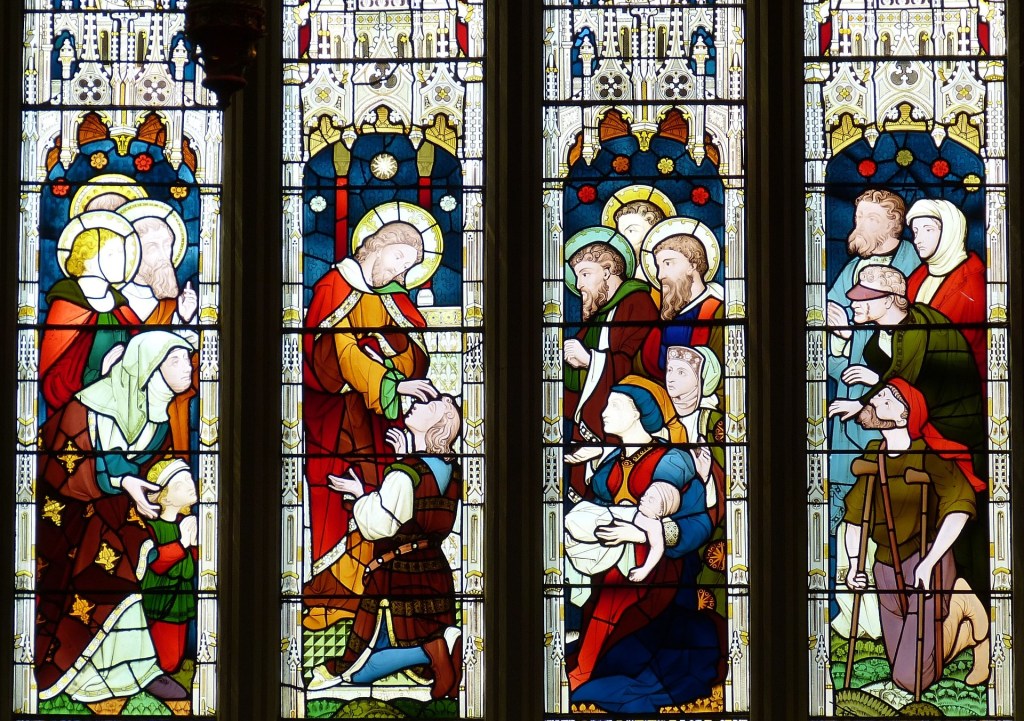
Then they came to Jericho. As Jesus and his disciples, together with a large crowd, were leaving the city, a blind man, Bartimaeus (which means ‘son of Timaeus’), was sitting by the roadside begging. When he heard that it was Jesus of Nazareth, he began to shout, ‘Jesus, Son of David, have mercy on me!’

Many rebuked him and told him to be quiet, but he shouted all the more, ‘Son of David, have mercy on me!’

Jesus stopped and said, ‘Call him.’

So they called to the blind man, ‘Cheer up! On your feet! He’s calling you.’ Throwing his cloak aside, he jumped to his feet and came to Jesus.

‘What do you want me to do for you?’ Jesus asked him.

The blind man said, ‘Rabbi, I want to see.’

‘Go,’ said Jesus, ‘your faith has healed you.’ Immediately he received his sight and followed Jesus along the road.

*       *       *

Bartimaeus was sitting begging. As far as we know he hadn’t set out to find Jesus, but he clearly knew of him. He heard the tumult of a crowd, and realised that Jesus was passing. He cried out, ‘Jesus, Son of David, have mercy on me!’, and, despite the efforts of the crowd to silence him, he wouldn’t stop shouting.

Now, “Son of David” is a very specific title. God had promised King David that his throne would be established for ever, and had spoken to the Israelites prophetically about David’s successor who would establish this kingdom. As a descendant of David, the Messiah would be known as “Son of David”.

We read in Mark 8: 27 – 30 about Peter’s declaration that Jesus is the Messiah – and Jesus’ warning that they mustn’t tell others about this. That is because the title was controversial. It implied a warrior who would lead the Israelites against their oppressors. We know that claims to be the Messiah were controversial from Acts 5: 34 – 39, where Gamaliel reminds the Sanhedrin about Theudas, who ‘claimed to be somebody’ (that is, claimed to be the Messiah). He had recruited fighters but been killed.  

When Bartimaeus shouted to Jesus calling him, “Son of David”, he was publicly saying what others were whispering behind closed doors. No wonder the crowd was keen to silence him.

“Jesus stopped and said, ‘Call him.’

So they called to the blind man, ‘Cheer up! On your feet! He’s calling you.’ Throwing his cloak aside, he jumped to his feet and came to Jesus.”

Jesus’ invitation to Bartimaeus was passed to him by the members of the crowd. Are we always ready to talk to others about Jesus? Are we always ready to pass on his invitation to come and be healed?

‘What do you want me to do for you?’ Jesus asked him.

Jesus doesn’t take it for granted that the man wants to see again. He asks him what he wants. Perhaps the sound of Jesus’ voice caused Bartimaeus’ faith to blaze up. ‘Yes!’ he might have felt, ‘Jesus really can heal me!’

The blind man said, ‘Rabbi, I want to see.’

‘Go,’ said Jesus, ‘your faith has healed you.’ Immediately he received his sight and followed Jesus along the road.

Bartimaeus received his sight immediately. How would he have felt? Astonished? Grateful? Full of praise? He was healed. He could work. He could once again play his full part in society. Mark tells us that he followed Jesus, and I’m sure he means that spiritually as well as literally.

There is more in this passage. It comes immediately before Jesus’ arrival in Jerusalem, which culminates in his arrest and death. At this critical time in his life and ministry, what do we see Jesus doing?

Opening the eyes of the blind.

The religious authorities are spiritually blind. Jesus could heal them. Jesus would heal them if they were prepared to ask. But they won’t. They reject him.

How dreadful.

Prayer

Heavenly Father

Thank you for the healing that Jesus offers. Please help me to be obedient to your will, and to express your love to all those around me.

In Jesus’ name, Amen

Post script

St Matthew’s gospel contains a very similar story in Matthew 20: 29 – 34. Just as in Mark’s gospel, the event takes place immediately after James and John have sought the privilege of being at Jesus’ right and left hands, and immediately before Jesus’ triumphal entry into Jerusalem. It’s plainly the same event – except that Mark provides a name for a single blind man, and Matthew says there were two blind men.

Mark 10: 35 – 45 The request of James and John

Mark 10: 35 – 45 The request of James and John

Then James and John, the sons of Zebedee, came to him. ‘Teacher,’ they said, ‘we want you to do for us whatever we ask.’

‘What do you want me to do for you?’ he asked.

They replied, ‘Let one of us sit at your right and the other at your left in your glory.’

‘You don’t know what you are asking,’ Jesus said. ‘Can you drink the cup I drink or be baptised with the baptism I am baptised with?’

‘We can,’ they answered.

Jesus said to them, ‘You will drink the cup I drink and be baptised with the baptism I am baptised with, but to sit at my right or left is not for me to grant. These places belong to those for whom they have been prepared.’

When the ten heard about this, they became indignant with James and John. Jesus called them together and said, ‘You know that those who are regarded as rulers of the Gentiles lord it over them, and their high officials exercise authority over them. Not so with you. Instead, whoever wants to be great among you must be your servant, and whoever wants to be first must be slave of all. For even the Son of Man did not come to be served, but to serve, and to give his life as a ransom for many.’

*       *       *

Then James and John, the sons of Zebedee, came to him. ‘Teacher,’ they said, ‘we want you to do for us whatever we ask.’

Does this strike you as rather crass and arrogant? James and John seem to be trying – rather clumsily – to manipulate Jesus. It shows them as very human. They’re fallible, flawed, and think they know much more than they actually do. And yet, very soon, Jesus will rely on them to pass on to the world news of the miracle of his resurrection. Only the grace of God could take these men and make them into apostles and saints!

Am I arrogant when I pray? Do I feel a sense of entitlement that Jesus should answer my prayers?

Turning the question around, do I have sufficient trust in God that his grace can make me a saint?

I must do my best to remain humble, and to trust God to work in me and through me. It’s his work, not mine. Anything good in my life is for his glory.

‘What do you want me to do for you?’ he asked.

They replied, ‘Let one of us sit at your right and the other at your left in your glory.’

When they ask this, they hope that when Jesus is glorified they will be second only to him in the new order of God’s kingdom. They have no idea what they’re actually asking for.

‘You don’t know what you are asking,’ Jesus said. ‘Can you drink the cup I drink or be baptised with the baptism I am baptised with?’

Looking at Jesus’ question with hindsight, we understand the cup and the baptism as referring to his Passion, but this was not the meaning James and John would have read into the question.

‘We can,’ they answered.

Were they still fixed on the idea they would be rewarded with riches and power?

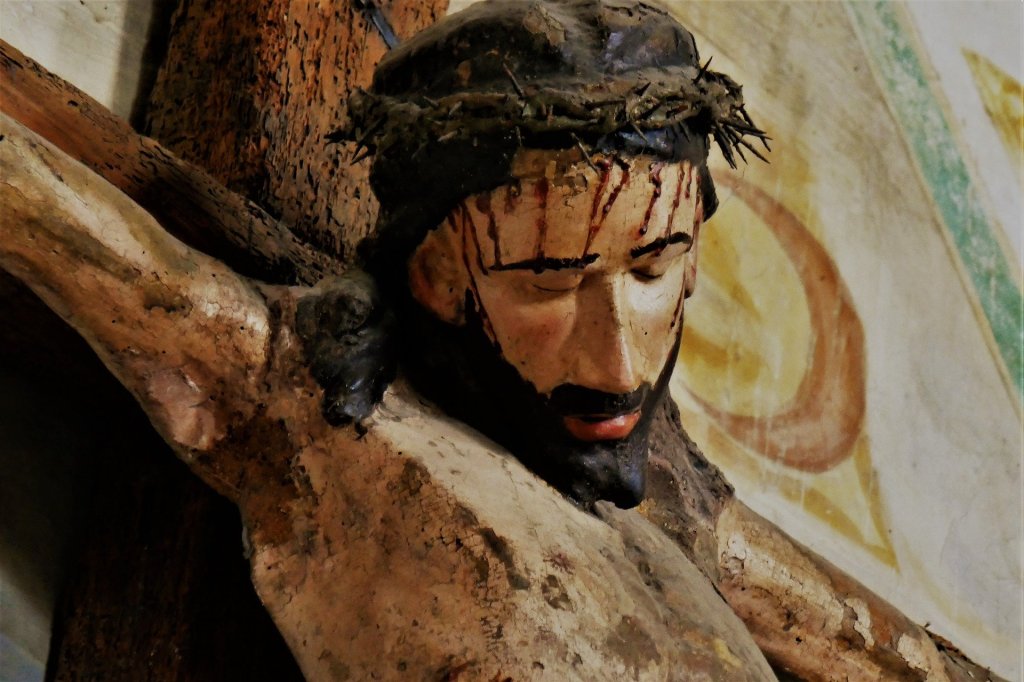
Knowing that Jesus meant his suffering, death and resurrection, how would I answer Jesus’ question? I hope I would say, ‘With God’s help, I will’, but it would be a dreadful question to be asked. And yet it is there, right at the core of our faith. (Click here to see the way of the cross)

Jesus said to them, ‘You will drink the cup I drink and be baptised with the baptism I am baptised with, but to sit at my right or left is not for me to grant. These places belong to those for whom they have been prepared.’

Jesus promises that they will indeed share his cup and his baptism, but tells them that he doesn’t have the authority to seat them at his right and left. That can only mean that the Father has already chosen who is to have those seats.

When the ten heard about this, they became indignant with James and John. Jesus called them together and said, ‘You know that those who are regarded as rulers of the Gentiles lord it over them, and their high officials exercise authority over them. Not so with you. Instead, whoever wants to be great among you must be your servant, and whoever wants to be first must be slave of all. For even the Son of Man did not come to be served, but to serve, and to give his life as a ransom for many.’

Jesus used the disciples’ squabbling to teach them a lesson in humble service. He points out that to be great, they must be a servant to others, ‘and whoever wants to be first must be slave of all.’

Humility is very difficult to achieve. It’s not simply being a doormat. It’s not being passive-aggressive. It’s having a genuine open love for those around you, and doing the things that help them realise their full potential as individuals. In other words, it’s being Jesus for them.

If we try our best to copy Jesus, if we pray, and listen obediently to God, we will gradually learn how to be humble. We will start to understand the words, “For even the Son of Man did not come to be served, but to serve, and to give his life as a ransom for many.”

How wonderful it is that God in Jesus came down and served us!

Prayer

Heavenly Father

Thank you for sending Jesus to us. Please help me to serve your sons and daughters better.

In Jesus’ name, Amen

Mark 10: 32 – 34 Jesus predicts his death a third time

Mark 10: 32 – 34 Jesus predicts his death a third time

They were on their way up to Jerusalem, with Jesus leading the way, and the disciples were astonished, while those who followed were afraid. Again he took the Twelve aside and told them what was going to happen to him. ‘We are going up to Jerusalem,’ he said, ‘and the Son of Man will be delivered over to the chief priests and the teachers of the law. They will condemn him to death and hand him over to the Gentiles, who will mock him and spit on him, flog him and kill him. Three days later he will rise.’

*       *       *

“They were on their way up to Jerusalem, with Jesus leading the way”

In John’s gospel we read that a previous visit to Jerusalem had ended with the authorities trying to stone Jesus. (John 10: 31 – 32) This latest visit was a walk into danger.

“The disciples were astonished”

What kind of anointed king moves against his enemies when he is still weak? Surely he should be building an army first? Why should they move from a place where they felt relatively safe, to one where the religious authorities knew Jesus and hated him?

Although Jesus had already spoken to them twice about his forthcoming death, the disciples were still astonished that Jesus planned to go into Jerusalem.

“Those who followed were afraid”

This was no play-acting. It was no bluff. It wasn’t symbolic teaching. Those who followed Jesus knew that they were going into real, deadly danger; and they were afraid.

It is against this backdrop that Jesus teaches them for the third time what is going to happen to him.

‘We are going up to Jerusalem,’ he said, ‘and the Son of Man will be delivered over to the chief priests and the teachers of the law. They will condemn him to death and hand him over to the Gentiles, who will mock him and spit on him, flog him and kill him. Three days later he will rise.’

There is something odd about the grammar of this paragraph. The gospel writer suddenly changes the way Jesus speaks of himself. The words he puts into Jesus’ mouth are in the third person rather than the first person. That is to say Jesus refers to himself as “Son of Man”, and “him”. By contrast, there are plenty of places in all the gospels where Jesus refers to himself in the first person: for example, “Truly I tell you,” (Mark 10: 29)

Why this change?

Well, it’s possible that the writer of Mark’s gospel wanted to stress that Jesus had repeatedly referred to himself as the Son of Man when talking about his death. In other words, he has paraphrased what Jesus said. That’s quite clumsy, though.

Perhaps it is more likely that Jesus deliberately spoke in this rather abstract way to put a distance between the horror of the reality and himself. We know from accounts of his prayer in the garden of Gethsemane. (Mark 14: 32 – 42; Luke 22: 39 – 46: Matthew 26: 36 – 46) that he dreaded his coming ordeal.

Or, possibly most likely of all, he did it to shield the disciples from the personal impact of the knowledge. Referring to himself as the Son of Man allows the disciples to have doubt that the events are going to happen to Jesus the man. ‘Perhaps there is some other way of understanding this?’ they might have thought. If they had fully grasped the truth of what was about to happen, would they have stayed with Jesus? I wonder.

At all events, the words of this passage make me sharply aware that the disciples aren’t just characters in a story; they are living human beings, with hopes, ambitions, faith – and fear.

Prayer

Heavenly Father

Thank you for the witness of the disciples. Thank you that despite their fear they stayed with Jesus long enough to do what you needed them to do. Please help me to copy their faithful service of Jesus.

In Jesus’ name, Amen

Mark 10: 17 – 31 The rich and the kingdom of God

Mark 10: 17 – 31 The rich and the kingdom of God

As Jesus started on his way, a man ran up to him and fell on his knees before him. ‘Good teacher,’ he asked, ‘what must I do to inherit eternal life?’

‘Why do you call me good,’ Jesus answered. ‘No one is good – except God alone. You know the commandments: “You shall not murder, you shall not commit adultery, you shall not steal, you shall not give false testimony, you shall not defraud, honour your father and mother.” ’

‘Teacher,’ he declared, ‘all these I have kept since I was a boy.’

Jesus looked at him and loved him. ‘One thing you lack,’ he said. ‘Go, sell everything you have and give to the poor, and you will have treasure in heaven. Then come, follow me.’

At this the man’s face fell. He went away sad because he had great wealth.

Jesus looked round and said to his disciples, ‘How hard it is for the rich to enter the kingdom of God!’

The disciples were amazed at his words. But Jesus said again, ‘Children, how hard it is to enter the kingdom of God! It is easier for a camel to go through the eye of a needle than for someone who is rich to enter the kingdom of God.’

The disciples were even more amazed, and said to each other, ‘Who then can be saved?’

Jesus looked at them and said, ‘With man this is impossible but not with God; all things are possible with God.

Then Peter spoke up, ‘We have left everything to follow you!’

‘Truly I tell you,’ Jesus replied, ‘no one who has left home or brothers or sisters or mother or father or children or fields for me and the gospel will fail to receive a hundred times as much in this present age: homes, brothers, sisters, mothers, children and fields – along with persecutions – and in the age to come eternal life. But many who are first will be last, and the last first.’

*       *       *

“Then Peter spoke up, ‘We have left everything to follow you!’ ”

This implies the question, “Are we going to find it worthwhile following you?”

The disciples have come to believe that Jesus is the Messiah, but they are still thinking of him in earthly terms, as a conquering king who will drive out the Romans, re-establish the kingdom of Israel in a purified form, and rule in glory. His supporters will surely be rewarded – won’t they?

And here’s Jesus telling them how hard it is for the rich to enter the kingdom of heaven!

In answer to Peter’s question, what does Jesus promise them?

In this life he promises them homes, people to love and for them to love, the security of a family and a source of food (the fields), although he warns them that they will also suffer persecution. In the world to come, he promises them eternal life.

Notice that he certainly doesn’t promise them worldly riches and power.

And this is enough to satisfy the disciples. They stay with Jesus as he sets his face towards Jerusalem and the cross. We see here how deeply they trusted him. Without the hope of earthly riches for their support, the disciples follow Jesus. This is truly faith in action.

Let’s look back now at the rest of the passage.

As Jesus started on his way, a man ran up to him and fell on his knees before him. ‘Good teacher,’ he asked, ‘what must I do to inherit eternal life?’

The man ran up; he was eager for the message of Jesus.

He fell on his knees before Jesus; although he was very wealthy, he humbled himself in public. He really wanted Jesus’ teaching.

Jesus referred him to the commandments, and the man said he’d kept them since he was a boy. Yet here he was, kneeling before Jesus. He was aware that his life was missing something vital.

Mark tells us that Jesus looked at him and loved him. He could see the hunger and thirst for righteousness in the man’s face.

Jesus says this to him: ‘One thing you lack,’ he said. ‘Go, sell everything you have and give to the poor, and you will have treasure in heaven. Then come, follow me.’

I expect there was a moment of stunned silence after Jesus said that.

“ ‘Go, sell everything you have and give to the poor, and you will have treasure in heaven. Then come, follow me.’

At this the man’s face fell. He went away sad because he had great wealth.”

Jesus uses this moment to teach about the danger of wealth. He says ‘How hard it is for the rich to enter the kingdom of God!’, and ‘Children, how hard it is to enter the kingdom of God! It is easier for a camel to go through the eye of a needle than for someone who is rich to enter the kingdom of God.’

And it is. Wealth tempts you to trust it, rather than God. It tempts you to feel you are better than other people, which hinders you from loving them. It tempts your life’s focus away from God and towards the pleasures of the world. It tempted people in Jesus’ day, and it tempts people now. It tempts me.

But the reason why the gospel writer linked this story of the rich man with that of the disciples seeking reassurance is that it also teaches about faith. The rich man fled when he realised what was being asked of him. He lacked the faith to let go of his earthly security. He had the chance to join Jesus’ disciples but he didn’t take it.

The disciples, on the other hand, learned that they weren’t going to receive riches and power, but went with Jesus anyway – out of faith – out of love – out of a growing realisation of who he truly was.

Prayer

Heavenly Father

I confess that I have more money than I need to live on. Help me to gradually replace my trust in what that money can buy with trust in you.

In Jesus’ name, Amen

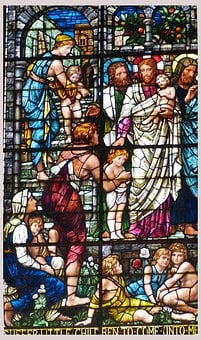
Mark 10: 13 – 16 The little children and Jesus

Mark 10: 13 – 16 The little children and Jesus

People were bringing little children to Jesus for him to place his hands on them, but the disciples rebuked them. When Jesus saw this, he was indignant. He said to them, ‘Let the little children come to me, and do not hinder them, for the kingdom of God belongs to such as these. Truly I tell you, anyone who will not receive the kingdom of God like a little child will never enter it.’ And he took the children in his arms, placed his hands on them and blessed them.

*       *       *

As soon as babies (we’ll call them Janet and John) start to crawl, we, as parents (or grandparents) go, “Uh-oh. Now we must be extra-careful to make sure Janet and John stay safe.” We are constantly on the look-out for situations that might be risky, and we move the children away from danger.

As we move them to safety, we usually explain what we’re doing, and gradually Janet and John learn to look after themselves.

It’s the same with other skills. Right from birth we talk to Janet and John. We introduce them to the objects, first in their home, then in their neighbourhood; to their family, then to their school.

And Janet and John learn. They learn the skills that they need for life as grown-ups. They learn trust.

Often and often and often they do the wrong things – not because they don’t trust, or don’t understand, but because the world is full of wonderful distractions, bright and shiny and tuneful. And we work hard to stay patient and make sure they learn the important skills.

Small children are fashioned to learn. They are pre-disposed to trust.

I think this is what Jesus is talking about in this passage when he says, ‘Truly I tell you, anyone who will not receive the kingdom of God like a little child will never enter it.’

We have to be ready to learn. We have to be humble enough to recognise that we know very little of God’s plan. Humility is difficult; it involves acknowledging weakness. Obedience is difficult; it involves paying attention to God rather than to the bright, shiny, tuneful distractions of this world.

But just like parents – in fact, better than human parents – God himself oversees our learning, pointing out the dangers, teaching us all we need to know to be able to live in his kingdom.

What a message of hope that is!

Prayer

Heavenly Father

Thank you for your love in teaching me how to live in your kingdom. I’m sorry when I get it wrong and will try to do better in future.

In Jesus name, Amen

Mark 10: 1 – 12 Divorce

Mark 10: 1 – 12 Divorce

Jesus then left that place and went into the region of Judea and across the Jordan. Again crowds of people came to him, and as was his custom, he taught them.

Some Pharisees came and tested him by asking, ‘Is it lawful for a man to divorce his wife?’

‘What did Moses command you?’ he replied.

They said, ‘Moses permitted a man to write a certificate of divorce and send her away.’

‘It was because your hearts are hard that Moses wrote you this law,’ Jesus replied. ‘But at the beginning of creation God “made them male and female”. “For this reason a man will leave his father and mother and be united to his wife, and the two will become one flesh.” So they are no longer two, but one flesh. Therefore, what God has joined together, let no one separate.’

When they were in the house again, the disciples asked Jesus about this. He answered, ‘Anyone who divorces his wife and marries another woman commits adultery against her. And if she divorces her husband and marries another man, she commits adultery.’

*       *       *

“Some Pharisees came and tested him by asking, ‘Is it lawful for a man to divorce his wife?’ ”

I wonder if this was a controversial topic at the time. John the Baptist had been imprisoned and killed for his stand against the sexual immorality of Herod (see Mark 6: 14 – 29). Perhaps the Pharisees were hoping to lure Jesus into a similar position?

Jesus, however, sees an opportunity for teaching the crowds about the difference between God’s way and man’s way:

“ ‘What did Moses command you?’ he replied.”

He requires them to state their understanding of divorce before he will answer their question.

“They said, ‘Moses permitted a man to write a certificate of divorce and send her away.’ ”

There was nothing politically contentious about this answer. They would have felt on safe ground if they were trying to trap Jesus.

Jesus, though, has exposed their hypocrisy.

“ ‘It was because your hearts are hard that Moses wrote you this law,’ ” he said.

Jesus then contrasts the tradition of the Pharisees with God’s intention for marriage. “ ‘But at the beginning of creation God “made them male and female”. “For this reason a man will leave his father and mother and be united to his wife, and the two will become one flesh.” So they are no longer two, but one flesh. Therefore, what God has joined together, let no one separate.’ ”

Jesus is very firm on this. Furthermore, when the disciples ask him again in private, he repeats the teaching even more firmly. He leaves no doubt that it’s black and white. If you divorce and remarry you are committing adultery.

My personal experience

I have been married for forty-six years. It is a glad and joyful marriage, and we love each other dearly. We have had difficulties, of course, but we have worked through them together.

My difficulties with this teaching

The teaching assumes that gender is strictly binary. However, in practice this doesn’t seem to be the case.

The teaching assumes that sexual attraction is always between a man and a woman. However, in practice this doesn’t seem to be the case.

What is the truth of this teaching?

  1. Perhaps most likely is that I am completely wrong, and that sufficient faith in God’s grace through Jesus is enough to resolve the difficulty (please, if you’re non-binary or gay, bear with me and keep reading. I’m aware of the incredible difficulty of doing what I’m saying.)
  2. We’ll rule out the possibility that Jesus gave wrong teaching.
  3. Jesus’ teaching has been misunderstood/misrepresented by the writers of the gospels or the early church fathers.

I feel very arrogant when I include point 3, that the teaching has been misunderstood. Many Christians, including scholars, professional theologians and deeply devout ordinary people believe in the inerrant truth of the bible. However, in questioning this I am in the company of many others.

There are few records in the gospels of Jesus condemning sinners. There are many records of Jesus making people whole.

Furthermore, St John records that Jesus said, “I am come that they may have life, and have it to the full.” (John 10:10)

And St Matthew tells us that Jesus said that the most important commandments are, “ ‘Love the Lord your God with all your heart and with all your soul and with all your mind. This is the first and greatest commandment. And the second is like it: Love your neighbour as yourself.’” (Matthew 22: 37 – 39)

Although Jesus demands the whole of a person’s loyalty and commitment, there are plenty of biblical examples where he recognises and accepts normal day to day life. Examples are the much-married Samaritan woman; Martha and Mary’s household; the wedding at Cana in Galilee; dining with tax collectors and sinners. Not merely does he accept it, he gives the impression of rejoicing in it.

Yes, he has disciples who give up everything to follow him; yes, he tells us that we must be prepared to give up everything worldly – including life – if he calls on us to do so. But to leave daily life behind is a minority calling, not the norm.

How does this apply to gay marriage and non-binary people?

In marriage, two people commit to love each other and to be faithful to each other. They can raise children together. They occupy a definite social role that builds the strength of a community. This model is good for the community and good for the couple.

The model can work for gay people just as it does for straight people. I know several couples who are faithfully living out gay marriages.

The model can work for transgender people too. A transman or transwoman can be the faithful, loving spouse of either a man or woman, depending on their sexuality. The key is honesty, respect, love and commitment between the partners; in other words, the serious intention to live as a married couple.

Why does this matter?

It matters because being gay is not a choice; being trans is not a choice. People are born this way. To be deprived of living in the most meaningful relationship open to human beings is a great cruelty. To be deprived of living authentically as the person you truly are is a great cruelty. I don’t believe it’s what God wants.

And listen to what it says in Genesis:

“But for Adam no suitable helper was found. So the Lord God caused the man to fall into a deep sleep; and while he was sleeping, he took one of the man’s ribs and then closed up the place with flesh.” (Genesis 2: 20 – 21)

The reason God created woman was that she should be a “helper” for the man; it was not primarily for reproduction.

Back to the teaching of Jesus

Today’s passage arose from a question posed by the Pharisees. Jesus exposed their hardness of heart and their hypocrisy. Jesus’ teaching on marriage was intended to show that we must all take it very seriously. If you marry, you should be planning for a lifelong partnership.

Prayer

Heavenly Father,

Thank you for the love my wife and I have shared for nearly fifty years. Please let that love be fruitful in helping to realise your plan.

In Jesus’ name, Amen.

Mark 9: 42 – 50 Causing to stumble

Mark 9: 42 – 50 Causing to stumble

‘If anyone causes one of these little ones – those who believe in me – to stumble, it would be better for them if a large millstone were hung round their neck and they were thrown into the sea. If your hand causes you to stumble, cut it off. It is better for you to enter life maimed than with two hands to go into hell, where the fire never goes out. And if your foot causes you to stumble, cut it off. It is better for you to enter life crippled than to have two feet and be thrown into hell. And if your eye causes you to stumble, pluck it out. It is better for you to enter the kingdom of God with one eye than to have two eyes and be thrown into hell, where

“the worms that eat them do not die, and the fire is not quenched.”

Everyone will be salted with fire.

‘Salt is good, but if it loses its saltiness, how can you make it salty again? Have salt among yourselves, and be at peace with each other.’

*       *       *

It’s essential to take this passage in context. A couple of days ago we read:

“Sitting down, Jesus called the Twelve and said, ‘Anyone who wants to be first must be the very last, and the servant of all.’

He took a little child whom he placed among them. Taking the child in his arms, he said to them, ‘Whoever welcomes one of these little children in my name welcomes me; and whoever welcomes me does not welcome me but the one who sent me.’ ” (Mark 9: 35 – 37)

Today’s passage is a part of this teaching, reinforcing and emphasising it.

“ ‘If anyone causes one of these little ones – those who believe in me – to stumble, it would be better for them if a large millstone were hung round their neck and they were thrown into the sea.’ ”

Jesus, the Messiah, is firmly on the side of the weak and powerless. He is saying that to put an obstacle in the way of someone coming to faith is a dreadful thing to do. What sort of obstacle? Well, on an institutional level some churches have been implicated in child abuse. That has been a big obstacle for many. At a personal level, an individual who professes to be a Christian but who lives a loveless life would be an obstacle for those among whom they live.

Jesus makes the point as forcefully as he can. You should do absolutely everything in your power to avoid such a sin – cut off your hand, cut off your foot, pluck out an eye. This is obviously not meant to be taken literally – what good would these actions do? – but it paints the consequences of the sin vividly.

Think back now to the event that started this teaching. The disciples had failed to understand Jesus’ words about his forthcoming death. Instead, they had argued about which of them was the greatest. Jesus has been explaining that “Anyone who wants to be first must be the very last, and the servant of all.”

The kingdom of heaven is not about power as we know it in this mortal world. It is about the power of love, the power of loving service.

To conclude his teaching, Jesus switches to a different metaphor, the metaphor of salt and fire.

“Everyone will be salted with fire” is referring to the Holy Spirit dwelling in them. The fire of the Holy Spirit will produce distinctive changes in a believer,

“Salt is good, but if it loses its saltiness, how can you make it salty again?”

The changes wrought by the Holy Spirit, will – among other things – enable the disciples to live in a way that attracts people to Jesus. Their focus will no longer be on personal status but on the loving service of others, especially the weak.  

“Have salt among yourselves, and be at peace with each other.”

Jesus closes this teaching by telling the disciples to focus on the service of each other, and that way they will be at peace with each other.

Prayer

Heavenly Father

Thank you for the example of Jesus, who loved humanity so much that he became human and lived a life of service and obedience. Please help us all to follow his example.

In Jesus’ name, Amen

Mark 9: 38 – 41 Whoever is not against us is for us

Mark 9: 38 – 41 Whoever is not against us is for us

‘Teacher,’ said John, ‘we saw someone driving out demons in your name and we told him to stop, because he was not one of us.’

‘Do not stop him,’ Jesus said. ‘For no one who does a miracle in my name can in the next moment say anything bad about me, for whoever is not against us is for us. Truly I tell you, anyone who gives you a cup of water in my name because you belong to the Messiah will certainly not lose their reward.’

*       *       *

John tells Jesus that the disciples had seen someone driving out demons in the name of Jesus and tried to stop him. Jesus, though, says that they had been wrong to do so. He puts them right with two, linked strands of teaching:

Strand 1 – “whoever is not against us is for us.”

Strand 2 – “anyone who gives you a cup of water in my name because you belong to the Messiah will certainly not lose their reward.”

Mark places these two statements in the same quotation by Jesus; almost in the same breath. This can only be because they have to be considered together to be truthful.

“Whoever is not against us is for us.”

But how do we recognise that they are for us?

“Anyone who gives you a cup of water in my name because you belong to the Messiah will certainly not lose their reward.”

Jesus doesn’t say anyone with a particular set of beliefs. In fact, he is specifically ruling that out as the qualification. We are to recognise those who are for us by how they behave. A single, small act of kindness in the name of Jesus is enough to show that they are on Jesus’ side.

To return to John’s question, right actions spring from the heart, so anyone working miracles in Jesus name is showing faith in him.

But there is other teaching that has been used to argue for a more exclusive approach.

“Whoever is not with me is against me, and whoever does not gather with me scatters” (Matthew 12: 30)

In fact, logically there is no contradiction between Mark’s statement “Whoever is not against us is for us,” and Matthew’s “Whoever is not with me is against me.” It just means that you are either for Jesus or against him; there is no overlap, no middle ground.

But logic is cold and often misleading in terms of faith. It’s worth looking more deeply at the contrast between the two quotations.

The context of Matthew’s teaching is this:

Jesus has been healing people and restoring them to life in the community. This is God’s work. Jesus refers to it as God’s harvest – ‘The harvest is plentiful but the workers are few. Ask the Lord of the harvest, therefore, to send out workers into his harvest field.’ (Matthew 9: 37 – 38)

The Pharisees are attacking Jesus for this – perhaps they are jealous of Jesus’ success? – and they say that he is driving out demons by Beelzebul, the prince of demons.

This amounts to saying that good is evil. Plainly in this case, anyone who is not with Jesus is against him.

“Whoever is not with me is against me, and whoever does not gather with me scatters”

There is a second clause to the quotation – “and whoever does not gather with me scatters”

Think back to the teaching in Mark. The disciples had wanted to be an exclusive group, by stopping an outsider from healing in the name of Jesus. If the disciples had had their way, they would have been an exclusive group, shutting people out. They would have been undermining God’s work. They would have been scattering rather than gathering. Jesus had told them they were wrong, and that anyone who did even a small act of kindness in his name was on their side.

Matthew, too, gives an example of the criteria that Jesus applied. “Make a tree good and its fruit will be good, or make a tree bad and its fruit will be bad, for a tree is recognised by its fruit.” (Matthew 12: 33) We can tell whether someone is for Jesus or against them by the fruit of their actions.

St Paul tells us what those fruit are. “But the fruit of the Spirit is love, joy, peace, forbearance, kindness, goodness, faithfulness, gentleness and self control.” (Galatians 5: 23 – 23)

We, like the disciples, don’t know the whole of God’s plan; in fact, we probably know next to nothing about it. God can raise up sons of Abraham from the stones; he can certainly bring people to faith without our knowing anything about it.

We mustn’t be exclusive in our faith. Others also have faith in Jesus.

It is not our task to decide whether people are in the group, or out of it. It is our job to gather the harvest, claiming it for the one who is the source of all good things.

Prayer

Heavenly Father

Thank you for teaching me today. Help me to trust and obey the words you have spoken. Thank you for the presence of Jesus in my life.

In Jesus’ name, Amen

Mark 9: 30 – 37 Jesus predicts his death a second time

Mark 9: 30 – 37 Jesus predicts his death a second time

They left that place and passed through Galilee. Jesus did not want anyone to know where they were, because he was teaching his disciples. He said to them, ‘The Son of Man is going to be delivered into the hands of men. They will kill him, and after three days he will rise.’ But they did not understand what he meant and were afraid to ask him about it.

They came to Capernaum. When he was in the house, he asked them, ‘What were you arguing about on the road?’ But they kept quiet because on the way they had argued about who was the greatest.

Sitting down, Jesus called the Twelve and said, ‘Anyone who wants to be first must be the very last, and the servant of all.’

He took a little child whom he placed among them. Taking the child in his arms, he said to them, ‘Whoever welcomes one of these little children in my name welcomes me; and whoever welcomes me does not welcome me but the one who sent me.’

*       *       *

“He said to them, ‘The Son of Man is going to be delivered into the hands of men. They will kill him, and after three days he will rise.’ But they did not understand what he meant and were afraid to ask him about it.”

It’s hard to imagine this scene. Jesus knew that the time was fast approaching when he was going to die. He was going to be executed as a criminal in a horrible fashion, in public, and everyone would mock him as a failure. As Jesus was fully human, this must have been a terrifying prospect. He knew that he was to be raised from the dead, of course, but even so…

Jesus tried to explain this to the disciples and they simply couldn’t take it in.

They had seen Jesus perform miracles, and they were well on the way towards believing he was the Messiah. The trouble was, they had the wrong image of what the Messiah would be like. They saw him as a leader who would restore Israel and rule over it in glory. So when Jesus talked about his death, the disciples didn’t understand. How could a man who can miraculously feed 5000 people be put to death? How could a man who can calm a storm be put to death?

They didn’t ask Jesus to explain. Instead, they went back to the image with which they were comfortable; Jesus the wonder worker, the natural leader of men, the great king. And, of course, a great king appoints assistants who become princes themselves. Which of the disciples was going to be the greatest in Jesus’ kingdom? They argued about it – but when Jesus asked them ‘What were you arguing about on the road?’ they remained silent.

Despite the disciples’ silence, Jesus knew perfectly well what they had been discussing. He used their failure to understand, and their failure to ask him to explain his teaching about his death, as an opportunity to teach them a very important lesson.

He told them, ‘Anyone who wants to be first must be the very last, and the servant of all.’ And he showed them a little child and said, ‘Whoever welcomes one of these little children in my name welcomes me; and whoever welcomes me does not welcome me but the one who sent me.’ He was saying, ‘Act as though you were the servant of a small child.’

The child in Jesus’ story stands for all those who are weak and helpless. Jesus is saying that we should welcome those who are weak; when we do, we are welcoming Jesus himself; indeed, we are welcoming God himself.

And that takes us back to the beginning.

“He said to them, ‘The Son of Man is going to be delivered into the hands of men. They will kill him, and after three days he will rise.’

Jesus allowed the Romans to crucify him.  By doing so, he identifies with all those who are weak and helpless. Children, certainly, but also victims of political oppression, of war, of genocide; all refugees. Jesus stands with all of these. He loves all of them, and teaches us, as he taught the disciples, that we must welcome them in his name if we want to do his will.

This is the love that Jesus showed, the love that will ultimately defeat evil, the love that will make perfect the kingdom of God.

Prayer

Heavenly Father

Thank you for teaching me today. Thank you for Jesus’ love for all humanity; thank you for his love for me. There are many things I don’t understand. Please teach me as I become able to understand.

In Jesus’ name, Amen

Mark 9: 14 – 29 Jesus heals a boy possessed by an impure spirit

Mark 9: 14 – 29 Jesus heals a boy possessed by an impure spirit

When they came to the other disciples, they saw a large crowd around them and the teachers of the law arguing with them. As soon as all the people saw Jesus, they were overwhelmed with wonder and ran to greet him.

‘What are you arguing with them about?’ he asked.

A man in the crowd answered ‘Teacher, I brought you my son, who is possessed by a spirit that has robbed him of speech. Whenever it seizes him, it throws him to the ground. He foams at the mouth, gnashes his teeth and becomes rigid. I asked your disciples to drive out the spirit, but they could not.’

‘You unbelieving generation,’ Jesus replied, ‘How long shall I stay with you? How long shall I put up with you? Bring the boy to me.’

So they brought him. When the spirit saw Jesus, it immediately threw the boy into a convulsion. He fell to the ground and rolled around, foaming at the mouth.

Jesus asked the boy’s father, ‘How long has he been like this?’

‘From childhood,’ he answered. ‘It has often thrown him into fire or water to kill him. But if you can do anything, take pity on us and help us.’

‘ “If you can”?’ said Jesus. ‘Everything is possible for one who believes.’

Immediately the boy’s father exclaimed, ‘I do believe; help me overcome my unbelief!’

When Jesus saw that a crowd was running to the scene, he rebuked the impure spirit. ‘You deaf and mute spirit,’ he said, ‘I command you, come out of him and never enter him again.’

The spirit shrieked, convulsed him violently and came out. The boy looked so much like a corpse that many said, ‘He’s dead.’ But Jesus took him by the hand and lifted him to his feet, and he stood up.

After Jesus had gone indoors, his disciples asked him privately, ‘Why couldn’t we drive it out?’

He replied, ‘This kind can come out only by prayer.’

*       *       *

What a disaster! The disciples have tried and failed to cast out an impure spirit from a boy. They are under attack by the teachers of the law. They have lost so much credibility that when Jesus asks them, ‘What are you arguing with them about?’ it’s not the disciples who answer, but a man in the crowd.

The theme running through this whole passage is faith.

The disciples lack sufficient faith.

The teachers of the law are present to challenge Jesus; you could almost say they are organisers against faith in Jesus.

Jesus makes it very clear that lack of faith has prevented the disciples from casting out the impure spirit. ‘You unbelieving generation,’ Jesus replied, ‘How long shall I stay with you? How long shall I put up with you?’

The father of the afflicted boy has just a tiny amount of faith; he knows it isn’t enough, and he begs Jesus to accept it and make it sufficient.

Finally, the disciples realise that they have fallen short. When they ask Jesus what went wrong, he replied, ‘This kind can come out only by prayer.’

In this passage, Mark is describing a vital step in the training of the disciples. They are going to be Jesus’ representatives in the world, responsible for continuing his work of healing, forgiving, teaching and cleansing. To do that requires faith.

Ah, but what is faith?

This story tells us.

Faith means trusting Jesus. It may be for forgiveness, or for healing or for power to fulfil his call to us.

At its least, it is to be like the father of the possessed boy. ‘I do believe; help me overcome my unbelief!’ The really important thing about his exclamation is that he realises his faith is weak and he asks Jesus to strengthen it.

The disciples had been trying to cast out the impure spirit in their own strength. ‘This kind can come out only by prayer,’ Jesus tells them. What he means is that they must acknowledge their own helplessness in the face of such challenges and ask God by prayer to make up the shortfall. Such prayer will deepen their relationship with God, and increase their faith.

Our faith in Jesus strengthens whenever we turn to him in humble prayer. Unless we do that, we cannot know him and we cannot play our part in bringing about God’s kingdom. Prayer is coming to the Father through our relationship with Jesus his Son.

So, in this passage Jesus is training his disciples to have faith, and to use their faith to do God’s work in the world.

But stop a moment.

Who has responsibility for taking part in God’s work in the world in the 21st century?

We do, of course, and this teaching is just as relevant to us today as it was for the disciples.

Faith is at the core of service. It is always God’s power that successfully confronts evil, not ours. God can channel his power through us if we have faith in Jesus. Our faith in Jesus grows as we pray, because we are spending time with him.

And how much need there is in the world! How much need there is in my neighbourhood! We need to be diligent in prayer, listening and being obedient to what the Holy Spirit tells us. We need to pray constantly, in the expectation that God will answer our prayers. Then our faith will grow and we will start to meet some of those needs.

Amen, Amen.

Prayer

Heavenly Father,

Thank you that you are faithful and hear us when we pray. Thank you that we can have a living relationship with Jesus. Thank you that you offer us the opportunity of deepening our faith and taking part in the ministry of Jesus.

In Jesus’ name, Amen