Luke 7: 11 – 17 Jesus raises a widow’s son

Luke 7: 11 – 17 Jesus raises a widow’s son

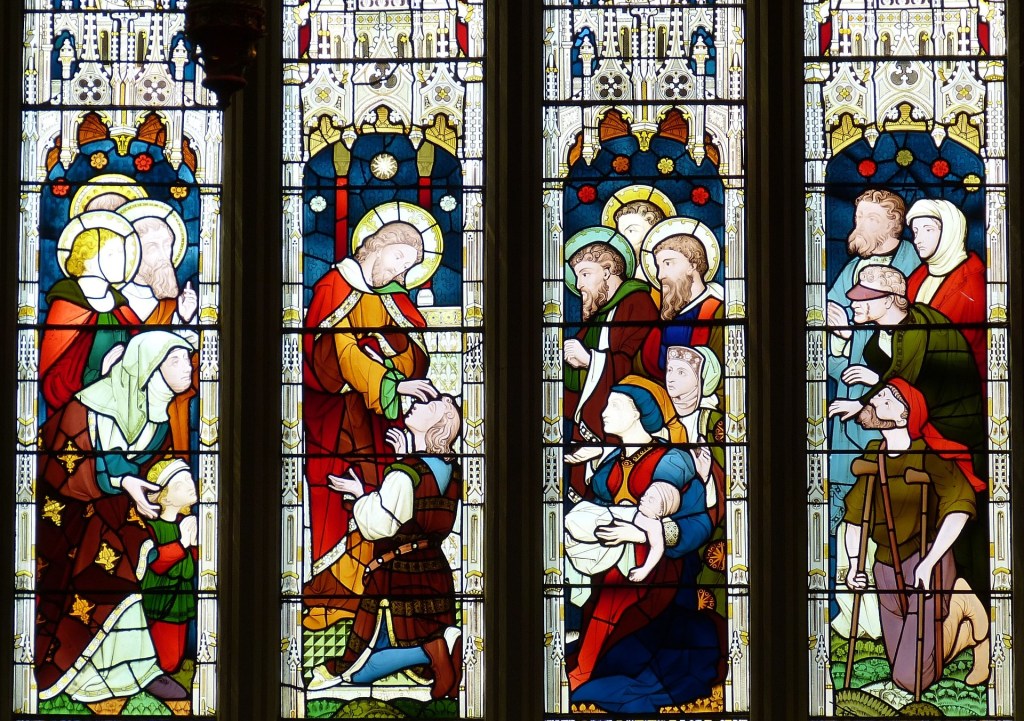
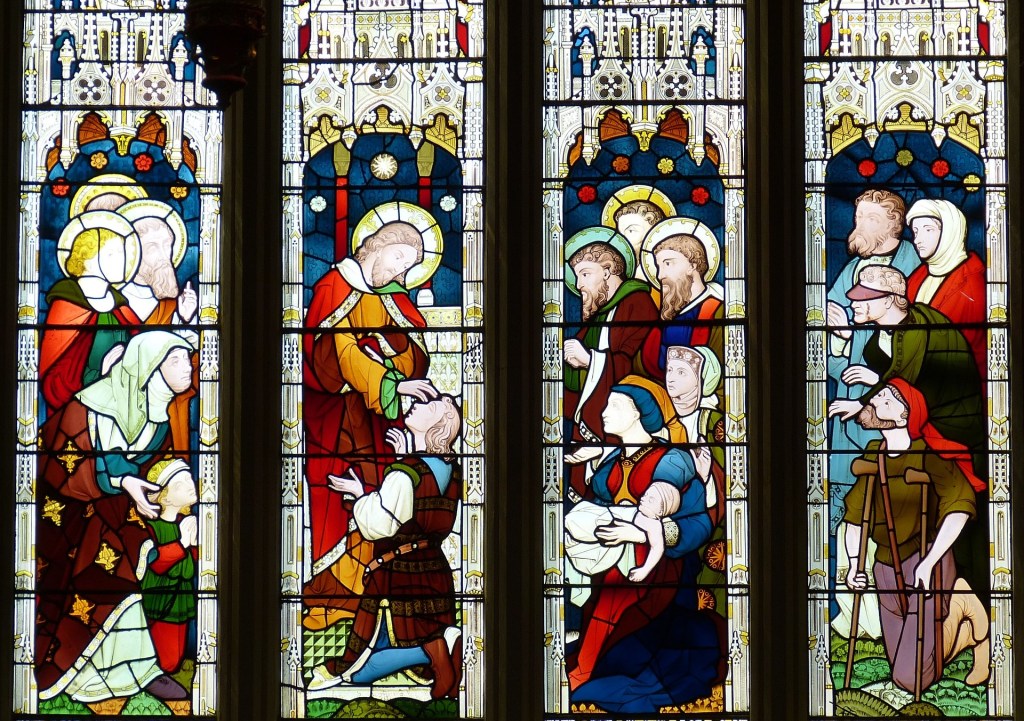
Soon afterwards, Jesus went to a town called Nain, and his disciples and a large crowd went along with him. As he approached the town gate, a dead person was being carried out – the only son of his mother, and she was a widow. And a large crowd from the town was with her. When the Lord saw her, his heart went out to her and he said, ‘Don’t cry.’

Then he went up and touched the bier they were carrying him on, and the bearers stood still. He said, ‘Young man, I say to you, get up!’ The dead man sat up and began to talk, and Jesus gave him back to his mother.

They were all filled with awe and praised God. ‘A great prophet has appeared among us,’ they said. ‘God has come to help his people.’ This news about Jesus spread throughout Judea and the surrounding country.

*       *       *

What is this story about? It’s about Jesus bringing life. He literally raised a young man to life.

I find myself wondering, “Was he really dead?”. I’m not leaping up and down going, “Gosh, wow!” And yet I believe that God heals, and has the power to raise from the dead. The numerous onlookers were filled with awe and praised God. Why aren’t I?

In part, I suppose, it’s because this event was a very long time ago. The young man was raised from the dead, and we hear no more of him. Presumably he will have lived out a normal life in Palestine and died again in due course, many, many years ago.

Maybe in part it’s because I live after the resurrection of Jesus. Doctrine teaches me that there is an eternal life of the spirit that is more significant than this mortal life. The raising of the widow’s son was very important for her, but in the greater scheme of things it had little more significance than a dramatic sign that authenticated Jesus’ ministry.

But, actually, I think I am fighting against a truth here, a truth that could help me grow spiritually. This narrative, as well as being a true story, is probably a parable for the way that Jesus brings new life.

The widow’s son had to die before Jesus could raise him to life.

Jesus brings new life, but I have to be prepared to die to gain it. I believe that I have eternal life; I trust Jesus to take care of me.  But I think he’s calling me to experience more of that life here and now.

There are two other things I feel called to write.

The first is that the widow didn’t ask Jesus to heal her son; she just wept. Jesus was moved by pity, and he restored the son, giving back to the woman both the emotional comfort of her family and her social identity. Although we often hear Jesus looking for faith in those he heals, in this instance he didn’t; he just restored the widow’s son. It was an act of pure compassion.

The second thing is that the assembled crowds said ‘God has come to help his people.’ This is what happens when God comes to help his people. The dead are raised to life. New life is poured out in abundance.

Prayer

Heavenly Father

Thank you for sending us Jesus. Thank you for the new life he brings. Please show me what parts of my life need to go if I am to follow him better.

In Jesus’ name, Amen
Luke 7: 1 – 10 The faith of the centurion

Luke 7: 1 – 10 The faith of the centurion

When Jesus had finished saying all this to the people who were listening, he entered Capernaum. There a centurion’s servant, whom his master valued highly, was ill and about to die. The centurion heard of Jesus and sent some elders of the Jews to him, asking him to come and heal his servant. When they came to Jesus, they pleaded earnestly with him, ‘This man deserves to have you do this, because he loves our nation and has built our synagogue.’ So Jesus went with them.

 He was not far from the house when the centurion sent friends to say to him: ‘Lord, don’t trouble yourself, for I do not deserve to have you come under my roof. That is why I did not even consider myself worthy to come to you. But say the word, and my servant will be healed. For I myself am a man under authority, with soldiers under me. I tell this one, “Go”, and he goes; and that one, “Come”, and he comes. I say to my servant, “Do This”, and he does it.’

When Jesus heard this, he was amazed at him, and turning to the crowd following him, he said, ‘I tell you, I have not found such great faith even in Israel.’ Then the men who had been sent returned to the house and found the servant well.

*       *       *

Both St Luke’s gospel and St Matthew’s gospel (Matthew 8: 5 – 13) contain this healing, and the two accounts are similar.

First and foremost, the incident is recorded as a lesson about faith. The centurion is a Gentile, who loves the Jewish nation, and has built the synagogue for the local Jews. He asks for Jesus to heal his servant, but says, “Don’t come to my house; just say the word, and I know my servant will be healed.” He recognises the authority of Jesus, because he himself both exercises authority and is subject to it.

His belief that Jesus need not be physically present to heal someone is remarkable. ‘Jesus was amazed at him,’ says St Luke, before concluding with “turning to the crowd following him, he said, ‘I tell you, I have not found such great faith even in Israel.’ Then the men who had been sent returned to the house and found the servant well.”

St Matthew ends his account like this: “When Jesus heard this, he was amazed and said to those following him, ‘Truly I tell you, I have not found anyone in Israel with such great faith. I say to you that many will come from the east and the west, and will take their places at the feast with Abraham, Isaac and Jacob in the kingdom of heaven. But the subjects of the kingdom will be thrown outside, into the darkness, where there will be weeping and gnashing of teeth.’ Then Jesus said to the centurion, ‘Go! Let it be done just as you believed it would.’ And his servant was healed at that moment.”

Both gospel writers are using this narrative to emphasise the legitimacy of Gentiles in the early church, by pointing out that Gentiles can show the faith in Jesus that is needed if you are to follow him.

But I think there is more to it than that. In St Luke’s gospel, this healing follows immediately after the parable of the wise and foolish builders. The key to that parable is that you must obey Jesus if you are to be secure in your faith. And what does the centurion speak of? Obedience.

The centurion is a man in a hierarchy of authority, and he recognises the authority of Jesus. A man (or woman) under authority has to be obedient. When we submit to the authority of Jesus, we must obey him. This story hammers home the message of the preceding parable; if you’re a follower of Jesus, you need to obey him.

Prayer

Heavenly Father,

Thank you for calling me to follow Jesus. Please help me to obey him.

In Jesus’ name, Amen

Luke 6: 46 – 49 The wise and foolish builders

Luke 6: 46 – 49 The wise and foolish builders

‘Why do you call me, “Lord, Lord,” and do not do what I say? As for everyone who comes to me and hears my words and puts them into practice, I will show you what they are like. They are like a man building a house, who dug down deep and laid the foundation on rock. When the flood came, the torrent struck that house but could not shake it, because it was well built. But the one who hears my words and does not put them into practice is like a man who built a house on the ground without a foundation. The moment the torrent struck that house, it collapsed and its destruction was complete.’

*       *       *

This story has a very simple meaning. If your faith is to stand up to adversity, you must put Jesus’ teaching into practice in your life.

Jesus is saying that building a life of faith is a bit like building a house. You have to do all of it properly or, as soon as times get tough, the faith you thought you had will come crashing about your ears.

For a house to be secure and proof against the tempests of life, it has to have a foundation that anchors it to the bedrock. You have to work hard, digging down deep to reach the rock. You have to work hard, laying the courses of stone or brick and mortaring them into place. When you’ve finished, nobody can see the foundation but it’s there, doing its job, keeping the house safe even in stormy weather. It’s probably the single most important part of the building.

What does Jesus say is the equivalent to building the foundation? It’s doing what he says; putting his teaching into practice.

It’s clearly very important, because this parable is the conclusion of a session of teaching on how to live your life.

  • Love your enemies.
  • Do good to those who hate you.
  • Bless those who curse you.
  • Pray for those who ill-treat you.
  • If someone slaps you on one cheek, turn to them the other also.
  • If someone takes your coat, do not withhold your shirt from them.
  • Give to everyone who asks you, and if anyone takes what belongs to you, do not demand it back.
  • Do to others as you would have them do to you.
  • Do not judge, and you will not be judged.
  • Do not condemn, and you will not be condemned.
  • Forgive, and you will be forgiven.
  • Give, and it will be given to you.

There’s no getting round it. Jesus is saying that this teaching is at the heart of a life of faith. It is not an optional extra, it is essential.

Prayer

Heavenly Father

Thank you that you have given us clear teaching as to how you want us to live our lives. Please help us to put it into practice as the foundation of everything we do.

In Jesus’ name, Amen

Luke 6: 43 – 45 A tree and its fruit

Luke 6: 43 – 45 A tree and its fruit

No good tree bears bad fruit, nor does a bad tree bear good fruit. Each tree is recognised by its own fruit. People do not pick figs from thorn bushes, or grapes from briars. A good man brings good things out of the good stored up in his heart, and an evil man brings evil things out of the evil stored up in his heart. For the mouth speaks what the heart is full of.

*       *       *

If we are good, if our heart is in a right relationship with God, what we say to others will show it. Our speech will be full of love, and we will be concerned more to hear the other’s point of view than put across our own.

If, on the other hand, our heart is not in a right relationship with God, then that, too, will be obvious to others by what we say. We may be manipulative or domineering. We will be self-centred.

St Paul summed up the fruits that a Christian should display in their life. “But the fruit of the Spirit is love, joy, peace, forbearance, kindness, goodness, faithfulness, gentleness and self-control.” (Galatians 5: 22 – 23)

God wants each of us to be a good tree bearing good fruit. If we ask him to help us love him, and love our fellow humans; if we open our hearts to be obedient when he asks us to do something; if we open our eyes and really look to see what our neighbour needs, and then, as far as we can, work to supply that need; then he will be faithful and answer our prayer.

We will begin to experience the fruits of the Spirit. We will become a good tree bearing good fruit.

Prayer

Heavenly Father,

Thank you for calling me to become a good tree yielding good fruit. Thank you for your Holy Spirit, whose presence in my heart will show me what you want me to do and help me to do it.

In Jesus’ name, Amen

Luke 6: 37 – 42 Judging others

Luke 6: 37 – 42 Judging others

‘Do not judge, and you will not be judged. Do not condemn, and you will not be condemned. Forgive, and you will be forgiven. Give, and it will be given to you. A good measure, pressed down shaken together and running over, will be poured into your lap. For with the measure you use, it will be measured to you.’

He also told them this parable: ‘Can the blind lead the blind? Will they not both fall into a pit? The student is not above the teacher, but everyone who is fully trained will be like their teacher.

‘Why do you look at the speck of sawdust in your brother’s eye and pay no attention to the plank in your own eye? How can you say to your brother, “Brother, let me take the speck out of your eye,” when you yourself fail to see the plank in your own eye? You hypocrite, first take the plank out of your eye, and then you will see clearly to remove the speck from your brother’s eye.

*       *       *

“Do not judge, and you will not be judged.”

What does it mean to judge someone? The context of these verses is how we can best do God’s will in the world. Every time we judge someone, we ‘dehumanise’ them in our heart. Here’s a rather trivial example that most people will recognise.

You’re driving gently along a road, within the speed limit, when somebody shoots out of a side street. You have to brake really hard, and you narrowly avoid a collision. How do you think of that driver? Do you call them names?

They roar away, and 200 yards down the road they pull into your workplace. You follow them in, see them rushing to the entrance. You park, and go in. Lo and behold, the person who nearly caused the accident turns out to be your first appointment of the day. Do you feel positive about them? How do you think the meeting will go?

For most of us, that meeting will not go very well, because we will be thinking of the visitor as “That moron who nearly bent my car”. We have judged them on the basis of an instant’s careless driving. We have devalued their individuality. We have given them a label that makes them just a little less human. We have reduced our capacity to love them.

If we knew that the ‘moron’ is a single parent, who has struggled to find someone to take care of a sick child, and who was trying desperately to be on time for the meeting with us, we might have felt differently – but we didn’t know.

We cannot safely judge anybody, because we never know the whole story. Only God knows that.

“Do not judge, and you will not be judged.”

The judgement that we are called to avoid is judging people in this life; the judgment we escape is in the kingdom of heaven. Similarly with condemnation; if we do not condemn in this world, we will not be condemned in the kingdom of heaven. Likewise, if we forgive, we will be forgiven in the kingdom of heaven.

Why is this?

It’s to do with love.

Judgment and condemnation preclude love. They can also be intensely damaging to others.

The kingdom of heaven is all about love. Firstly, it’s God’s love for us, and then, in response to that, it’s our love for the rest of humanity. And that really does mean the whole of the rest of humanity.

These verses call on us not to judge people. They don’t say that we shouldn’t be clear about right or wrong, but the second half of today’s passage reminds us that we have to be careful to avoid judging people by our own beliefs.

It’s a very well-known story.

‘Why do you look at the speck of sawdust in your brother’s eye and pay no attention to the plank in your own eye? How can you say to your brother, “Brother, let me take the speck out of your eye,” when you yourself fail to see the plank in your own eye? You hypocrite, first take the plank out of your eye, and then you will see clearly to remove the speck from your brother’s eye.

It’s a ‘larger than life’ scene of two people, one with a plank in his eye, the other with a speck of sawdust in theirs. The one with the plank in his eye is offering to help the other person to remove the speck of dust. Obviously, he’s unlikely to be able to help.

The plank and the speck of dust represent sin. Both characters have sins. Surprise, surprise! We’re none of us perfect!

It’s a great idea to help each other overcome sin, but we can’t do it on the basis of judgment – and before we can do anything at all, we need to be in a loving relationship with the other person.

Because St Luke has juxtaposed the teaching on judgment with this parable, I think that one of the implications of this parable is that the man with a plank represents someone who judges others. Judging others, as we saw, takes away from their humanity.

The kingdom of heaven is all about love. We cannot truly love others when we judge them.

The kingdom of heaven is all about love.

Prayer

Heavenly Father

Thank you for your love for us. Thank you for the love that Jesus showed, living and dying as one of humanity. Please help me to judge less and love more.

In Jesus name, Amen

Luke 6: 27 – 36 Love for enemies

Luke 6: 27 – 36 Love for enemies

‘But to you who are listening I say: love your enemies, do good to those who hate you, bless those who curse you, pray for those who ill-treat you. If someone slaps you on one cheek, turn to them the other also. If someone takes your coat, do not withhold your shirt from them. Give to everyone who asks you, and if anyone takes what belongs to you, do not demand it back. Do to others as you would have them do to you.

If you love those who love you, what credit is that to you? Even sinners love those who love them. And if you do good to those who are good to you, What credit is that to you? Even sinners do that. And if you lend to those from whom you expect repayment, what credit is that to you? Even sinners lend to sinners, expecting to be repaid in full. But love your enemies, do good to them, and lend to them without expecting to get anything back. Then your reward will be great, and you will be children of the Most High, because he is kind to the ungrateful and wicked. Be merciful, just as your Father is merciful.’

*       *       *

“Love your enemies? You’re joking, Lord! Aren’t you?”

Silence.

“What, even that person who ‘borrowed’ hundreds of pounds and never paid it back?”

Silence.

“What about that person who tweeted all those hurtful comments about me?”

Silence.

“What about those youths who surrounded me, and called me a ‘f*****g tranny’? They frightened me, especially when they came back and shouted insults outside my home. What about them, Lord?”

Silence.

“What about that man who made me redundant? I had to leave the place I loved, and all my dear friends. That hurt, Lord.”

Silence.

“You’re serious, aren’t you?”

“Yes.”

“I’m sorry. I find it difficult.”

“I know. It is difficult. Did you expect following me to be easy?”

“No, Lord. But I don’t understand…”

“Don’t worry about not understanding. I’m calling you to love. Love all those I send to you. Love your enemies. I shall be with you.”

“Lord, I’m sorry I don’t love as much as I should. Please help me to do better. Please help me to love my enemies.”

“Penny, remember that I love your enemies. I want the best for them as well as for you. Remember above all that you are my dear daughter, and I will keep you safe for everlasting life.”

“Thank you, Father. Thank you!”

Prayer

Heavenly Father

Thank you for your love for me and for all humankind. Help me to love with your love, wanting the best for all those I meet.

In Jesus name, Amen.

Luke 6: 17 – 26 Blessings and woes

Luke 6: 17 – 26 Blessings and woes

He went down with them and stood on a level place. A large crowd of his disciples was there and a great number of people from all over Judea, from Jerusalem, and from the coastal region around Tyre and Sidon, who had come to hear him and to be healed of their diseases. Those troubled by impure spirits were cured, and the people all tried to touch him, because power was coming from him and healing them all.

Looking at his disciples, he said:

‘Blessed are you who are poor, for yours is the kingdom of God.

Blessed are you who hunger now, for you will be satisfied.

Blessed are you who weep now, for you will laugh.

Blessed are you when people hate you, when they exclude you and insult you and reject your name as evil, because of the Son of Man.

‘Rejoice in that day and leap for joy, because great is your reward in heaven. For that is how their ancestors treated the prophets.

‘But woe to you who are rich, for you have already received your comfort.

Woe to you who are well fed now, for you will go hungry.

Woe to you who laugh now, for you will mourn and weep.

Woe to you when everyone speaks well of you, for that is how their ancestors treated the false prophets.’

*       *       *

There are several things that strike me as I read the first paragraph.

The first is that preaching and teaching go hand in hand with healing. People had flocked to Jesus because, as St Luke puts it, “(they) had come to hear him and to be healed of their diseases.” Question – do we see this link between teaching and healing today?

The second thing is the abundance of power. The power flowing from Jesus was so great that people were trying to touch him. A single touch was enough to heal them. This sounds as though if they didn’t touch Jesus, they weren’t healed. Now we know Jesus healed people at a distance, so why didn’t he heal all the people who had come to hear him? Was it because it was necessary for those who had been healed to be able to say for certain that it was Jesus who had healed them, and that to have touched him was the guarantee of that?

Which brings me to a third thought. Were the healings done out of compassion for the sick or so that the healed would bear witness to Jesus?

When we pray for healing, it tends to be out of our human distress. Is that why we so rarely see miraculous healings?

Moving on to the next paragraph, the blessings are fairly straightforward. The fourth blessing has a condition attached. The blessing is for those who are persecuted because they love Jesus and bear witness to him.

The first three blessings have no conditions. They are unconditional. Those who have suffered will be recompensed. The order of this world is not immutable. Those who suffer, for whatever reason, will be given consolation in heaven.

But what about the woes?

While I am not rich by the standards of the society in which I live, I’m not poor, and by comparison with most of the world I guess you could say I’m rich. I’m well fed. I have enjoyed much happiness in my life.

Woe to me?

I certainly take this as a warning.

Perhaps these are the key verses:

  • Blessed are you when people hate you, when they exclude you and insult you and reject your name as evil, because of the Son of Man. ‘Rejoice in that day and leap for joy, because great is your reward in heaven. For that is how their ancestors treated the prophets. (verses 22 – 23)
  • Woe to you when everyone speaks well of you, for that is how their ancestors treated the false prophets.’ (verse 26)

The prophets about whom Jesus spoke approvingly were men like Amos, who pointed out the great injustice and exploitation that went on in Israel. They called the nation to repentance, pointing out that disaster would follow unless the nation changed its ways.

The false prophets were men like Amaziah, the priest of Bethel, who denounced Amos saying that he was raising a conspiracy in the very heart of Israel. Amaziah had Amos expelled from Israel back to Judah in an attempt to silence him.

Jesus is telling us that the prophets were right. We cannot run a society based on greed, dishonesty and exploitation. However, note that he is not saying that enjoying good things is wrong in itself. Look, for example, at the wedding at Cana in Galilee (John 2:1 – 11) or the banquet prepared for Jesus by Levi (Luke 5: 29).

I think that as a Christian, I need to be aware of the injustices that are built in to the world, and to speak out against them. I need to live my life in line with God’s values. Probably I should be far more generous in supporting the poor. After all, why should I eat my fill every day when so many go hungry?

I find this hard teaching…

Prayer

Heavenly Father

Thank you for the blessings I have enjoyed. Please help me to be more generous to those in need. Help me to be more effective in advocacy of the poor and exploited.

In Jesus name, Amen.

Luke 6: 12 – 16 The twelve apostles

Luke 6: 12 – 16 The twelve apostles

One of those days Jesus went out to a mountainside to pray, and spent the night praying to God. When morning came, he called his disciples to him and chose twelve of them, whom he also designated apostles: Simon (whom he named Peter), his brother Andrew, James, John, Philip, Bartholomew, Matthew, Thomas, James son of Alphaeus, Simon who was called the Zealot, Judas son of James, and Judas Iscariot, who became a traitor.

Peter (Cephas, Simon)

Son of Jonah. We know he was married because Jesus healed his mother in law when she had a high fever (Luke 4: 38 – 39). Peter was one of inner circle with James and John the sons of Zebedee. He was the first to recognise Jesus as Messiah. After Jesus was arrested and was on trial for his life, Peter denied that he knew Jesus. After Jesus’ resurrection and Pentecost, Peter became a pillar of church leadership. He went to Rome to proclaim the good news of Jesus.

He was martyred under Nero. Crucified upside down. RC tradition makes him the first pope. Preached at Pentecost. Convinced the early church that Gentiles were ok after a vision. Raised Dorcas from the dead.

Andrew

Peter’s brother. The name Andrew is Greek and Andrew has no alternative Hebrew/Aramaic name, which argues an element of cultural openness in his family. He was born in Bethsaida in Galilee, which was quite Hellenized. Brought Peter to Jesus (John 1: 35 – 42). Brought the boy with the loaves and fishes to Jesus (John 6: 8). When some Greeks asked Philip if they could see Jesus, Philip asked Andrew who then asked Jesus. Andrew made numerous missionary journeys, travelling literally to the ends of the Roman world.

James the Greater

‘Greater’ here refers either to height or age rather than to importance. One of the two sons of Zebedee, the other being John. Witnessed the transfiguration. He was martyred by beheading in AD 44 on the order of King Herod (Acts 12: 1 – 2).

John the Apostle

A son of Zebedee, and held by tradition to be the youngest of the Apostles. He was a disciple of John the Baptist, before John pointed him to Jesus, and he became one of the first of Jesus’ disciples. He witnessed the raising of Jairus’ daughter, the transfiguration, he was sent ahead with Peter to make preparations for the Last Supper. He probably wrote St John’s gospel and the first letter of St John, but probably not the second and third letters or Revelation. He is believed to have died of natural causes.

Philip

Most of what we know about Philip is from St John’s gospel. He was from Bethsaida and was one of Jesus first disciples. As soon as he had been recruited, he went to Nathanael and told him about Jesus. He was approached by Greek pilgrims with a request to see Jesus. This, together with his Greek name, suggests that he was familiar with Greek culture and may have spoken some Greek.

Note that Philip the Apostle is not to be confused with St Philip the Evangelist, who is mentioned extensively in Acts!

Bartholomew

Little is recorded about this saint. He may be the same person as Nathanael.

Matthew

Matthew (or Levi) was born in Galilee, the son of Alpheus. He was originally a tax collector, and, as such, would have been literate in both Aramaic and Greek. Jesus called Matthew to follow him, which he did without hesitation. The book of Acts records that Matthew was present at the ascension of Jesus into heaven (Acts 1: 13).

It isn’t certain whether Matthew’s gospel was written by Matthew the Apostle. The gospel does not state the author. Early tradition says that Matthew wrote it, but modern scholars doubt this.

Thomas

Thomas (also known as Didymus; both names mean “Twin”) is best remembered for doubting the resurrection of Jesus until he had seen and touched his wounds. When Jesus appeared to Thomas, though, he believed immediately. But alongside his scepticism, Thomas was also a brave man. In John’s gospel, after Lazarus has died, Jesus told the disciples that he was going to Judea, a horribly dangerous act because he’d only just avoided being stoned there. Thomas’s response was “Let us also go that we may die with him.” (John 11: 16)

After the resurrection and Pentecost, Thomas travelled widely to tell the world about Jesus. He travelled to India (to Kerala), and probably visited China as well.

James the Less

James the Less was also known as James the Just, or James, the brother of the Lord. It is quite likely that he was the son of Alphaeus and Mary Clopas, and a cousin of Jesus. He played a prominent role in the early church in Jerusalem. He’s mentioned as a pillar of the early church by St Paul in his letter to the Galatians. He played the decisive role in the council at Jerusalem that pronounced that Gentiles didn’t need to be circumcised.

Simon the Zealot

The least known apostle. There is very little written about him that isn’t scholarly speculation, and I’m not qualified either to add to that or to assess it! However, it is likely that he was not a member of the Zealots; the name almost certainly refers to his zeal for the law rather than his political inclination.

Jude, son of James

Again, a little-known apostle. He was probably the writer of the Epistle that bears his name.

Judas Iscariot

The man who betrayed Jesus to his death.

Prayer

Heavenly Father

Thank you for the apostles you sent to tell us about Jesus. Because of them we have a written record of the life and ministry of Jesus, and a worshipping church in which we can grow as Christians. Thank you.

In Jesus’ name, Amen

Luke 6: 1 – 11 Jesus is Lord of the Sabbath

Luke 6: 1 – 11 Jesus is Lord of the Sabbath

One Sabbath Jesus was going through the cornfields, and his disciples began to pick some ears of corn, rub them in their hands and eat the grain. Some of the Pharisees asked, ‘Why are you doing what is unlawful on the Sabbath?’

Jesus answered them, ‘Have you never read what David did when he and his companions were hungry? He entered the house of God, and taking the consecrated bread, he ate what is lawful only for priests to eat. And he also gave some to his companions.’ Then Jesus said to them, ‘The Son of Man is Lord of the Sabbath.’

On another Sabbath he went into the synagogue and was teaching, and a man was there whose right hand was shrivelled. The Pharisees and the teachers of the law were looking for a reason to accuse Jesus, so they watched him closely to see if he would heal on the Sabbath. But Jesus knew what they were thinking and said to the man with the shrivelled hand, ‘Get up and stand in front of everyone.’ So he got up and stood there.

Then Jesus said to them, ‘I ask you, which is lawful on the Sabbath: to do good or to do evil, to save life or to destroy it?’

He looked round at them all, and then said to the man, ‘Stretch out your hand.’ He did so, and his hand was completely restored. But the Pharisees and the teachers of the law were furious and began to discuss with one another what they might do to Jesus.

*       *       *

In these verses, St Luke puts together two stories of Jesus breaking the Sabbath. I’m going to consider the second story first.

On another Sabbath he went into the synagogue and was teaching, and a man was there whose right hand was shrivelled. The Pharisees and the teachers of the law were looking for a reason to accuse Jesus, so they watched him closely to see if he would heal on the Sabbath.

To break the Sabbath was not trivial. It was one of the ten commandments that underpinned the whole Jewish Law.

But Jesus knew what they were thinking and said to the man with the shrivelled hand, ‘Get up and stand in front of everyone.’ So he got up and stood there.

Jesus made this healing a direct confrontation with the Pharisees and the teachers of the law. He made it publicly very clear that he intended to heal the man.

Then Jesus said to them, ‘I ask you, which is lawful on the Sabbath: to do good or to do evil, to save life or to destroy it?’

The question he is posing to the Pharisees is, ‘I ask you, which is lawful on the Sabbath (or any other day): to do good or to do evil, to save life or to destroy it?’

The implication of his words is, ‘What is it about the Sabbath that changes our understanding of right and wrong?” The Pharisees could give no answer, and Jesus healed the man, then and there.

Couldn’t Jesus have waited twenty four hours and healed the man in compliance with the Law? I expect he could, and so breaking the Sabbath was deliberate. It can only have been to teach a lesson.

The healings that Jesus performed were signs. They were one of the ways in which his ministry was validated by God the Father. Linking the healing and the Sabbath breaking was a way of demonstrating that God approved of Jesus’ teaching that doing good on he Sabbath was still good even when it formally broke the Sabbath law.

The first story, in which Jesus’ disciples pluck and eat corn on the Sabbath is more problematical. The story of David and his men eating consecrated bread (1 Samuel 21: 1 – 6) hardly seems analogous to the casual actions of Jesus’ disciples. David was fleeing Saul. He needed food and the consecrated bread was all that was available. The disciples just look careless.

And yet, Jesus pins his authority on it: ‘The Son of Man is Lord of the Sabbath.’

I think that the first story needs to be read in the context of the second story. It seems to be saying that Jesus has authority to ‘break the rules’. That poses the question, ‘When do we have the authority to ‘break the rules’, and I think the only answer to that is that we can do it when we are sure that it’s God the Father’s will.

Which has two great big messages for me. First of all, I shall have to take the Sabbath more seriously. Secondly, I really need to practice opening my heart to God’s voice, and listening with obedience.

Prayer

Heavenly Father

Thank you for your love, and the way you guide me. Please help me to learn the lessons that you are teaching me.

In Jesus name, Amen

Luke 5: 33 – 39 Jesus questioned about fasting

Luke 5: 33 – 39 Jesus questioned about fasting

They said to him, ‘John’s disciples often fast and pray, and so do the disciples of the Pharisees, but yours go on eating and drinking.’

Jesus answered, ‘Can you make the friends of the bridegroom fast while he is with them? But the time will come when the bridegroom will be taken from them; in those days they will fast.’

He told them this parable: ‘No one tears a piece out of a new garment to patch an old one. Otherwise, they will have torn the new garment, and the patch from the new will not match the old. And no one pours new wine into old wineskins. Otherwise the new wine will burst the skins; the wine will run out and the wineskins will be ruined. No, new wine must be poured into new wineskins. And no one after drinking old wine wants the new, for they say, “The old is better.” ‘

*       *       *

The first part of this passage seems straightforward enough. The presence of Jesus on earth is a great cause for joy. Just like a wedding, it promises a new start, leading on to new life. When the bridegroom is with his friends, it would be unreasonable to expect them to fast.

The next part of the passage, though, where Jesus tells two parables, gave me real problems.

The ‘traditional’ interpretation that I had been taught was that the new garment and the new wine represented the new religion of Christianity, full of the tumultuous life of the Holy Spirit. If you tried to graft bits of this new faith onto the old faith of Judaism both would be spoiled beyond repair.

You don’t have to look too hard to see that the metaphors are back-to-front. The Pharisees are suggesting that fasting is necessary. That’s a patch from the old garment of Judaism, not from the new faith of Christianity. And what about verse 39 which says ‘And no one after drinking old wine wants the new, for they say, “The old is better.” ’? That amounts to saying that Judaism will be preferred.

When you look deeper, it makes even less sense. Jesus wasn’t preaching a new religion; he was solidly grounded in Judaism. St Luke, although he was taking the gospel to the Gentiles, wasn’t setting out to found a new church. On the contrary, the early church was very Jewish in its teaching. Even after Pentecost the believers persisted with temple worship at the heart of their lives (see, for example, Acts 2:46 and Acts 3:1)

I couldn’t understand why Jesus chose those particular metaphors to rebut the Pharisees.

Well, as I’ve said before, this blog is a record of how Jesus has been leading me to be closer to him.

I prayed and asked him what the passage meant, and he led me to this website.

https://www.bethimmanuel.org/articles/new-wine-and-old-wineskins-parable-luke-536-39-re-examined

To understand it properly, I suggest you read the whole article; it’s well worth it.

The wider context of the passage in Luke is that the Pharisees are very interested in the ministry of Jesus. At this point, they are not necessarily antagonistic. Luke 5:17 says: “One day Jesus was teaching, and Pharisees and teachers of the law were sitting there. They had come from every village in Galilee and from Judea and Jerusalem.” Some of those places were 100 miles apart. They had a deep desire to understand what this new teacher was saying.

But for all their effort and persistence, Jesus was not recruiting any of them as disciples. He was choosing fishermen and tax collectors, people whose knowledge of the law and the scriptures was elementary. They would have learned the scripture by rote, but would have learned little in the way of sophisticated exposition of its meaning.

And, on the occasion of the banquet given by Levi, the Pharisees express their feelings by questioning why Jesus’ disciples don’t fast. They’re interested in having an answer, sure, but what they’re really asking is, “Why are you overlooking us, with our education and our experience in understanding the Law and the Prophets? Why are you choosing the unlearned and sinners?”

It was these Pharisees and teachers to whom Jesus told the parables, and they are parables about people. The old garment is a man who has been trained in the old way of thinking about the scriptures. He will not be receptive to new teaching. The old wineskin is a man who has been thoroughly schooled in the old understanding. He will be forever questioning and contradicting the new ideas, because, “no one after drinking old wine wants the new, for they say, “The old is better.””

There is a lesson especially for me in this. Jesus can speak to me through anybody at all, whether they are highly educated or with very little learning. The truth about Jesus may be passed on by anybody who loves him. I must listen with an open heart.

Prayer

Heavenly Father

Thank you for guidance, thank for helping me to understand your word, and thank you for reminding me of the need for humility. Thank you, above all, for your love shown in Jesus.

In Jesus’ name, Amen