Luke 15: 1 – 10 The parables of the lost sheep and the lost coin

Luke 15: 1 – 10 The parables of the lost sheep and the lost coin

Now the tax collectors and sinners were all gathering round to hear Jesus. But the Pharisees and the teachers of the law muttered, ‘This man welcomes sinners, and eats with them.’

Then Jesus told them this parable: ‘Suppose one of you has a hundred sheep and loses one of them. Doesn’t he leave the ninety-nine in the open country and go after the lost sheep until he finds it? And when he finds it, he joyfully puts it on his shoulders and goes home. Then he calls his friends and neighbours together and says, “Rejoice with me; I have found my lost sheep.” I tell you that in the same way there will be more rejoicing in heaven over one sinner who repents than over ninety-nine righteous people who do not need to repent.

‘Or suppose a woman has ten silver coins and loses one. Doesn’t she light a lamp, sweep the house and search carefully until she finds it? And when she finds it, she calls her friends and neighbours together and says, “Rejoice with me; I have found my lost coin.” In the same way, I tell you, there is rejoicing in the presence of the angels of God over one sinner who repents.’

*       *       *

St Luke describes tax collectors and sinners gathering round to hear Jesus. Perhaps surprisingly, it is the Pharisees and teachers of the law who witness to the character of Jesus, because St Luke tells us that they muttered ‘This man welcomes sinners, and eats with them.’

An orthodox Jew would have avoided sinners, so as not to be made ritually unclean. Jesus, by contrast, welcomes them and socialises with them. No wonder they gathered round him!

We’re not told here whether they accept Jesus’ teaching; I don’t expect many of them did. But that’s not the point; the point is that at least some of them repented.

Hearing the mutterings of the Pharisees and teachers of the law, Jesus tells two little stories. They’re very simple, but they say something very profound.

In the first, a man loses a sheep. Leaving the rest of his flock to take care of themselves, he hunts for the lost sheep until he finds it. He finds it, carries it back home and rejoices publicly that the sheep is safe home again.

In the second, a woman loses a silver coin. She stops what she’s doing, and uses every effort to find the lost coin, sweeping out the house, and lighting a lamp to see into dark corners and recesses. And when she finds it, she publicly rejoices.

Jesus likens a sinful human to the lost coin or the lost sheep. The one lost is just one out of a large number who aren’t lost – one out of a hundred sheep; one out of ten coins. When God finds them and brings them home, heaven rejoices.

Now, these parables were told in response to mutterings of the Pharisees and teachers of the law, and there is a temptation to view them as a swipe at hypocrisy. Verse 7 says ‘I tell you that in the same way there will be more rejoicing in heaven over one sinner who repents than over ninety-nine righteous people who do not need to repent.’ Do we think that the ninety-nine righteous people are hypocrites?

I, personally, don’t think so. The message of Jesus here is about inclusion, not exclusion. These two parables are about why Jesus is spending time with sinners, not about hypocrisy. Once we have repented and committed ourselves to following Jesus, we’re righteous. Heaven rejoiced over us when we repented and became Christians; now it’s someone else’s turn! That is not to say that we are without recognition or reward, for what could be better than to be a part of the kingdom of God?

The core message of these two short tales is to tell us Jesus’ priority; it is to bring sinners into the kingdom of God.

We are called to imitate Jesus. Where is saving sinners on our list of priorities?

The church is the Body of Christ. How active is our church in bringing sinners into the kingdom of God?

Prayer

Heavenly Father

Thank you for Jesus, for his life, for his ministry, for his death and for his resurrection. Thank you for calling us to continue his work. Please strengthen our faith and our desire to serve you day by day.

In Jesus’ name, Amen

Luke 14: 25 – 35 The cost of being a disciple

Luke 14: 25 – 35 The cost of being a disciple

Large crowds were travelling with Jesus, and turning to them he said, ‘If anyone comes to me and does not hate his father and mother, wife and children, brothers and sisters – yes, even their own life – such a person cannot be my disciple. And whoever does not carry their cross and follow me cannot be my disciple.

‘Suppose one of you wants to build a tower. Won’t you first sit down and estimate the cost to see if you have enough money to complete it? For if you lay the foundation and are not able to finish it, everyone who sees it will ridicule you, saying, “This person began to build and wasn’t able to finish.”

‘Or suppose a king is about to go to war with another king. Won’t he first sit down and consider whether he is able with ten thousand men to oppose the one coming against him with twenty thousand? If he is not able, he will send a delegation while the other is still a long way off and will ask for terms of peace. In the same way, those of you who do not give up everything you have cannot be my disciples.

‘Salt is good, but if it loses its saltiness, how can it be made salty again? It is fit neither for the soil nor for the manure heap; it is thrown out.

‘Whoever has ears to hear, let them hear.’

*       *       *

In the first paragraph, when Jesus uses the word ‘hate’ he doesn’t do so in the sense that we would mean it today. It’s a Hebrew idiom that expresses a strong preference for one thing over another. In this instance, Jesus is saying that we must consistently do his will, even if it is in conflict with the wishes or needs of family members. If you don’t obey Jesus, you are making something else your god.

Indeed, he goes further. A disciple has to ‘hate’ their own life. In fact, “Whoever does not carry their cross and follow me cannot be my disciple”. To be a disciple, you have to be prepared to give up everything, even life itself.

Of course, most of us are not called to be martyrs – although even today some people do suffer martyrdom for Jesus. But the point is that to follow Jesus we have to say “Yes, Lord,” to the possibility.

Paragraphs two and three are quite difficult. They refer to counting the cost of discipleship. My first thought was “It’s okay to count the cost, but what about the cost of not building the tower, or of not waging war with the hostile king?”

What is the cost of not being a disciple?

If you count your money and you can’t afford to build the tower and never start, you’re guaranteed to fail. Likewise, what are left with if you capitulate to the hostile king with the large army?

Then I realised that the tower is the kingdom of God. The kingdom of the hostile monarch is the kingdom of God. Few of us could afford to build a tower; even fewer have thousands of soldiers under their command. And none of us have enough resource to buy a place in heaven; that is God’s free gift alone.

Yesterday, in thinking about the parable of the great banquet, I wrote that we can only enter the banquet when we realise our own extreme need of spiritual salvation. Today’s teaching is the other side of the same coin. When we accept salvation, we must not allow anything to come between us and God. Nothing must be more precious than the gift of salvation.

It is the pearl of great price, for which the merchant sold everything he had. So, for me that means all my income, my savings, my dwelling, my car, must be at God’s disposal. I have them on loan from him, but he has first call.

The meaning of this passage, at least for me, has now become clear. It is warning me, ahead of time, that I must be ready to surrender everything if I am to follow Jesus.

Prayer

Heavenly Father

Thank you for calling me to follow Jesus. Thank you for warning me as to what it may cost me in human terms. Thank you for the free gift of the Holy Spirit who will help me to be obedient.

In Jesus’ name, Amen

Luke 14: 15 – 24 The parable of the great banquet

Luke 14: 15 – 24 The parable of the great banquet

When one of those at the table with him heard this, he said to Jesus, ‘Blessed is the one who will eat at the feast in the kingdom of God.’

Jesus replied: ‘A certain man was preparing a great banquet and invited many guests. At the time of the banquet he sent his servant to tell those who had been invited, “Come, for everything is now ready.”

‘But they all alike began to make excuses. The first said, “I have just bought a field and I must go and see it. Please excuse me.”

‘Another said, “I have just bought five yoke of oxen, and I’m on my way to try them out. Please excuse me.”

‘Still another said, “I have just got married, so I can’t come.”

‘The servant came back and reported this to his master. Then the owner of the house became angry and ordered his servant, “Go quickly into the streets and alleys of the town and bring in the poor, the crippled, the blind and the lame.”

‘ “Sir,” the servant said, “what you ordered has been done, but there is still room.”

‘Then the master told his servant, “Go out to the roads and country lanes and compel them to come in, so that my house will be full. I tell you, not one of those who were invited will get a taste of my banquet.” ’

*       *       *

I’ll be honest; my first thought on reading this was to wonder what was wrong with the host. Why did so many people make excuses rather than go to his banquet? I wonder, though, whether I ask that question because I don’t properly appreciate the cultural milieu in which the parable was told. Rich and influential people used to hold banquets to display their wealth, to define the social circle in which they moved and to establish bonds of social obligation. It wouldn’t necessarily be much fun attending such a function.

But, hang on a minute. Jesus is telling a parable about the heavenly banquet. That’s the best possible experience I could have, isn’t it?

Think again, Penny.

Why would anyone turn down an invitation to the heavenly banquet?

Because of a failure of imagination? Hm-hm; possibly.

Because of a failure of faith? That’s closer, I think.

Because of a failure to appreciate the reality of my spiritual state and the significance of Jesus? That feels about right.

No matter how I feel about myself, spiritually I’m actually poor, crippled, blind and lame. I need Jesus. However, it’s only when I recognise my need that I can recognise God’s invitation for what it is. It’s food for the starving.

This parable is saying that until we realise we are starving, we will make excuses for not accepting God’s gift. It’s oh-so-easy to be like the Pharisees present when Jesus told this parable. There are many things that can distract us.

But God is offering his invitation now. It’s free. There’s nothing I can bring. I can’t offer anything in exchange; indeed, I daren’t offer anything, for to do so would be to try to purchase the most generous free gift ever given.

All I can do is say, “Thank you, Lord. I accept your invitation.”

My heart, my life, is yours.

Prayer

Heavenly Father

Thank you for your free gift of salvation. Thank you for Jesus.

Lord Jesus, please help me to feel you close to me every day.

In Jesus’ name, Amen

Luke 14: 1 – 14 Jesus at a Pharisee’s house

Luke 14: 1 – 14 Jesus at a Pharisee’s house

One Sabbath, when Jesus went to eat in the house of a prominent Pharisee, he was being carefully watched. There in front of him was a man suffering from abnormal swelling of his body. Jesus asked the Pharisees and experts in the law, ‘Is it lawful to heal on the Sabbath or not?’ But they remained silent. So taking hold of the man, he healed him and sent him on his way.

Then he asked them, ‘If one of you has a child or an ox that falls into the well on a Sabbath day, will you not immediately pull it out?’ And they had nothing to say.

When he noticed how the guests picked the places of honour at the table, he told them this parable: ‘When someone invites you to a wedding feast, do not take the place of honour, for a person more distinguished than you may have been invited. If so, the host who invited both of you will come and say to you, “Give this person your seat.” Then, humiliated, you will have to take the least important place. But when you are invited, take the lowest place, so that when your host comes, he will say to you, “Friend, move up to a better place.” Then you will be honoured in the presence of all the other guests. For all those who exalt themselves will be humbled, and those who humble themselves will be exalted.’

Then Jesus said to his host, ‘When you give a luncheon or dinner, do not invite your friends, your brothers or sisters, your relatives, or your rich neighbours; if you do, they may invite you back and so you will be repaid. But when you give a banquet, invite the poor, the crippled, the lame, the blind, and you will be blessed. Although they cannot repay you, you will be repaid at the resurrection of the righteous.’

*       *       *

Jesus re-affirms his argument for healing on the Sabbath day. Healing is urgent; you wouldn’t leave your child or your ox down a well until sunset even to keep the Sabbath.

Jesus then tells a parable that emphasises the need for humility. When you enter the kingdom of God, take the lowest place and wait for your host, God the Father, to place you in a suitable position. The superficial meaning of this parable is that judgment of the self-important will be humiliation when they realise they’re not so significant after all. But I think as well that it’s a lead-in to the next piece of teaching.

Jesus says, “Don’t plan your social functions just with those whose patronage can help you. There is no merit in just entertaining those who can respond in kind. Instead, invite those who can’t return your hospitality because they have nothing, neither money nor status.”

You could read this as a general call to charity towards the least well-off, and that’s certainly part of it. However, I think it goes well beyond that. I think Jesus is speaking pretty much literally. We need, for our soul’s sake, to socialise with those who have nothing, those who are social outcasts. If we don’t, we risk losing our compassion, for how will we know what they are suffering if we don’t know them face to face? How will we know how best to help them unless we’ve heard their story?

And that’s where the previous parable hits home. We all need to enter the kingdom of God with humility. The task of feeding and befriending those who have little or nothing requires us to be humble, and to accept a menial role. It requires us to mix with those we may feel are beneath us – and we must open our hearts until we realise that to God, each one of us is precious. How dare we belittle anybody, when to God we are all precious?

This seems to me to be important, and it’s something at which I fail. I must give it serious thought and work out how I can do better. That’s a pretty feeble resolution but it’s the best I can manage right now. I’m sorry.

Prayer

Heavenly Father

I’m sorry that I haven’t done your will and made friends with the poor, the crippled, the lame and the blind. Please help me to do better.

In Jesus name, Amen

Luke 13: 31 – 35 Jesus’ sorrow for Jerusalem

Luke 13: 31 – 35 Jesus’ sorrow for Jerusalem

At that time some Pharisees came to Jesus and said to him, ‘Leave this place and go somewhere else. Herod wants to kill you.’

He replied, ‘Go and tell that fox, “I will keep on driving out demons and healing people today and tomorrow, and on the third day I will reach my goal.” In any case, I must press on today and tomorrow and the next day – for surely no prophet can die outside Jerusalem!

‘Jerusalem, Jerusalem, you who kill the prophets and stone those sent to you, how often I have longed to gather your children together, as a hen gathers her chicks under her wings, and you were not willing. Look, your house is left to you desolate. I tell you, you will not see me again until you say, “Blessed is he who comes in the name of the Lord.”’

*       *       *

How interesting! Some Pharisees came to Jesus to warn him that Herod wanted to kill him. I wonder who they were, and why they warned him? Whoever they were, they didn’t want Jesus to suffer the same fate as John the Baptist, killed in an extra-judicial execution.

In fact, Jesus’ teaching is not very far from the teaching of the Pharisees. The expert in the law whose question to Jesus prompted the parable of the good Samaritan answered correctly.

‘Teacher,’ he asked, ‘what must I do to inherit eternal life?’

‘What is written in the Law?’ he replied. ‘How do you read it?’

He answered, ‘ “Love the Lord your God with all your heart and with all your soul and with all your strength and with all your mind”; and, “Love your neighbour as yourself.” ‘

‘You have answered correctly,’ Jesus replied. ‘Do this and you will live.’ (Luke 10: 25 – 28)

What was distinctively different about Jesus teaching?

Firstly, he taught that he, himself, was the only way to reach God the Father.

Jesus answered, ‘I am the way and the truth and the life. No one comes to the Father except through me. (John 14:6)

Secondly, his emphasis was on the mercy and forgiveness of God rather than rigid adherence to the Mosaic law.

‘Be merciful, just as your Father is merciful.’ (Luke 6:36)

Thirdly, he placed much more emphasis on practical works of love than on adherence to the Mosaic law, even to the extent of routinely and intentionally breaking the Sabbath.

On a Sabbath Jesus was teaching in one of the synagogues, and a woman was there who had been crippled by a spirit for eighteen years. She was bent over and could not straighten up at all. When Jesus saw her, he called her forward and said to her, ‘Woman, you are set free from your infirmity.’ Then he put his hands on her, and immediately she straightened up and praised God.

Indignant because Jesus had healed on the Sabbath, the synagogue leader said to the people, ‘There are six days for work. So come and be healed on those days, not on the Sabbath.  (Luke 13: 10 – 14)

But the biggest thing that showed the difference between Jesus and the Pharisees was his zeal and determination. In today’s passage we see Jesus being warned of the evil intent of Herod. He’s told that Herod wants to murder him.

Does Jesus flee? Does he go into hiding? Does he make his message more palatable for the authorities?

No.

Jesus tells those who had warned him, to return to Herod, and tell him that he will continue casting out demons and healing. He will go to Jerusalem where he knows he will be put to death. God’s message to the world is so important that Jesus yields everything to deliver it.

Is my zeal like Jesus?

Or am I a Pharisee?

Prayer

Heavenly Father

Thank you for the life and example of Jesus. Please help me to be more like Jesus and less like the Pharisees. Help me to yield to your will for me.

In Jesus’ name, Amen

Luke 13: 22 – 30 The narrow door


Normal 0 false false false EN-GB X-NONE X-NONE


Then Jesus went through the towns and villages, teaching as he made his way to Jerusalem. Someone asked him, ‘Lord, are only a few people going to be saved?’

/* Style Definitions */ table.MsoNormalTable {mso-style-name:”Table Normal”; mso-tstyle-rowband-size:0; mso-tstyle-colband-size:0; mso-style-noshow:yes; mso-style-priority:99; mso-style-parent:””; mso-padding-alt:0cm 5.4pt 0cm 5.4pt; mso-para-margin-top:0cm; mso-para-margin-right:0cm; mso-para-margin-bottom:8.0pt; mso-para-margin-left:0cm; line-height:107%; mso-pagination:widow-orphan; font-size:11.0pt; font-family:”Arial”,sans-serif; mso-fareast-language:EN-US;}

He said to them, ‘Make every effort to enter through the narrow door, because many, I tell you, will try to enter and will not be able to. Once the owner of the house gets up and closes the door, you will stand outside knocking and pleading, “Sir, open the door for us.”

‘But he will answer, “I don’t know you or where you come from.”

‘Then you will say, “We ate and drank with you, and you taught in our streets.”

‘But he will reply, “I don’t know you or where you come from. Away from me, all you evildoers!”

‘There will be wailing there, and gnashing of teeth, when you see Abraham, Isaac and Jacob and all the prophets in the kingdom of God, but you yourselves thrown out. People will come from east and west and north and south, and will take their places at the feast in the kingdom of God. Indeed there are those who are last who will be first, and first who will be last.’

*       *       *

Jesus is somewhere between Galilee and Judea, and is teaching in one of the towns or villages. One of the crowd asks, ‘Lord, are only a few people going to be saved?’ The person asking the question would have been a follower of the Mosaic law, and a descendant of Abraham. He would have considered himself righteous by virtue of the covenant between God and Abraham. To him, the Gentiles were unclean.

What does he mean by his question?

Perhaps he is implying that Abraham’s descendants will be saved while the Gentiles are not. Or perhaps he is remembering the way Israel was often reduced to a remnant of the righteous.

In his answer, Jesus says, ‘People will come from east and west and north and south, and will take their places at the feast in the kingdom of God. Indeed there are those who are last who will be first, and first who will be last.’ Some of God’s chosen people, the Jews, will not enter the kingdom, while Gentiles – those from the east and west and north and south – will be saved.

More importantly, though, Jesus, reframes the question, saying ‘Make every effort to enter through the narrow door, because many, I tell you, will try to enter and will not be able to.’

Jesus is the narrow door. We can only come to the Father by way of Jesus. In this passage Jesus seems to say that a considerable number of people will be excluded from the kingdom of heaven. That’s a concept that I find very difficult to accept. Are we not all made in the image of God? I would not be able to shut out my children from my family whatever they had done. How could a loving God bear to do that? And, indeed the parable of the prodigal son seems to suggest that he will not do so.

Whether judgment and permanent exclusion from God’s presence happens or not, the mere possibility makes our response to Jesus urgent. Are we for or against? Do we take up our cross and follow him, or follow our own perceived self-interest?

I have chosen to follow Jesus. I want to know him better and experience his presence more closely. What do I have to do?

Well, I have Jesus’ own teaching on that. One of the clearest passages of teaching is the parable of the Good Samaritan, which starts with the question ‘What must I do to inherit eternal life?’

On one occasion an expert in the law stood up to test Jesus. ‘Teacher,’ he asked, ‘what must I do to inherit eternal life?’

‘What is written in the Law?’ he replied. ‘How do you read it?’

He answered, ‘ “Love the Lord your God with all your heart and with all your soul and with all your strength and with all your mind”; and, “Love your neighbour as yourself.” ‘

‘You have answered correctly,’ Jesus replied. ‘Do this and you will live.’

But he wanted to justify himself, so he asked Jesus, ‘And who is my neighbour?’

In reply Jesus said: ‘A man was going down from Jerusalem to Jericho, when he was attacked by robbers. They stripped him of his clothes, beat him and went away, leaving him half-dead. A priest happened to be going down the same road, and when he saw the man, he passed by on the other side. So too, a Levite, when he came to the place and saw him, passed by on the other side. But a Samaritan, as he travelled came where the man was; and when he saw him, he took pity on him. He went to him and bandaged his wounds, pouring on oil and wine. Then he put the man on his own donkey, brought him to an inn and took care of him. The next day he took out two denarii and gave them to the inn-keeper. “Look after him,” he said “and when I return, I will reimburse you for any extra expense you may have.”

‘Which of these three do you think was a neighbour to the man who fell into the hands of robbers?’

The expert in the law replied, ‘The one who had mercy on him.’

Jesus told him, ‘Go and do likewise.’  

Today’s passage, the narrow door, is saying once again that we must follow Jesus. While we cannot earn a place in the kingdom of heaven – that is a free gift from God – if we believe in Jesus and follow him, we will want to know him better and we will want to obey him. Our obedience is the touchstone of our faith.

Prayer

Heavenly Father

Thank you for Jesus. Please help me to long to know Jesus better, and to obey him more consistently.

In Jesus name, Amen


Today’s passage, the narrow door, is saying once again that we must follow
Jesus. While we cannot earn a place in the kingdom of heaven – that is a free
gift from God – if we believe in Jesus and follow him, we will want to know him
better and we will want to obey him. Our obedience is the touchstone of our
faith.

Prayer

Heavenly Father

Thank you for Jesus. Please help me to long to know Jesus better, and
to obey him more consistently.

In Jesus name, Amen


Luke 13: 18 – 21 The parables of the mustard seed and the yeast

Luke 13: 18 – 21 The parables of the mustard seed and the yeast

Then Jesus asked, ‘What is the kingdom of God like? What shall I compare it to? It is like a mustard seed, which a man took and planted in his garden. It grew and became a tree, and the birds perched in its branches.’

Again he asked, ‘What shall I compare the kingdom of God to? It is like yeast that a woman took and mixed into about thirty kilograms of flour until it worked all through the dough.’

*       *       *

In the first parable, the start of the kingdom is a mustard seed – a single mustard seed that a man plants in his garden. What happens to it there?

Jesus replied, ‘Very truly I tell you, unless a grain of wheat falls to the ground and dies, it remains only a single seed. But if it dies, it produces many seeds.’ (John 12: 24)

It is the same with the mustard seed. It is buried in the ground, it ‘dies’, and then, when the spring comes, it starts to grow. Nurtured by God, it grows until it is a tree, so large that birds can sit on its branches.

We see this over and over with the Christian church, from its birth, through numerous missionary endeavours, through the reformation, through the start of the Methodist church, through the Pentecostal renewal and many others. A very small thing involving few people will grow into something mighty, glorifying God.

In the second parable, the start of the kingdom is a small quantity of yeast. The yeast would be mixed in a little water, and then this would have been mixed into the dough.

Now, thirty kilos of dough is a lot – the amount in the picture above is about one kilo. It would make more than thirty large loaves – enough to last a whole big family a week, even if bread were the main part of their diet. It’s also a lot to handle. It would take a great deal of hard work to mix so much in a single batch.

You can’t see the yeast as you’re mixing it in, but it works away, and eventually the whole batch of dough is leavened. The woman knows by experience how much mixing is needed before she splits up the dough into separate portions. Then she leaves each of the portions in a warm place for a short time and the leaven works, causing each of the portions to rise and become a loaf ready for cooking.

The main message we can take from this parable is that, just as with the yeast, we often can’t see the way God is working to bring about his kingdom. It’s hidden. It goes on below the surface through the working of his Holy Spirit.

I think these two parables were primarily told to encourage the disciples. In the dark days surrounding Jesus’ death, and in the confusion that filled them at his resurrection, these parables would remind them that God was working even when they couldn’t see him. They would remind the disciples that the kingdom of God would start small and grow to become great.

Moreover, they apply to every age, and they can encourage us too. God is there, working, even when we can’t see him. Praise Him!

Prayer

Heavenly Father

Thank you for the privilege of being part of your kingdom. Help us all to play our part in bringing it to completion.

In Jesus’ name, Amen

Luke 13: 10 – 17 Jesus heals a crippled woman on the Sabbath

Luke 13: 10 – 17 Jesus heals a crippled woman on the Sabbath

On a Sabbath Jesus was teaching in one of the synagogues, and a woman was there who had been crippled by a spirit for eighteen years. She was bent over and could not straighten up at all. When Jesus saw her, he called her forward and said to her, ‘Woman, you are set free from your infirmity.’ Then he put his hands on her, and immediately she straightened up and praised God.

Indignant because Jesus had healed on the Sabbath, the synagogue leader said to the people, ‘There are six days for work. So come and be healed on those days, not on the Sabbath.

The Lord answered him, ‘You hypocrites! Doesn’t each of you on the Sabbath untie your ox or donkey from the stall and lead it out to give it water? Then should not this woman, a daughter of Abraham, whom Satan has kept bound for eighteen long years, be set free on the Sabbath day from what bound her?’

When he said this, all his opponents were humiliated, but the people were delighted with all the wonderful things he was doing.

*       *       *

This healing miracle is an acted-out parable. Jesus plainly wants to teach something by his actions. This is a healing on the Sabbath. The chief priests and Pharisees objected to healings on the Sabbath on the grounds that healing was work, and work was forbidden on the Sabbath.

St Luke’s gospel sets this healing miracle in the context of teaching about hypocrisy, and about seizing opportunities to be saved. That suggests that the miracle, too, will illuminate our understanding of these topics.

Another clue that this miracle is designed to teach is that Jesus takes the initiative throughout. The woman doesn’t request healing, she’s just there in the congregation. Jesus recognises her need and calls her forward. He doesn’t ask whether she wants to be healed, he simply tells her she is freed from her infirmity, and lays his hands on her. The woman immediately straightens up and praises God.

The synagogue leader’s response is not what you would hope. He tells his congregation to come and get healed on a working day, not on the Sabbath. Jesus’ response is to point out that even on the Sabbath everyone unties their ox or their donkey, leads it outside and gives it water. Water is vital. Animals need it every day. Just so, making people whole is urgent, and every opportunity to do so should be seized, Sabbath or not.

The woman’s response by praising God shows that she hasn’t merely been healed physically, she has been healed spiritually. Jesus has led her to drink from springs of living water.

Now look at the context of this passage. It is part of the teaching against hypocrisy – the synagogue leader’s hypocrisy is plain to see – but it is also teaching us to seize the moment. Jesus healed her then and there. Just as we have been warned not to delay bearing fruit, and we have been reminded that life could end at any moment, here we are being shown that we must lose no opportunity for bringing people to spiritual health by bringing them to Jesus.

After all, what could be better than to see someone praising God for a healed life?

Prayer

Heavenly Father

Thank you for the healing brought by Jesus. Help us to bring your living water to those who need it.

In Jesus name, Amen

Luke 13: 1 – 9 Repent or perish

Luke 13: 1 – 9 Repent or perish

Now there were some present at that time who told Jesus about the Galileans whose blood Pilate had mixed with their sacrifices. Jesus answered, ‘Do you think that these Galileans were worse sinners than all the other Galileans because they suffered this way? I tell you, no! But unless you repent, you too will all perish. Or those eighteen who died when the tower in Siloam fell on them – do you think they were more guilty than all the others living in Jerusalem? I tell you, no! But unless you repent, you too will all perish.’

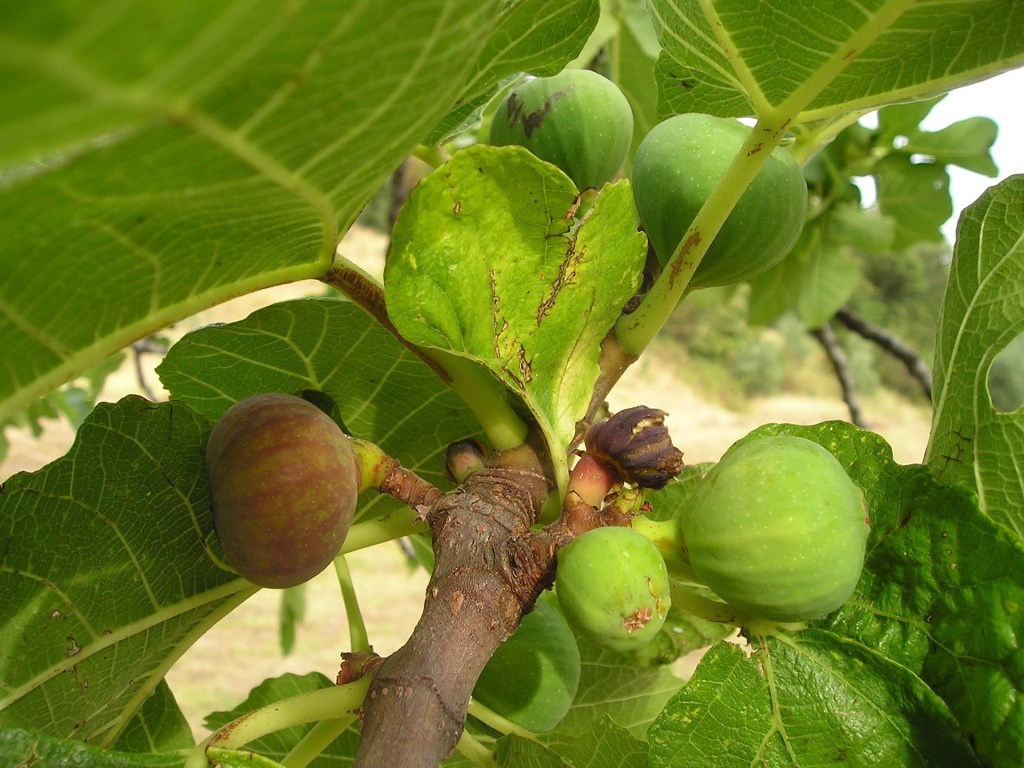
Then he told this parable: ‘A man had a fig-tree growing in his vineyard, and he went to look for fruit on it but did not find any. So he said to the man who took care of the vineyard, “For three years now I’ve been coming to look for fruit on this fig-tree and haven’t found any. Cut it down! Why should it use up the soil?”

‘ “Sir,” the man replied, “leave it alone for one more year, and I’ll dig round it and fertilise it. If it bears fruit next year, fine! If not, then cut it down.” ’

*       *       *

Jesus has just rebuked the crowd for being slow to comprehend the signs of the times. They can forecast the weather from what they see, he says, so why can’t they understand the spiritual significance of what they are witnessing? As we saw yesterday, Jesus’ rebuke is intended to draw their attention to the way self-interest blinds them to the truth of his message and the signs that accompany it.

In today’s reading, it would seem as though some of the crowd had tried to defend their ability to read the signs of the times. They remind Jesus of the Galileans slaughtered by Pilate during a festival, and the implication is that these people must have sinned to deserve such a punishment.

“No!” says Jesus, “They were not worse sinners than you. But unless you repent you will perish.” And Jesus offers them another example of the same thing. Eighteen people had been killed when a tower fell down. Were they worse sinners? No! But unless you repent, you too will all perish.

The thrust of this teaching is two-fold. First it dismisses the idea that earthly disasters come about because of sin. Second, it emphasises that life is precarious. If we are going to lead a life that is pleasing to God, the time to start is now. We don’t know when our death will come.

This leads on to a parable, and it’s a parable we shouldn’t over-analyse. Its point is that a life pleasing to God produces fruit. God is patient and allows time and effort to bring everyone to repentance – but life comes, sooner or later, to an end. Take advantage of God’s patience and produce fruit, because one day your life will end.

What is the fruit God wants us to produce? Why, surely it is the fruit of the Spirit! “But the fruit of the Spirit is love, joy, peace, forbearance, kindness, goodness, faithfulness, gentleness and self-control.” (Galatians 5: 22 – 23)

What wonderful fruit! I long to see such fruit in my life, and in the lives of those around me! I long to feel the presence of Jesus close beside me!

Prayer

Heavenly Father

There are many ways in which I sin and don’t put you first. Please help me to keep fighting this selfishness, help me to put you first, so that I can live a life bringing forth the fruit of the Spirit.

In Jesus’ name, Amen

Luke 12: 54 – 59 Interpreting the times

Luke 12: 54 – 59 Interpreting the times

He said to the crowd: ‘When you see a cloud rising in the west, immediately you say, “It’s going to rain,” and it does. And when the south wind blows, you say, “It’s going to be hot,” and it is. Hypocrites! You know how to interpret the appearance of the earth and the sky. How is it that you don’t know how to interpret this present time?

‘Why don’t you judge for yourselves what is right? As you are going with your adversary to the magistrate, try hard to be reconciled on the way, or your adversary may drag you off to the judge, and the judge turn you over to the officer, and the officer throw you into prison. I tell you, you will not get out until you have paid the last penny.’

*       *       *

Before we start, a note about weather forecasting, so that our thoughts aren’t diverted by meteorology. The point of this passage isn’t about the ease and/or accuracy of weather forecasting. Jesus is clearly quoting popular sayings related to the weather. They were probably right more often than they were wrong so they had credibility with the listeners.

Why does Jesus call the crowd “hypocrites”? He seems to be saying that judging right from wrong is as easy as forecasting the weather.

What did the people need for their weather forecasts?  They needed basic observations of wind and cloud, and they needed knowledge of what was likely to happen next.

We can understand Jesus’ teaching here as being that we should give at least as much attention to the things of God as we do to the weather.

That prompts me to think, “What is the first thing I usually talk about with those I meet? The weather.”

Ah!

How often do I talk to people about God and Jesus? Not very often. Do I ever open a conversation with a stranger by talking about Jesus? No.

Hypocrite, Penny!

This is not necessarily the way Jesus’ hearers would have understood the parable. It might have been a very direct challenge. Jesus had healed many people and declared the kingdom of God; these were the signs that made spiritual sense of the world. Why did his hearers not believe him, and act on what he had taught? He tells them they are hypocrites, because they are choosing to let self-interest blind them to the truth.

The passage concludes with a warning. There is a judgment. We need to take advantage today of the chance we have of being reconciled to God, because the chance may not come again.

What do we need to do?

Follow Jesus. Love each other.

This applies to us as well as the crowd Jesus was teaching.

Am I being a hypocrite, or am I putting Jesus first in my life? I know there are some matters where I have reservations and I pray for God to forgive me and help me to let go of false gods.

Prayer

Heavenly Father

I am sorry that I don’t always put you first. Please help me to let go of everything that stops me from following Jesus wholeheartedly.

In Jesus name, Amen