Luke 24: 36 – 49 Jesus appears to the disciple

Luke 24: 36 – 49 Jesus appears to the disciples

While they were still talking about this, Jesus himself stood among them and said to them, ‘Peace be with you.’

They were startled and frightened, thinking they saw a ghost. He said to them, ‘Why are you troubled, and why do doubts rise in your minds? Look at my hands and my feet. It is I myself! Touch me and see; a ghost does not have flesh and bones as you see I have.’

When he had said this, he showed them his hands and feet. And while they still did not believe it because of joy and amazement, he asked them, ‘Do you have anything here to eat?’ They gave him a piece of broiled fish, and he took it and ate it in their presence.

He said to them, ‘This is what I told you while I was still with you: everything must be fulfilled that is written about me in the Law of Moses, the Prophets and the Psalms.’

Then he opened their minds so they could understand the Scriptures. He told them, ‘This is what is written: the Messiah will suffer and rise from the dead on the third day, and repentance for the forgiveness of sins will be preached in his name to all nations, beginning at Jerusalem. You are witnesses of these things. I am going to send you what my Father has promised; but stay in the city until you have been clothed with power from on high.’

*       *       *

The risen Jesus had already appeared to Simon, and to the two disciples from Emmaus. The disciples from Emmaus hurried back to Jerusalem and found the Eleven apostles, and ‘those with them’ – probably the women who had seen the empty tomb. There were over a dozen people in the room, excited, talking over their remarkable experiences.

Suddenly, Jesus was there with them.

What must that have been like? It was late in the evening; it had been dark for at least three hours (two of those present had set off from Emmaus at nightfall, and walked seven miles). Three of them had seen the risen Jesus, but most had not. Their last sight of him would have been his lifeless body on the cross, or in the case of the women, laid in the tomb. St Luke reports that they were frightened, thinking they saw a ghost.

Simon and the two disciples from Emmaus had already seen the risen Jesus. Did they step forward and try to convince the others of the reality of the experience? St Luke doesn’t say so. Had their experiences been lacking in some way? Or was it all just so hard to believe?

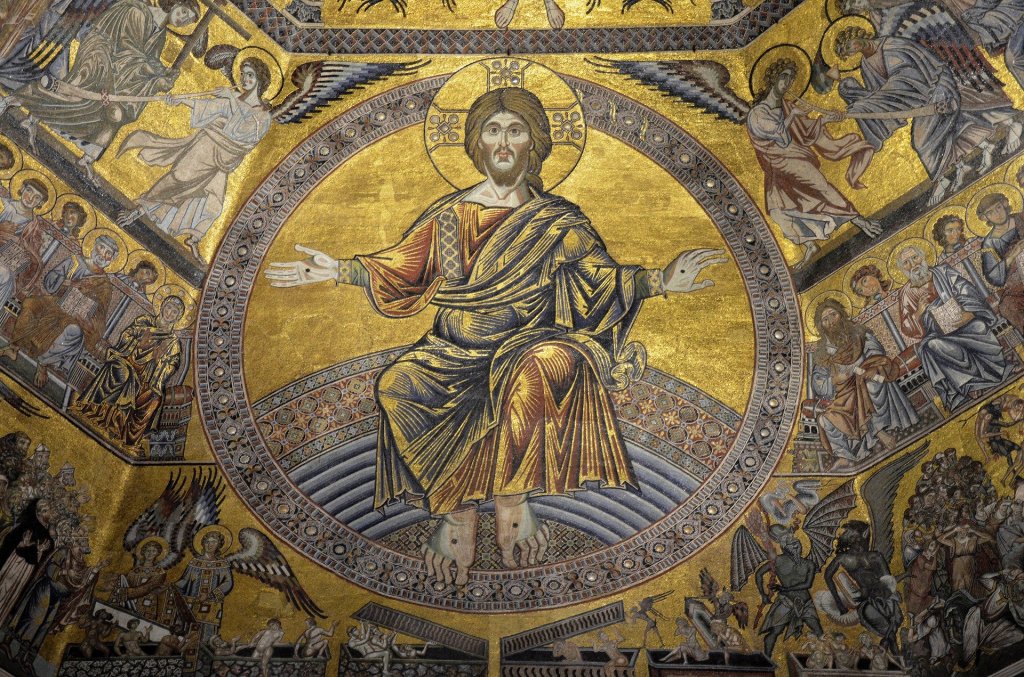
Jesus said ‘Look at my hands and my feet. It is I myself!’

Although St Luke doesn’t say so, the invitation to look at his hands and feet strongly suggests that the wounds of crucifixion were visible.

Jesus invites them to touch him. ‘Touch me and see; a ghost does not have flesh and bones as you see I have,’ he says.

And yet St Luke says: “…they still did not believe it because of joy and amazement…”

In a final attempt to convince them of the physical reality of his presence “…he asked them, ‘Do you have anything here to eat?’ They gave him a piece of broiled fish, and he took it and ate it in their presence.

Despite this, St Luke doesn’t write that the disciples were convinced that Jesus was really there with them. What he does tell us is that Jesus opened their minds so they could understand the Scriptures.

St Luke has been scrupulous in how he has recorded the resurrection. He has told us what people saw and what they felt (men in clothes that gleamed like lightning; Jesus was recognised by them when he broke the bread; …they still did not believe it…). He has not made any unequivocal statement that Jesus was physically raised from the dead. Indeed, his narrative suggests that there was something different about the risen Jesus. The disciples had lived very close to Jesus, and they found something unnerving about his resurrection appearances.

Prayer

Heavenly Father

Thank you for Jesus. Please help me to understand better how he is alive today, and how I can draw closer to him.

In Jesus’ name, Amen

Luke 24: 13 – 35 On the road to Emmaus

Luke 24:  13 – 35 On the road to Emmaus

Now that same day two of them were going to a village called Emmaus, about seven miles from Jerusalem. They were talking with each other about everything that had happened. As they talked and discussed these things with each other, Jesus himself came up and walked along with them; but they were kept from recognising him.

He asked them, ‘What are you discussing together as you walk along?’

They stood still, their faces downcast. One of them, named Cleopas, asked him, ‘Are you the only one visiting Jerusalem who does not know the things that have happened there in these days?’

‘What things?’ he asked.

‘About Jesus of Nazareth,’ they replied. ‘He was a prophet, powerful in word and deed before God and all the people. The chief priests and our rulers handed him over to be sentenced to death, and they crucified him; but we had hoped that he was the one who was going to redeem Israel. And what is more, it is the third day since all this took place. In addition, some of our women amazed us. They went to the tomb early this morning but didn’t find his body. They came and told us that they had seen a vision of angels, who said he was alive. Then some of our companions went to the tomb and found it just as the women had said, but they did not see Jesus.’

He said to them, ‘How foolish you are, and how slow to believe all that the prophets have spoken! Did not the Messiah have to suffer these things and then enter his glory?’ And beginning with Moses and all the prophets, he explained to them what was said in all the Scriptures concerning himself.

As they approached the village to which they were going, Jesus continued on as if he were going further. But they urged him strongly, ‘Stay with us, for it is nearly evening; the day is almost over.’ So he went in to stay with them.

When he was at table with them, he took bread, gave thanks, broke it and began to give it to them. Then their eyes were opened and they recognised him, and he disappeared from their sight. They asked each other, ‘Were not our hearts burning within us while he talked with us on the road and opened the Scriptures to us?’

They got up at once and returned to Jerusalem. There they found the Eleven and those with them, assembled together and saying, ‘It is true! The Lord has risen and has appeared to Simon.’ Then the two told what had happened on the way, and how Jesus was recognised by them when he broke the bread.

*       *       *

This narrative describes the first physical appearance of Jesus after his resurrection. It has several interesting aspects.

One aspect is that this first appearance was not to the Eleven (although it may have been simultaneous with the appearance to Simon). The risen Jesus appeared first to two disciples, one named Cleopas, and the other unnamed.

The second is that these disciples didn’t, at first, recognise Jesus. They walked a significant distance with him – it was seven miles from Jerusalem to Emmaus, and, while the account doesn’t say Jesus walked all the way with them, it gives the impression that he walked the greater part of it. He certainly had plenty of time to expound the Scriptures to them.

The third is that they only recognised Jesus when he took bread, gave thanks and broke it. All of a sudden, they realised who was with them, but before they could greet him, he disappeared from their sight.

The fourth aspect is that they were so thrilled by the encounter that they set out at once and returned to Jerusalem – nearly three hours walking, in addition to the three hours they’d already walked that day.

The fifth interesting point is that when they arrived in Jerusalem, they discovered that Jesus had been there before them.

There they found the Eleven and those with them, assembled together and saying, ‘It is true! The Lord has risen and has appeared to Simon.’

The risen Jesus seems to be no longer limited in time. His appearance to Simon seems to have happened simultaneously with his appearance to the Emmaus disciples.

Let’s consider first why the disciples didn’t immediately recognise Jesus.

After the event, they knew that they’d been aware of who was talking to them all the time: They asked each other, ‘Were not our hearts burning within us while he talked with us on the road and opened the Scriptures to us?’ They hadn’t recognised him in the sense of greeting a dearly beloved friend, but they had recognised the authority with which he spoke.

Why would God have wanted them not to recognise the risen Jesus immediately?

Perhaps it was because there were things that they had to know before they were fully ready to believe. If Jesus had walked up to them, and greeted them in his normal fashion, and they’d recognised him, what would they have done? I think there would have been a great deal of emotion, and incredulity, and – well, chatter. But they needed to know that this is the risen Jesus, who fulfils prophecy. It’s the lesson that Jesus tried to teach them in Luke 18: 31 – 34; only, now they’ve seen his death. Here, in glorious fulfilment of Jesus’ words, is the risen Lord. Now they can understand Jesus’ teaching, and they can see how it fits with the teaching of the Scriptures.

It’s of less importance, but still interesting, that Jesus first appeared to these obscure disciples. Perhaps one lesson we could learn is that God will speak to whoever is listening, however humble.

And what did they do when God made Jesus’ resurrection clear to them? They set off, in the dark, to walk seven miles back to Jerusalem. They were absolutely thrilled! I find that very moving. The joy felt by these two men drove them out of the house and onto the road, heedless of danger, discomfort and fatigue, because Jesus, their Lord whom they’d seen crucified, was alive!

JESUS IS RISEN! ALLELUIA!

Prayer

Heavenly Father

Thank you that you raised Jesus from the dead, and revealed the risen Jesus physically to his disciples. Help us to come so close to Jesus that we too share the joy of knowing that he is risen.

In Jesus’ name, Amen


 [PG1]

Luke 24: 1 – 12 Jesus has risen

Luke 24: 1 – 12 Jesus has risen

On the first day of the week, very early in the morning, the women took the spices they had prepared and went to the tomb. They found the stone rolled away from the tomb, but when they entered, they did not find the body of the Lord Jesus. While they were wondering about this, suddenly two men in clothes that gleamed like lightning stood beside them. In their fright the women bowed down with their faces to the ground, but the men said to them, ‘Why do you look for the living among the dead? He is not here; he has risen! Remember how he told you, while he was still with you in Galilee: “The Son of Man must be delivered over to the hands of sinners, be crucified and on the third day be raised again.” ’ Then they remembered his words.

When they came back from the tomb, they told all these things to the eleven and to all the others. It was Mary Magdalene, Joanna, Mary the mother of James, and the others with them who told this to the apostles. But they did not believe the women, because their words seemed to them like nonsense. Peter, however, got up and ran to the tomb. Bending over, he saw the strips of linen lying by themselves, and he went away, wondering to himself what had happened.

*        *        *

When the women reach the tomb, very early in the morning, they are totally baffled. They had seen Jesus buried here, in this tomb; and now the stone has been rolled away and the body’s gone.

Their thoughts would have been in turmoil. Who could have done this? Why had they done it? Where is Jesus’ body? They would have been desperate to give Jesus a proper burial.

Jesus had told his disciples repeatedly that he was going to be crucified and rise again, see, for example, Luke 18: 31 – 34. The idea of being raised from the dead was not totally incredible to the women. St Luke describes two occasions when Jesus raises someone from the dead. The first is the son of the widow of Nain (Luke 7: 11 – 17), and the second is the daughter of a synagogue leader named Jairus (Luke 8: 40 – 56).

While they were wondering about this, suddenly two men in clothes that gleamed like lightning stood beside them.

I wonder why God chose to speak to them in such a dramatic way? Perhaps the women needed the extraordinary vision because they were to receive such an extraordinary message.

It’s interesting, too, that St Luke doesn’t refer to them as angels. When he writes about the messenger to Zechariah about John the Baptist’s birth, and to Mary about Jesus’ birth, he has no hesitation in calling them angels.

Personally, I find this gives more credibility to the account of the appearance at the tomb. What did the women see? Two men in clothes that gleamed like lightning. It’s the sort of factual statement you’d make in a court of law.

St Luke also describes the effect the men had on the women.

In their fright the women bowed down with their faces to the ground.

It must have been a terrifying experience, quite unlike anything the women had experienced before.

The men made the startling statement: “He is not here; he has risen!”, and reminded the women of the prophecy Jesus had spoken in Galilee about his death and rising again.

Then they remembered his words.

What would you do if you had been given news like that? The women rushed back to the apostles and told them.

But the apostles did not believe the women, because their words seemed to them like nonsense.

The apostles had seen astonishing miracles. Jesus had calmed the storm, walked on water, made the blind see and the dumb speak, cast out demons and raised people from the dead. But they had also seen their leader, their teacher, their Lord die on a Roman cross. Their hope was dead.

Or was it?  

Peter, however, got up and ran to the tomb. Bending over, he saw the strips of linen lying by themselves, and he went away, wondering to himself what had happened.

I think the resurrection story is the most important in the bible. If Jesus wasn’t raised from the dead, then human sin won; the blameless one, the perfect example of love, was extinguished – and for what?

It took a supernatural appearance to convince the women who had gone to anoint the body. The apostles weren’t convinced by their story.

Am I convinced?

Yes.

But that conviction could be stronger. When I think about the implications of the resurrection of Jesus, I know that my conviction should be stronger. This is literally the most important event in the history of the world.

Prayer

Heavenly Father

Thank you for raising Jesus from the dead. Please help my faith to grow and make me ever more committed to helping to build your kingdom.

In Jesus name, Amen

Luke 23: 44 – 56 The death of Jesus and the burial of Jesus

Luke 23: 44 – 56 The death of Jesus and the burial of Jesus

It was now about noon, and darkness came over the whole land until three in the afternoon, for the sun stopped shining. And the curtain of the temple was torn in two. Jesus called out with a loud voice, ‘Father, into your hands I commit my spirit.’ When he had said this, he breathed his last.

The centurion, seeing what had happened, praised God and said, ‘Surely this was a righteous man.’ When all the people who had gathered to witness this sight saw what took place, they beat their breasts and went away. But all those who knew him, including the women who had followed him from Galilee, stood at a distance, watching these things.

Now there was a man named Joseph, a member of the Council, a good and upright man, who had not consented to their decision and action. He came from the Judean town of Arimathea, and he himself was waiting for the kingdom of God. Going to Pilate, he asked for Jesus’ body. Then he took it down, wrapped it in linen cloth and placed it in a tomb cut in the rock, one in which no one had yet been laid. It was Preparation Day, and the Sabbath was about to begin.

The women who had come with Jesus from Galilee followed Joseph and saw the tomb and how his body was laid in it. Then they went home and prepared spices and perfumes. But they rested on the Sabbath in obedience to the commandment.

*       *       *

One of the key verses of this passage is v.49: But all those who knew him, including the women who had followed him from Galilee, stood at a distance, watching these things.

St Luke clearly feels that it’s extremely important to reassure his readers that the events he is describing are true, and happened in the way he describes. He has said from the start that he himself was not an eye-witness, so how does he know the detail of the crucifixion? This verse is the clue, particularly the phrase “including the women.”

There is considerable evidence that suggests that St Luke had access to Jesus’ mother Mary’s memories of the events of Jesus’ life. Indeed, it is quite likely that he heard them face to face from Mary herself.

St Luke reports that as he died, Jesus said ‘Father, into your hands I commit my spirit.’

This affirms that Jesus was fully human. It was necessary for him to commit his spirit to the Father, because as a human he had been separate from the Father. I do not believe that Jesus knew precisely what was coming next; he was fully human; he had to trust in God, just like the rest of us. And, having suffered the worst things that humans can do – betrayal, abandonment, denial, wrongful accusation, injustice, torture and death – having suffered all these, his faith in a loving God is unbroken. He can say ‘Father, into your hands I commit my spirit.’

Jesus has reached the end of a blameless life, totally dedicated to God’s will, and yet his life closes in isolation and agony on a Roman cross. It seems that sin has won.

Similarly, when we look at the world it can sometimes look very bleak, as though human sin is triumphant.

But Jesus, in these last few seconds, can say, ‘Father, into your hands I commit my spirit.’

Sin does not win. Jesus died trusting the Father totally, because he knew the nature of the Father. The closer we can cling to God, the greater our trust in him will become.

The last six verses of this passage describe the burial of Jesus. Here, too, we have a verse about the women. The women who had come with Jesus from Galilee followed Joseph and saw the tomb and how his body was laid in it.

Once again, St Luke wants us to know that the burial was witnessed. There was no question of Jesus’ body being removed and buried somewhere unknown to the disciples; the women followed Joseph and saw the tomb and how Jesus’ body was laid in it. Jesus’ body was not stolen and smuggled away; it was laid in a tomb close to Jerusalem. The women saw it lying there, before going home and preparing spices and perfumes to anoint the body. They couldn’t go immediately to prepare Jesus’ body, though, because it was the Sabbath.

They had to wait…

Prayer

Heavenly Father

Thank you for courage and trust and obedience that Jesus showed as he died. Help us to follow him wherever you choose to send us.

In Jesus’ name, Amen

Luke 23: 32 – 43 The crucifixion of Jesus

Luke 23: 32 – 43 The crucifixion of Jesus

Two other men, both criminals, were also led out with him to be executed. When they came to the place called the Skull, they crucified him there, along with the criminals – one on his right, the other on his left. Jesus said, ‘Father, forgive them, for they do not know what they are doing.’ And they divided up his clothes by casting lots.

The people stood watching, and the rulers even sneered at him. They said, ‘He saved others; let him save himself if he is God’s Messiah, the Chosen One.’

The soldiers also came up and mocked him. They offered him wine vinegar and said, ‘If you are the king of the Jews, save yourself.’

There was a written notice above him, which read: THIS IS THE KING OF THE JEWS.

One of the criminals who hung there hurled insults at him: ‘Aren’t you the Messiah? Save yourself and us!’

But the other criminal rebuked him. ‘Don’t you fear God,’ he said, ‘since you are under the same sentence? We are punished justly, for we are getting what our deeds deserve. But this man has done nothing wrong.’

Then he said, ‘Jesus, remember me when you come into your kingdom.’

Jesus answered him, ‘Truly I tell you, today you will be with me in paradise.’

*       *       *

Roman crucifixion was a horrible way to be killed. It was intensely painful, and the sufferer knew it would continue hurting more and more until they died.

St Luke records three things that Jesus said as he hung on the cross in agony.

The first was: Jesus said, ‘Father, forgive them, for they do not know what they are doing.’

He prayed for those who were torturing him. His thoughts were not for himself but for others.

The second thing Luke records was:

Jesus answered him, ‘Truly I tell you, today you will be with me in paradise.’

Once again, his thoughts were for somebody else. What great compassion he showed to the condemned man hanging next to him! Jesus was continuing his ministry to bring sinners to repentance and then forgive them, right up until the very end of his life.

We will come to the third saying tomorrow.

What is going on in today’s reading? What is the message?

Jesus is perfectly displaying the love of God. He is giving every last breath to the service of God and his fellow men. To copy Jesus’ focus on God and on those around him is what we are called to do. It is all we are called to do.

Then we look at the cross. Who designed it? Human beings did. Who decided it should be used? The Roman Empire – made up of human beings. Who sentenced Jesus to die on it? Pontius Pilate – a human being. You see, human beings believe in punishment; we believe in retribution when something bad has been done.

And yet punishment for wrongdoers is the last thing on Jesus’ mind. He forgives those who crucify him – and I feel sure that the forgiveness extends back beyond the soldiers driving the nails through his flesh, to Pontius Pilate, and the Jewish authorities. None of them really knew what they were doing. He forgives the criminal beside him, even though the man says, ‘We are punished justly, for we are getting what our deeds deserve.’

God does not believe in punishment.

There is nothing conditional about Jesus’ forgiveness. The soldiers don’t have to stop driving the nails through his feet. The rulers don’t have to stop mocking him. The forgiveness is free and unconditional.

This is the climax of Jesus’ mortal life. Everything has led to this point. It is the most perfect and clear image we have of Jesus, and hence about God. And what does it say to us? It says, ‘God is love.’

GOD IS LOVE!

Prayer

Heavenly Father

You are love. You care for each one of us with a passion we can’t imagine. Thank you, Lord, thank you!

In Jesus’ name, Amen.

Luke 23: 26 – 31 The crucifixion of Jesus – the daughters of Jerusalem

Luke 23: 26 – 31 The crucifixion of Jesus – the daughters of Jerusalem

As the soldiers led him away, they seized Simon from Cyrene, who was on his way in from the country, and put the cross on him and made him carry it behind Jesus. A large number of people followed him, including women who mourned and wailed for him. Jesus turned and said to them, ‘Daughters of Jerusalem, do not weep for me: weep for yourselves and for your children. For the time will come when you will say, “Blessed are the childless women, the wombs that never bore and the breasts that never nursed!” Then

‘ “they will say to the mountains, ‘Fall on us!’ and to the hills, ‘Cover us!’ ”

For if people do these things when the tree is green, what will happen when it is dry?’

*       *       *

This passage mixes a narrative of the events of the crucifixion with prophecy and with theology.

First of all, we have the soldiers seizing Simon from Cyrene, and making him carry Jesus’ cross. Why would this be? The most likely reason is that by now Jesus was too weak to carry it. Although St Luke doesn’t mention it, the other three gospels tell us that Jesus was flogged before being led out to be crucified. The wounds from a Roman flogging were very severe. And this was on top of beatings by the temple guards, and additional ill-treatment from the Roman soldiers. The need for the Romans to force Simon to carry Jesus’ cross tells us that Jesus was undergoing an intense physical ordeal.

And yet, despite being nearly spent, Jesus is aware of the crowd. He hears women mourning and wailing for him. He speaks to them. He has no comfort to offer, simply a prophecy. He tells them that, bad though this event is, things are going to become much worse. He tells them that they will say, “Blessed are the childless women, the wombs that never bore and the breasts that never nursed!” Under what circumstances would a first century Jewish woman say such a thing? Only when the values of civilisation had been turned on their head.

There are two opposing forces that shape human society, and ultimately determine the destiny of the human race. There is love, which comes from God; and there is sin, which is self-centred. The love of God prompts us to care for our world and to care for each other. Sin causes us to disregard the welfare of our world and to exploit other people for our own benefit. When sin has too great an influence in a society, the values of civilisation seem to be turned on their heads. Greed is rewarded and the needs of the weak are trampled on. And when that is the case, sooner or later comes the reckoning, when indeed people say, “Blessed are the childless women, the wombs that never bore and the breasts that never nursed!”

On his way to the cross, to agony and death, Jesus thinks this message is sufficiently important to proclaim to the bystanders. And he’s not merely proclaiming it – he’s living it. He is sacrificing everything to tip the balance back to the love of God.

I have often asked God, “Why did Jesus have to die, and die so cruelly?”

Well, this is a part of the answer. Jesus is showing that love has a readiness to sacrifice absolutely everything for others. He is showing that sacrifices made because of love are effective in changing the world.

All those of us who love Jesus need to heed this message.

Prayer

Heavenly Father

Thank you for letting me understand a little of the mystery of the suffering of your son, Jesus. Please help me to follow him faithfully.

In Jesus name, Amen

Luke 23: 13 – 25 Jesus before Pilate and Herod – Part 3

Luke 23: 13 – 25 Jesus before Pilate and Herod – Part 3

Pilate called together the chief priests , the rulers and the people, and said to them, ‘You brought me this man as one who was inciting the people to rebellion. I have examined him in your presence and have found no basis for your charges against him. Neither has Herod, for he sent him back to us; as you can see, he has done nothing to deserve death. Therefore I will punish him and then release him.’

But the whole crowd shouted, ‘Away with this man! Release Barabbas to us!’ (Barabbas had been thrown into prison for an insurrection in the city, and for murder.)

Wanting to release Jesus, Pilate appealed to them again. But they kept shouting, ‘Crucify him! Crucify him!’

For the third time he spoke to them: ‘Why? What crime has this man committed? I have found in him no grounds for the death penalty. Therefore I will have him punished and then release him.’

But with loud shouts they insistently demanded that he be crucified, and their shouts prevailed. So Pilate decided to grant their demand. He released the man who had been thrown into prison for insurrection and murder, the one they asked for, and surrendered Jesus to their will.

*       *       *

Jesus was brought before Pilate on a charge of inciting the people to rebellion. Pilate found him not guilty and said so publicly. Despite this, the crowd demanded that Jesus be crucified, and Pilate caved in to them.

The crowd shouted for the release of Barabbas who had been imprisoned for an insurrection in the city and murder. Pilate acceded to the crowd’s demand and released him.

The symmetry of this is stark. Both men are accused of essentially the same crime – incitement to rebellion – one guilty, the other innocent. The guilty man goes free while the innocent man is put to death.

The Romans actually had quite a decent legal system. Modern western law is based firmly on the Roman model. However, it can go badly wrong. Why does it sometimes go wrong? Because it depends upon human beings.

Why did the crowd call for Jesus’ death? We can only guess.

The crowd had hoped that Jesus was the Messiah, but hadn’t understood what that meant. Their hope for a great warrior king to defeat the Romans and make Judea great again was in tatters – the evidence was in front of them. Jesus was a prisoner of the Romans, bound and helpless. Perhaps they felt that Barabbas would be more war-like, more effective, more patriotic than Jesus?

The chief priests and teachers of the law were vehemently accusing Jesus. I don’t expect they stuck to the truth. Every rumour that could weaken Jesus’ reputation would have been yelled out, whipping up the crowd into a frenzy. And there was nobody there to speak for Jesus – the disciples had fled.

The death of Jesus was accomplished by malice, lies, lack of understanding, and cowardice. All human weakness and viciousness was on display. The way human institutions can be so easily subverted was laid bare. And all this was driven by the self-interest of those involved.

Prayer

Heavenly Father

I am sorry for the many times I put my wishes before yours, my self-interest before your will. Please help me to do better.

In Jesus’ name, Amen

Luke 23: 1 – 12 “Are you the king of the Jews?”

Luke 23: 1 – 12 Jesus before Pilate and Herod – continued

Then the whole assembly rose and led him off to Pilate. And they began to accuse him, saying, ‘We have found this man subverting our nation. He opposes payment of taxes to Caesar and claims to be Messiah, a king.’

So Pilate asked Jesus, ‘Are you the king of the Jews?’

‘You have said so,’ Jesus replied.

Then Pilate announced to the chief priests and the crowd, ‘I find no basis for a charge against this man.’

But they insisted, ‘He stirs up the people all over Judea by his teaching. He started in Galilee and has come all the way here.’

On hearing this, Pilate asked if the man was a Galilean. When he learned that Jesus was under Herod’s jurisdiction, he sent him to Herod, who was also in Jerusalem at that time.

When Herod saw Jesus, he was greatly pleased, because for a long time he had been wanting to see him. From what he had heard about him, he hoped to see him perform a sign of some sort. He plied him with many questions, but Jesus gave him no answer. The chief priests and the teachers of the law were standing there, vehemently accusing him. Then Herod and his soldiers ridiculed and mocked him. Dressing him in an elegant robe, they sent him back to Pilate. That day Herod and Pilate became friends – before this they had been enemies.

*        *        *

The council of the elders, having heard a claim from Jesus they could construe as blasphemy, hurried to the Roman Procurator, Pontius Pilate. Their problem, though, was that blasphemy against Yahweh was not a crime recognised in Roman law. They charged Jesus instead with subversion – plotting to overthrow the Roman regime. Specifically, they said that Jesus opposed payment of taxes to Rome and that he claimed to be a king.

Let’s look at these allegations.

On the occasion when Jesus was asked whether it was lawful to pay taxes to Caesar, he replied by pointing at a coin and asking, “Whose image and superscription are these?” When the questioners answered “Caesar’s,” Jesus said “Give to Caesar the things that are Caesar’s and to God the things that are God’s.”

Jesus was asked many times whether he was the Messiah, but he didn’t publicly claim the title. He always deflected the question, not denying the title, but not claiming it either.

For example, when he entered Jerusalem, the crowds were shouting, “Blessed is the king who comes in the name of the Lord!” When some of the Pharisees asked Jesus to rebuke his disciples, he replied “I tell you, if they keep quiet, the stones will cry out.” (Luke 19: 37 – 40, paraphrased).

When Peter made his confession of faith, that Jesus was God’s Messiah (Luke 9: 20 – 21), Jesus strictly warned his disciples not to tell this to anyone.

Pilate listens to the charges, and asks Jesus directly, “Are you the king of the Jews?” And Jesus replies, “You have said so.”

What would you expect a man to say under those circumstances? Almost everyone, I guess, would realise that the game was up and would deny any claim to be king. After all, those who were serious about rebellion and claiming kingship would have taken care not to be arrested in the first place.

And what in any case does it mean? In its original Greek, Pilate’s answer is συ λεγεις. Possibly a more idiomatic translation than “You have said so,” would be, “That’s what you say.”

Does that apply to us? Sometimes I doubt my faith. It’s as though I’m asking Jesus, “Are you really king?” The answer from Jesus, “That’s what you say,” is actually quite true. Jesus will only be king in my life, king in my heart, if I proclaim him so. That is the awesome responsibility that comes with free will; the right to exclude the king – not just of the Jews – but of the universe.

Another slant on Jesus’ reply to Pilate’s question is to view it as prophecy. What did Pilate have written on a notice above Jesus on the cross? “This is the king of the Jews”

Jesus’ answer, “You have said so,” must have been a complete surprise to Pilate. It’s neither a denial nor a claim. Pilate clearly thought that Jesus was no danger to Roman rule in Judea because his immediate response is to tell Jesus’ accusers that he finds no basis for a charge against Jesus.

But that doesn’t satisfy them. They insist that he is stirring up people throughout Judea, and furthermore, he started in Galilee; his subversion is spreading.

Pilate was delighted to hear that Jesus was a Galilean; he could hand over this political hot potato to his old enemy, Herod, who was in Jerusalem for the Passover. Herod for his part is greatly pleased to have the chance to see and question Jesus. Perhaps he would see a sign!

He plied Jesus with questions, to which Jesus made no answer.

You see, Herod was not a sincere seeker for truth; he was looking for entertainment. He had listened to John the Baptist: ‘…Herod feared John and protected him, knowing him to be a righteous and holy man. When Herod heard John, he was greatly puzzled; yet he liked to listen to him.’ (Mark 6: 20) But he did nothing to repent of the sins that John had pointed out to him, and eventually, for the sake of a promise made at a banquet, he had John executed.

Jesus will answer questions that are asked sincerely, even those from opponents – see, for example, the teaching he gave Nicodemus in John 3: 1 – 21. But questions which are asked hypocritically either receive an enigmatic answer, or no answer at all.

He plied him with many questions, but Jesus gave him no answer.

Jesus is alone, and remains silent.

The chief priests and the teachers of the law were standing there, vehemently accusing him. Then Herod and his soldiers ridiculed and mocked him. Dressing him in an elegant robe, they sent him back to Pilate.

What a vivid picture St Luke paints. The chief priests vehemently accusing Jesus; Herod trying to entice Jesus into debating with him; the whole company descending to mockery and insults. Who lost their dignity? Who kept his dignity? I wonder how much it hurt Jesus to see these men and to be unable to touch their hearts because they refused to listen?

Prayer

Heavenly Father

Thank you for the fortitude and dignity of Jesus under interrogation. Thank you for his steadfast obedience to your will. Help us to be obedient whenever we are called to witness to Jesus.

In Jesus name, Amen

Luke 22: 63 – 71 The guards mock Jesus & Jesus before Pilate and Herod

Luke 22: 63 – 71 The guards mock Jesus & Jesus before Pilate and Herod

The men who were guarding Jesus began mocking and beating him. They blindfolded him and demanded, ‘Prophesy! Who hit you?’ And they said many other insulting things to him.

At daybreak the council of the elders of the people, both the chief priests and the teachers of the law, met together, and Jesus was led before them. ‘If you are the Messiah,’ they said, ‘tell us.’

Jesus answered, ‘If I tell you, you will not believe me, and if I asked you, you would not answer. But from now on, the Son of Man will be seated at the right hand of the mighty God.’

They all asked, ‘Are you then the Son of God?’

He replied, ‘You say that I am.’

Then they said, ‘Why do we need any more testimony? We have heard it from his own lips.’

*       *       *

St Luke’s account of Jesus’ ‘trial’ before the Sanhedrin is much less detailed than the other synoptic gospels. Nevertheless, he makes it perfectly clear what’s going on.

Jesus is tortured by the men guarding him. They blindfold him, beat him, and mock him in a way designed to undermine his identity; ‘Prophesy! Who hit you?’ they demanded. Being hit repeatedly is both painful and disorienting. When you’re blindfolded and can’t see when the next blow is coming, it must be worse. It leaves you feeling sick and shaken, in no condition to resist difficult questions.

When it comes to his interrogation by the chief priests and teachers of the law, though, Jesus is very clear.

‘If you are the Messiah,’ they said, ‘tell us.’

This is the key question.

Jesus answers ‘If I tell you, you will not believe me,’

If Jesus had said, “Yes, I’m the Messiah”, the chief priests and teachers of the law must either dismiss the answer as a lie, or accept it and follow Jesus. There really is no half-way house. Jesus knows that confronted with such a stark choice his opponents will tell him he’s lying.

‘and if I asked you, you would not answer.’

If Jesus had pressed his opponents to answer their own question, they would have remained silent. Jesus had been teaching in Jerusalem for months. He had performed many healings. He had performed miracles. If his opponents had looked at the evidence, they would have found that Jesus fulfilled the scriptural prophecies for the Messiah. (Read Luke 7: 18 – 23)

The chief priests and teachers of the law did not look for evidence, because they were unwilling to accept the consequences. They did not want to follow Jesus.

Jesus now tells his opponents obliquely who he is, by using the title ‘Son of Man’.

But from now on, the Son of Man will be seated at the right hand of the mighty God.’

The chief priests and teachers of the law scent a kill.

They all asked, ‘Are you then the Son of God?’

And Jesus replies ‘You say that I am.’

That is enough for the assembled leaders of Israel to condemn him. Jesus seems to have claimed to be the Son of God, and that, to them, is blasphemy.

Then they said, ‘Why do we need any more testimony? We have heard it from his own lips.’

*       *       *

The words of Jesus show how the leaders wilfully refuse to believe in him; their actions are plainly evil. However, what about the men who were guarding Jesus; the men who were beating him? We can make some excuses for them. They were under orders. They were taking their lead from their rulers. But the fact is that their actions involved torturing Jesus, and led ultimately to his death on a Roman cross.

One of the consequences of original sin is that it is built into society. Our power structures are all flawed, and rely on force. The prosperity of the western world rests to a considerable extent on the exploitation of poorer nations. The prosperity of the elite in any country depends on the exploitation of the poor in that society.

One concrete example of this is the way the UK government supplies weapons to Saudi Arabia. These aircraft and bombs earn a great deal of money for the country, which funds, for example, our pensions. And these weapons are not used to defend Saudi territory, rather they are used in Yemen, where they kill terrorists, and school children, and nursing mothers and wedding parties. My comfortable life is partly paid for by the suffering of Yemeni citizens.

Shall we shut our eyes, like the chief priests and teachers of the law did?

Are we complicit with murder by investing in companies that flout human rights? Are we like the men guarding Jesus, prepared to duck responsibility and accept without question what our leaders tell us?

Whose side are we on?

Prayer

Heavenly Father

Please help us, insofar as we are able, to work for a world with more justice and more love.

In Jesus’ name, Amen.

Luke 22: 54 – 62 Peter disowns Jesus

Luke 22: 54 – 62 Peter disowns Jesus

Then seizing him, they led him away and took him into the house of the high priest. Peter followed at a distance. And when some there had kindled a fire in the middle of the courtyard and had sat down together, Peter sat down with them. A servant-girl saw him seated there in the firelight. She looked closely at him and said, ‘This man was with him.’

But he denied it. ‘Woman, I don’t know him,’ he said.

A little later someone else saw him and said, ‘You also are one of them.’

‘Man, I am not!’ Peter replied.

About an hour later another asserted, ‘Certainly this fellow was with him, for he is a Galilean.’

Peter replied, ‘Man, I don’t know what you are talking about!’ Just as he was speaking, the cock crowed. The Lord turned and looked straight at Peter. Then Peter remembered the word the Lord had spoken to him: ‘Before the cock crows today, you will disown me three times.’ And he went outside and wept bitterly.

*       *       *

All four of the gospels tell this story. The other accounts are found here (Matthew 26: 69 – 75; Mark 14: 68 – 72; John 18: 15 – 18 and 25 – 27).

Let’s think about Peter.

Peter was the first of the disciples to realise and declare that Jesus was the Messiah, only to be rebuked by him for arguing against the journey to Jerusalem which was to lead to Jesus’ death.

Simon Peter answered, ‘You are the Messiah, the Son of the living God.’ (Matthew 16:16)

Peter took him aside and began to rebuke him. ‘Never, Lord! he said. ‘This shall never happen to you!’ Jesus turned and said to Peter, ‘Get behind me Satan! You are a stumbling block to me; you do not have in mind the concerns of God, but merely human concerns.’ (Matthew 16: 22 – 23)

He was the disciple who walked on water to Jesus, only to lose confidence and start to sink, needing to be rescued by Jesus.

When the disciples saw him walking on the lake, they were terrified. ‘It’s a ghost,’ they said, and cried out in fear.

But Jesus immediately said to them, ‘Take courage! It is I. Don’t be afraid.’

‘Lord, if it’s you,’ Peter replied, “tell me to come to you on the water.’

‘Come,’ he said.

Then Peter got down out of the boat, walked on the water and came towards Jesus. But when he saw the wind, he was afraid and, beginning to sink, cried out, ‘Lord, save me!’

Immediately Jesus reached out his hand and caught him. ‘You of little faith,’ he said, ‘why did you doubt?’ (Matthew 14: 26 – 31)

Today’s study passage is another occasion when Peter is ahead of the other disciples.

He follows Jesus as he is taken to the high priest’s house. He enters the courtyard, where there are people gathered. Doubtless many of the people there had been a part of the crowd who had apprehended Jesus. Peter joins them around a fire. He was surrounded by the enemies of Jesus. So far, he’s living up to his declaration during the Last Supper: “Lord, I am ready to go with you to prison and to death.”

I don’t know whether he hoped to do anything practical to help Jesus; I think it was more a wish to stand beside the leader he loved and revered.

One thing about which I feel fairly certain is that Peter wasn’t praying, because when he was challenged as a follower of Jesus he answered with a lie. He didn’t run; his courage was not in question; but he lied about following Jesus. Even when he was challenged again, he brazened it out, denying his allegiance to Jesus. It wasn’t until he was challenged a third time – and the cock crowed – that he realised what he had done.

St Luke adds a detail that isn’t in the other gospels. The Lord turned and looked straight at Peter.

This implies that Jesus was outside and clearly visible at that particular moment. Peter saw his Lord captive. He realised suddenly the physical reality of what was happening. His eyes met those of Jesus, and he saw compassion and forgiveness. He saw the perfection of Jesus. Peter had given everything he had of courage and tenacity, and yet he had accomplished nothing except the denial of his Lord.

He went out and wept bitterly.

Peter is, in some ways, an archetypal figure. He is a hero, but a flawed one. He’s not a clever or wise man, but he has moments of great insight. He’s an ordinary, doubting human being, but he has moments of great faith. He’s no more courageous than most humans, but he followed Jesus faithfully; and eventually he followed him to the cross.

Peter is a human being. He’s one of us. He’s not perfect, but he places his faith in Jesus, and – ultimately – that’s all that matters. He tries his hardest, he repents when he makes a mistake, and he isn’t too proud to accept forgiveness, over and over again.

I don’t know about you, but I find that very encouraging.

Prayer

Heavenly Father

Thank you for the example of St Peter. Help me, please, to do as he did – place my faith in Jesus, recognise when I sin and repent, and accept your forgiveness with thankfulness.

In Jesus name, Amen