Acts 9: 1 – 19 Saul’s conversion

Acts 9: 1 – 19 Saul’s conversion

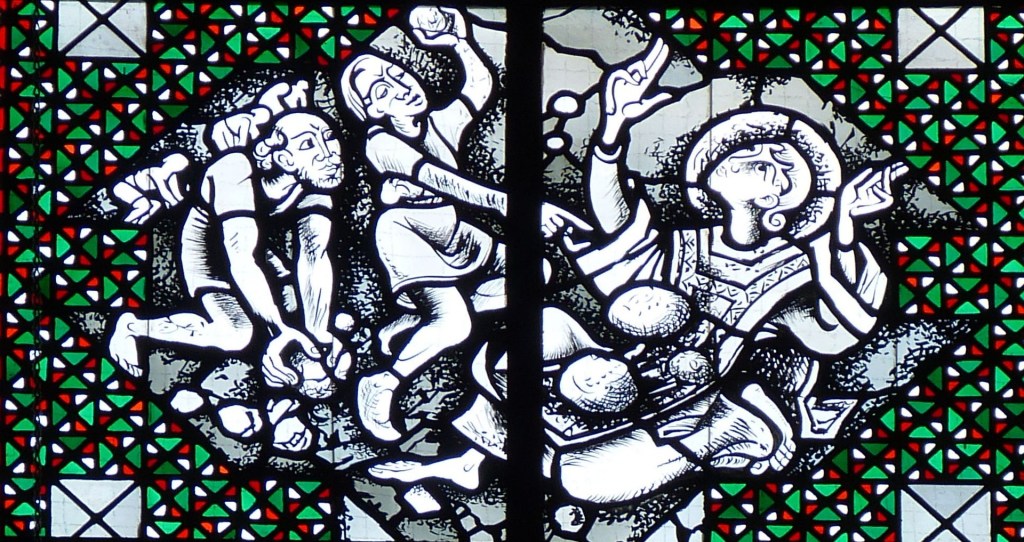
Meanwhile, Saul was still breathing out murderous threats against the Lord’s disciples. He went to the high priest and asked him for letters to the synagogues in Damascus, so that if he found any there who belonged to the Way, whether men or women, he might take them as prisoners to Jerusalem. As he neared Damascus on his journey, suddenly a light from heaven flashed around him. He fell to the ground and heard a voice say to him, ‘Saul, Saul, why do you persecute me?’

‘Who are you, Lord?’ Saul asked.

‘I am Jesus, whom you are persecuting,’ he replied. ‘Now get up and go into the city, and you will be told what you must do.’

The men travelling with Saul stood there speechless; they heard the sound but did not see anyone. Saul got up from the ground, but when he opened his eyes he could see nothing. So they led him by the hand into Damascus. For three days he was blind, and did not eat or drink anything.

In Damascus there was a disciple named Ananias. The Lord called to him in a vision, ‘Ananias!’

‘Yes, Lord,’ he answered.

The Lord told him, ‘Go to the house of Judas on Straight Street and ask for a man from Tarsus named Saul, for he is praying. In a vision he has seen a man named Ananias come and place his hands on him to restore his sight.’

‘Lord,’ Ananias answered, ‘I have heard many reports about this man and all the harm he has done to your holy people in Jerusalem. And he has come here with authority from the chief priests to arrest all who call on your name.’

But the Lord said to Ananias, ‘Go! This man is my chosen instrument to proclaim my name to the Gentiles and their kings and to the people of Israel. I will show him how much he must suffer for my name.’

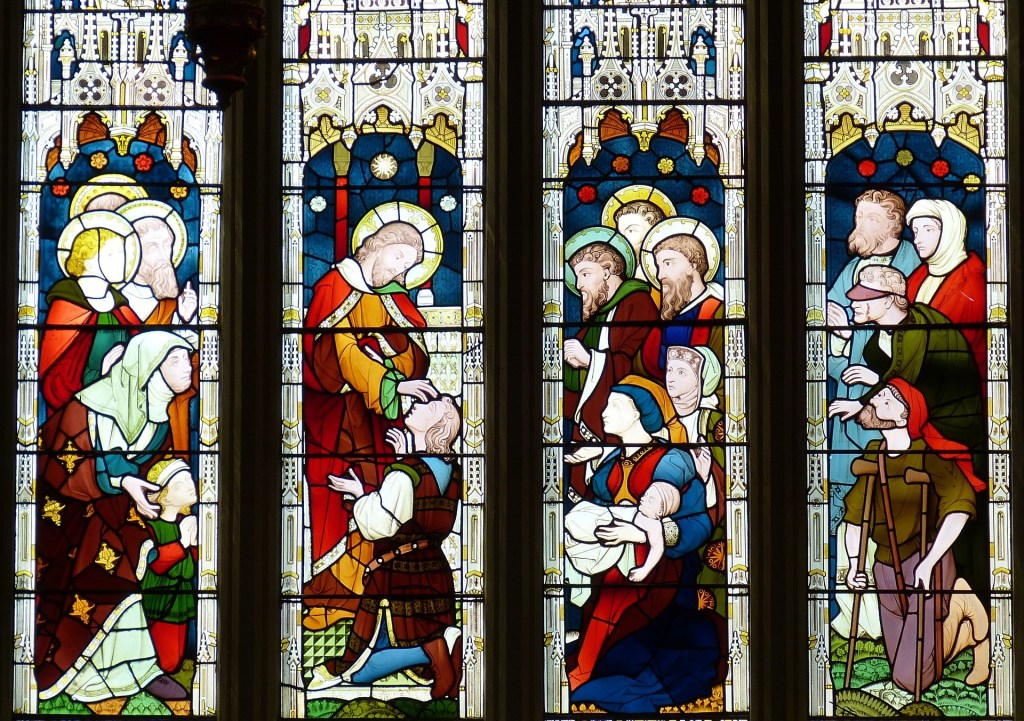
Then Ananias went to the house and entered it. Placing his hands on Saul, he said, ‘Brother Saul, the Lord – Jesus, who appeared to you on the road as you were coming here – has sent me so that you may see again and be filled with the Holy Spirit.’ Immediately, something like scales fell from Saul’s eyes, and he could see again. He got up and was baptised, and after taking some food, he regained his strength.

*       *       *

Saul had blood on his hands. He had approved Stephen’s killing. He had been actively seeking to imprison and punish, potentially with death, those who followed the Way. St Luke describes him as “breathing out murderous threats against the Lord’s disciples.”

His zeal to destroy what he saw as the blasphemy of this new religion even extended to obtaining a warrant from the high priest to go to Damascus and arrest Christians there. Within the confines of his society and religious belief, his motivation was good. He wanted to do God’s will. Blasphemy and apostasy were very serious sins under Mosaic law, and the death penalty was not viewed as disproportionate.

The story of Saul’s conversion highlights the dramatic difference between Judaism and Christianity that had emerged in just a few years since Jesus’ death and resurrection. Under Judaism, Saul was a good man and a fervent servant of God. The Christians, by contrast, saw him as a threat to their very existence. However, as this story shows, they had a means of understanding who he truly was, forgiving him, and accepting him as a co-worker in the kingdom of God.

The whole story hinges upon miracles.

Paul sees a vision and hears the voice of Jesus, challenging the whole basis of his life. The experience is so compelling that he takes it to heart. When he gets to Damascus, he fasts, strictly, and prays for three days. During this period, he sees a vision that shows Ananias laying on hands and healing him.

Meanwhile, Ananias, a disciple of Jesus, also has a vision in which he is told to go to Saul and heal him. He’s even given the address. Not surprisingly, Ananias is wary. He points out that Saul has been persecuting the church. However, the Lord tells him to go, because Saul is his chosen instrument for proclaiming Jesus to the world.

Ananias obeys. Saul is healed and baptised as a Christian.

The difference between Saul’s dreadful mistakes before conversion and his powerful witness for Jesus afterwards is down to the work of the Holy Spirit. Before conversion he had the Mosaic law to guide his behaviour and sacrifice in the temple to demonstrate atonement for sin. After conversion he had the indwelling Holy Spirit.

The difference between the Christian experience of God and the Jewish experience of God is down to the presence of the Holy Spirit in our lives.

Our actions must be guided by the Holy Spirit. We must be obedient to what he tells us. We should expect God to work miracles today, if we listen and obey.

I will add a cautionary note. Our listening to the Holy Spirit must be done with great care. We must test revelations against Scripture. We must pray diligently. We must trust God to teach us how to listen and how to understand, and how to obey.

Prayer

Heavenly Father

Thank you for the gift of your Holy Spirit. Please help me to be better at listening to him, and more obedient to his guidance.

In Jesus’ name, Amen

Additional note  

There are two accounts of Saul’s conversion in Acts, this one, Acts 9: 1 – 19 and Acts 22: 6 – 21, when Luke reports St Paul telling the Jews of Jerusalem about his conversion. These two accounts are different.

In the NIV translation that I have been using, the difference is smoothed out and hardly perceptible, but in, for example, the King James translation the difference is clear.

Here are the NIV versions of the differences.

Acts 9: 7 “The men travelling with Saul stood there speechless; they heard the sound but did not see anyone.”

Acts 22: 9 “My companions saw the light, but they did not understand the voice of him who was speaking to me.”

They heard the sound but did not understand the voice.

And here are the King James versions.

Acts 9: 7 “And the men which journeyed with him stood speechless, hearing a voice, but seeing no man.”

Acts 22: 9 “And they that were with me saw indeed the light, and were afraid; but they heard not the voice of him that spake to me.”

They heard a voice/they heard not a voice.

It can certainly be argued that “did not understand the voice” is a more accurate translation of the Greek, but the argument is far from conclusive.

Whether or not the NIV translation is better, it still begs the question as to which translation should be taken as ‘inerrant’; or indeed whether any version should be regarded as inerrant.
Acts 8: 26 – 40 Philip and the Ethiopian

Acts 8: 26 – 40 Philip and the Ethiopian

Now an angel of the Lord said to Philip, ‘Go south to the road – the desert road – that goes down from Jerusalem to Gaza.’ So he started out, and on his way he met an Ethiopian eunuch, an important official in charge of all the treasury of the Kandake (which means ‘queen of the Ethiopians’). This man had gone to Jerusalem to worship, and on his way home was sitting in his chariot reading the scroll of Isaiah the prophet. The Spirit told Philip, ‘Go to that chariot and stay near it.’

Then Philip ran up to the chariot and heard the man reading Isaiah the prophet. ‘Do you understand what you are reading?’ Philip asked.

‘How can I,’ he said, ‘unless someone explains it to me?’ So he invited Philip to come up and sit with him.

This is the passage of Scripture the eunuch was reading:

‘He was led like a sheep to the slaughter, and as a lamb before its shearers is silent, so he did not open his mouth. In his humiliation he was deprived of justice. Who can speak of his descendants? For his life was taken from the earth.’

The eunuch asked Philip, ‘Tell me, please, who is the prophet talking about, himself or someone else?’ Then Philip began with that very passage of Scripture and told him the good news about Jesus.

As they travelled along the road, they came to some water and the eunuch said, ‘Look, here is water. What can stand in the way of my being baptised? And he gave orders to stop the chariot. Then both Philip and the eunuch went down into the water and Philip baptised him. When they came up out of the water, the Spirit of the Lord suddenly took Philip away and the eunuch did not see him again, but went on his way rejoicing. Philip, however, appeared at Azotus and travelled about, preaching the gospel in all the towns until he reached Caesarea.

*       *       *

Perhaps one reason St Luke included this story about Philip is to teach us about effective evangelism.

Philip was prompted by the Holy Spirit to go to a particular place. He was listening for the Spirit’s voice, he recognised it, and he obeyed what he was told.

As he was doing what the Spirit told him, he saw a chariot that belonged to an important man. Once again, the Holy Spirit spoke to him: “Go to that chariot and stay near it.” Once again, Philip obeyed.

As he obeyed, he heard the man reading from the Jewish Scriptures, the passage being: “He was led like a sheep to the slaughter, and as a lamb before its shearers is silent, so he did not open his mouth. In his humiliation he was deprived of justice. Who can speak of his descendants? For his life was taken from the earth.”

This is a quotation from Isaiah 53: 7, 8.

Philip asked him whether he understood the passage. It is important when telling somebody about Jesus to find out what they already know. In this case, the man was a foreigner from ‘Ethiopia’ (not necessarily the same as the modern state of that name; it may just have indicated a place to the south of Egypt). He had been to Jerusalem to worship, so he must have been at least a proselyte to Judaism. However, he didn’t understand what he was reading. Whatever his position towards Judaism, he had not had the benefit of instruction.

By asking whether he understood the passage, Philip had opened the way for the man to ask for instruction. Teaching goes better when the pupil wishes to learn.

The passage of Isaiah is all about Jesus as the suffering servant. It’s an excellent starting point. Philip used Scripture to tell the man about Jesus. So powerful was his evangelism that the man wanted to be baptised as soon as possible. They came to some water, and Philip baptised him. Then the Spirit took Philip away, and the man went on his way.

Now the man was returning to Ethiopia. He would have had no support there from the early church. Nevertheless, God thought it worthwhile to send Philip specially to bring him the good news of Jesus. Every single soul is precious to God. And we don’t know the impact of the man’s Christian faith on his family, his colleagues and the Kandake. What we do know, is that Ethiopia was one of the first nations to make Christianity the state religion, in the late 4th century. I can’t help wondering whether this was due to Philip’s evangelism!

Prayer

Heavenly Father,

Thank you for all those who, like Philip, witness to your love. Please help me to be more eager to share my faith in Jesus with those around me.

In Jesus’ name, Amen

Acts 8: 9 – 25 Simon the sorcerer

Acts 8: 9 – 25 Simon the sorcerer

Now for some time a man named Simon had practised sorcery in the city and amazed all the people of Samaria. He boasted that he was someone great, and all the people, both high and low, gave him their attention and exclaimed, ‘The man is rightly called the Great Power of God.’ They followed him because he had amazed them for a long time with his sorcery. But when they believed Philip as he proclaimed the good news of the kingdom of Gof and the name of Jesus Christ, they were baptised, both men and women. Simon himself believed and was baptised. And he followed Philip everywhere, astonished by the great signs and miracles he saw.

When the apostles in Jerusalem heard that Samaria had accepted the word of God, they sent Peter and John to Samaria. When they arrived, they prayed for the new believers there that they might receive the Holy Spirit, because the Holy Spirit had not yet come on any of them; They had simply been baptised in the name of the Lord Jesus. Then Peter and John placed their hands on them, and they received the Holy Spirit.

When Simon saw that the Spirit was given at the laying on of the apostles’ hands, he offered them money and said, ‘Give me also this ability so that everyone on whom I lay my hands may receive the Holy Spirit.’

Peter answered: ‘May your money perish with you, because you thought you could buy the gift of God with money! You have no part or share in this ministry, because your heart is not right before God. Repent of this wickedness and pray to the Lord in the hope that he may forgive you for having such a thought in your heart. For I see that you are full of bitterness and captive to sin.’

Then Simon answered, ‘Pray to the Lord for me so that nothing you have said may happen to me.’

After they had further proclaimed the word of the Lord and testified about Jesus, Peter and John returned to Jerusalem, preaching the gospel in many Samaritan villages.

*       *       *

Sorcery was strictly forbidden under Mosaic Law. Perhaps the most emphatic statement against it is this:

“A man or woman who is a medium or spiritist among you must be put to death. You are to stone them; their blood will be on their own heads” (Leviticus 20: 27)

It would seem that Simon concealed the occult nature of his practices, for Luke reports that “all the people, both high and low, gave him their attention and exclaimed, ‘The man is rightly called the Great Power of God.’ ”

Then Philip arrived in Samaria, chased out of Jerusalem when the church there was persecuted. He was one of the seven who had been appointed to oversee food distribution, and had been a co-worker with Stephen. He preached to the Samaritans about the kingdom of God and about Jesus, and his ministry was validated by many healings. People flocked to be baptised.

This must have had a bad effect on Simon’s prestige – and his income.

Nevertheless, Simon joined the congregation, and was himself baptised. Luke says “And he followed Philip everywhere, astonished by the great signs and miracles he saw.”

I wonder if it was only the signs and miracles that attracted him? Maybe he was also drawn to Jesus by Philip’s witness to him?

Simon’s self-interest was threatened by the miracles worked by God through Philip. A threat to self-interest often prompted the violent rejection of Jesus, as we’ve just seen in the stoning of Stephen. Yet Simon became baptised and followed Philip everywhere.

News of Philip’s success in preaching the word to the Samaritans was reported to the apostles in Jerusalem, who sent Peter and John to Samaria. They found that Philip had simply baptised the new believers in the name of Jesus; the Holy Spirit had not yet come on any of them.

Peter and John prayed for the Holy Spirit to be given to the new believers, placed their hands on them, and they received the Holy Spirit. Luke doesn’t describe the scene, but it must have been quite dramatic. In fact, it was so powerful that Simon immediately identified it as the source of the signs done by Philip and the apostles.

“When Simon saw that the Spirit was given at the laying on of the apostles’ hands, he offered them money and said, ‘Give me also this ability so that everyone on whom I lay my hands may receive the Holy Spirit.’ ”

Peter’s reply bears close study.

“ ‘May your money perish with you, because you thought you could buy the gift of God with money!’ ”

The gift of God is the forgiveness of sins. It is free; it can’t be bought, or earned, or in any way deserved. Belief in Jesus is all that you need.

“You have no part or share in this ministry, because your heart is not right before God.”

Simon had seen that the presence of the Holy Spirit had brought power, and he desired that power. But he hadn’t realised that the real gift of God wasn’t the power, but the forgiveness of his sins. He didn’t believe in Jesus, he believed in the power he saw. Simon had not sought and received forgiveness; how, then, could he have any share in the ministry?

“Repent of this wickedness and pray to the Lord in the hope that he may forgive you for having such a thought in your heart.”

What was the sin that needed repentance? Well, it was actually a very common sin, the one that underlies most sin. Simon wanted to retain control of his life. He wanted God’s power, but not God’s direction. He had been through the ritual of baptism but had not surrendered his life to Jesus.

“For I see that you are full of bitterness and captive to sin.’ ”

Peter could see clearly that Simon wanted to retain control of his life and was therefore captive to sin.

Simon’s reply to Peter is intriguing

“ ‘Pray to the Lord for me so that nothing you have said may happen to me.’ ”

He clearly trusts what Peter has told him. He fears the consequences of his sin. He’s some way short of repentance and belief, but he’s moving in the right direction, I think.

Meanwhile, Peter and John return to Jerusalem, preaching the gospel in many Samaritan villages. The good news of Jesus has started to spread!

Prayer

Heavenly Father

Thank you that I can turn to you for guidance when I need to know your will. Please help me to allow you to direct my life.

In Jesus’ name, Amen

Acts 8: 1 – 8 The church persecuted and scattered

Acts 8: 1 – 8 The church persecuted and scattered

On that day a great persecution broke out against the church in Jerusalem, and all except the apostles were scattered throughout Judea and Samaria. Godly men buried Stephen and mourned deeply for him. But Saul began to destroy the church. Going from house to house, he dragged off both men and women and put them in prison.

Philip in Samaria

Those who had been scattered preached the word wherever they went. Philip went down to a city in Samaria and proclaimed the Messiah there. When the crowds heard Philip and saw the signs he performed, they all paid close attention to what he said. For with shrieks, impure spirits came out of many, and many who were paralysed or lame were healed. So there was great joy in that city.

*       *       *

For the last four days I’ve been looking at Stephen’s trial and martyrdom. Today, we move ahead to the immediate aftermath of Stephen’s stoning to death. However, we will need to refer to the previous posts to understand what today’s reading can teach us.

The first thing I personally have to come to terms with is that God allowed Stephen to be brutally murdered. That’s not to say God was responsible, because he wasn’t; the responsibility lies firmly with those who killed Stephen. But God, knowing what was to happen, let it happen. Stephen didn’t even seem to get the chance to decide whether he was prepared to be martyred; once he’d started preaching to the Sanhedrin his martyrdom was pretty much inevitable.

But, actually, his decision to be prepared to be martyred was made considerably earlier, right from the moment he decided to follow Jesus.

“Then Jesus said to his disciples, ‘Whoever wants to be my disciple must deny themselves and take up their cross and follow me.’ ” (Matthew 16: 24)

“Then he called the crowd to him along with his disciples and said: ‘Whoever wants to be my disciple must deny themselves and take up their cross and follow me.’ ” (Mark 8: 34)

“Then he said to them all: ‘Whoever wants to be my disciple must deny themselves and take up their cross daily and follow me.’ ” (Luke 9: 23)

All three of the synoptic gospels spell out Jesus’ statement of the cost of being a disciple. We need to be prepared to give up possessions, reputation, comfort and even life itself, if we are to be a disciple of Jesus. The possibility of martyrdom isn’t something covered in the small print – it’s in bold print, and worded in the strongest way possible.

Stephen had accepted that possibility, had opened himself to the Holy Spirit, who had used him powerfully.

Consider what happened as a result of Stephen’s death.

The church was persecuted.

On that day a great persecution broke out against the church in Jerusalem, and all except the apostles were scattered throughout Judea and Samaria.

Saul was a leader in persecuting the church.

But Saul began to destroy the church. Going from house to house, he dragged off both men and women and put them in prison.

What was the result of the scattering of the followers of Jesus?

Those who had been scattered preached the word wherever they went.

 What was the result of Saul’s experiences while persecuting the church? Saul became a follower of Jesus and ultimately became St Paul.

If Stephen had not been martyred, would the faith have spread beyond Jerusalem? I wonder…

And, when we’re thinking about the cost of discipleship, we can remember the words Stephen spoke at the conclusion of his speech: ‘Look,’ he said, ‘I see heaven open and the Son of Man standing at the right hand of God.’ The strength and encouragement of that vision enabled him to remain at peace, forgiving his murderers, and committing his spirit to the Lord Jesus.

Prayer

Heavenly Father

May your kingdom come, your will be done, on earth as it is in heaven.

Please help me to play my part in the coming of your kingdom. Please help me to be willing to put your will before everything else.

In Jesus’ name, Amen

Acts 7: 44 – 60, 8: 1 Stephen’s speech to the Sanhedrin – Part 4

Acts 7: 44 – 60, 8: 1 Stephen’s speech to the Sanhedrin – Part 4

Our ancestors had the tabernacle of the covenant law with them in the wilderness. It had been made as God directed Moses, according to the pattern he had seen. After receiving the tabernacle, our ancestors under Joshua brought it with them when they took the land from the nations God drove out before them. It remained in the land until the time of David, who enjoyed God’s favour and asked that he might provide a dwelling-place for the God of Jacob. But it was Solomon who built a house for him.

‘However, the Most High does not live in houses made by human hands. As the prophet says: “Heaven is my throne, and the earth is my footstool. What kind of house will you build for me? says the Lord. Or where will my resting place be? Has not my hand made all these things?”

‘You stiff-necked people! Your hearts and ears are still uncircumcised. You are just like your ancestors: you always resist the Holy Spirit! Was there ever a prophet your ancestors did not persecute? They even killed those who predicted the coming of the Righteous One. And now you have betrayed and murdered him – you who have received the law that was given through angels but have not obeyed it.’

The stoning of Stephen

When the members of the Sanhedrin heard this, they were furious and gnashed their teeth at him. But Stephen, full of the Holy Spirit, looked up to heaven and saw the glory of God, and Jesus standing at the right hand of God. ‘Look,’ he said, ‘I see heaven open and the Son of Man standing at the right hand of God.’

At this they covered their ears and, yelling at the top of their voices, they all rushed at him, dragged him out of the city and began to stone him. Meanwhile, the witnesses laid their coats at the feet of a young man named Saul.

While they were stoning him, Stephen prayed, ‘Lord Jesus, receive my spirit.’ Then he fell on his knees and cried out, ‘Lord, do not hold this sin against them.’ When he had said this, he fell asleep.

And Saul approved of their killing him.

*       *       *

Stephen had been seized and taken before the Sanhedrin, charged with preaching that Jesus of Nazareth would destroy the temple and change the customs established by Moses. In his response to these charges, he summarised the story of the Israelites from Abraham to Moses. He referred repeatedly to the scripture to show he was preaching an orthodox faith.

However, the account given in the scriptures showed that the Israelites repeatedly rejected those sent to them by God. Despite Moses’ anointing by God as the Israelites leader, despite the signs and wonders that God worked through him, the Israelites returned to idol worship.

Stephen now addressed the charge of preaching that Jesus of Nazareth would destroy the temple. Once again, he approached this through the scriptures.

He described how the original holy place for the Israelites wasn’t a temple but a tabernacle. At God’s direction, Moses had the tabernacle built to carry the covenant law, and this went with the Israelites as they wandered in the wilderness and then settled in Canaan. He related that it wasn’t until the reign of King Solomon that a temple had been built for God.

Then he immediately added, ‘However, the Most High does not live in houses made by human hands. As the prophet says: “Heaven is my throne, and the earth is my footstool. What kind of house will you build for me? says the Lord. Or where will my resting place be? Has not my hand made all these things?”

This is almost an exact quotation of a passage from Isaiah:

“This is what the Lord says: ‘Heaven is my throne, and the earth is my footstool. Where is the house you will build for me? Where will my resting place be? Has not my hand made all these things, and so they came into being?’ declares the Lord.”

What Stephen meant here is that the temple is unnecessary. It hasn’t always existed, and it isn’t essential because God is everywhere – and can thus be worshipped anywhere.

The temple was central to the worship of the Jews of Jesus’ day. Every adult male was supposed to go there for the major festivals, and many did. At Passover, for instance, tens of thousands would flock to Jerusalem and the temple. And they brought sacrifices and offerings. This was where the wealth and power of the chief priests and teachers of the law came from. Custom, reinforced by self-interest made the abandonment of temple worship unthinkable for the Sanhedrin.

Stephen then concluded his speech by denouncing the members of the Sanhedrin. He told them their hearts and ears were uncircumcised, by which he meant that although they had the physical sign of circumcision, spiritually they were not circumcised. Spiritually they were not included in God’s covenant. Stephen told them that, like their ancestors, they were resisting the Holy Spirit. He pointed out that their ancestors persecuted all the prophets, including those who predicted the coming of the Righteous One (the Messiah; Jesus of Nazareth). And, finally, he charged them with the betrayal and murder of Jesus.

The anger of the Sanhedrin rose to fever-pitch.

But Stephen, full of the Holy Spirit, looked up to heaven and saw the glory of God, and Jesus standing at the right hand of God. ‘Look,’ he said, ‘I see heaven open and the Son of Man standing at the right hand of God.’

For a mere mortal to claim to see God was intolerable. It outraged everything the members of the Sanhedrin had been taught, every value they had lived by.

At this they covered their ears and, yelling at the top of their voices, they all rushed at him, dragged him out of the city and began to stone him.

How revealing. They covered their ears. They yelled at the top of their voices. This is what children do when they don’t want to hear something. The members of the Sanhedrin didn’t want to hear the message of Jesus, they didn’t want to be obedient. They wanted their own way.

I find this scene quite appalling. These men, leaders of the nation, wealthy, powerful, and learned were transformed into a murderous mob. And that the transformation was triggered by a desperate urge to reject the message of Jesus is absolutely chilling.

Stephen, as he was being stoned, commits his spirit to Jesus, and he forgives the men who are murdering him.

We shall see later that God did indeed forgive that sin, for, “the witnesses laid their coats at the feet of a young man named Saul.”

We shall be meeting that young man again.

Prayer

Heavenly Father

You created human beings in your own image, and you gave us the potential to overcome the sinful and selfish urges that too often drive our actions. I confess that I am selfish. Please forgive me when I act selfishly, and please help me to be more loving and generous.

In Jesus’ name, Amen

Acts 7: 30 – 43 Stephen’s speech to the Sanhedrin – Part 3

Acts 7: 30 – 43 Stephen’s speech to the Sanhedrin – Part 3

‘After forty years had passed, an angel appeared to Moses in the flames of a burning bush in the desert near Mount Sinai. When he saw this, he was amazed at the sight. As he went over to get a closer look, he heard the Lord say: “I am the God of your fathers, the God of Abraham, Isaac and Jacob.” Moses trembled with fear and did not dare to look.

‘Then the Lord said to him, “Take off your sandals, for the place where you are standing is holy ground. I have indeed seen the oppression of my people in Egypt. I have heard their groaning and have come down to set them free. Now come, I will send you back to Egypt.”

This is the same Moses they had rejected with the words, “Who made you ruler and judge?” He was sent to be their ruler and deliverer by God himself, through the angel who appeared to him in the bush. He led them out of Egypt and performed wonders and signs in Egypt, at the Red Sea and for forty years in the wilderness.

‘This is the Moses who told the Israelites, “God will raise up for you a prophet like me from your own people.” He was in the assembly in the wilderness, with the angel who spoke to him on Mount Sinai, and with our ancestors; and he received living words to pass on to us.

‘But our ancestors refused to obey him. Instead, they rejected him and in their hearts turned back to Egypt. They told Aaron, “Make us gods who will go before us. As for this fellow Moses who led us out of Egypt – we don’t know what has happened to him!” That was the time they made an idol in the form of a calf. They brought sacrifices to it and revelled in what their own hands had made. But God turned away from them and gave them over to the worship of the sun, moon and stars. This agrees with what is written in the book of the prophets:

‘ “Did you bring me sacrifices and offerings for forty years in the wilderness, people of Israel? You have taken up the tabernacle of Molek and the star of your god Rephan, the idols you made to worship. Therefore I will send you into exile beyond Babylon.”

*       *       *

Stephen had been seized and taken before the Sanhedrin, charged with preaching that Jesus of Nazareth would destroy the temple and change the customs established by Moses. In the first part of his defence, he summarised the story of Abraham and his descendants as far as the patriarchs, to show he was preaching an orthodox faith. In the second part of his speech, he spoke about Moses’ early life. Again, he’s orthodox in what he says. However, he slants his account to emphasise that although Moses was sent by God, the Israelites rejected him.

In today’s passage, the emphasis of Stephen’s speech changes; the focus moves from showing the orthodoxy of his preaching to an indictment of the Israelites. At present, he confines the indictment to the Israelites of Moses’ day, but the direction in which he is moving is clear.

He starts by telling how God used a burning bush to attract Moses’ attention before commissioning him to return from Midian to Egypt to deliver the Israelites from slavery. “He was sent to be their ruler and deliverer by God himself, through the angel who appeared to him in the bush.”

This is orthodox. In Exodus, one of the books of the Jewish scriptures, it says this:

“And now the cry of the Israelites has reached me, and I have seen the way the Egyptians are oppressing them. So now, go. I am sending you to Pharaoh to bring my people the Israelites out of Egypt.” (Exodus 3: 9 – 10)

Stephen then very concisely covers the successful departure of the Israelites from Egypt. He notes particularly that Moses performed wonders and signs in Egypt, in the Red Sea and for forty years in the wilderness. God validated his anointing of Moses by working miracles through him. The parallel with Jesus is only implicit at this point, so Stephen moves to make it explicit.

‘This is the Moses who told the Israelites, “God will raise up for you a prophet like me from your own people.”

In Deuteronomy, another of the books of the Jewish scriptures, it says this:

“The Lord your God will raise up for you a prophet like me from among you, from your fellow Israelites. You must listen to him.” (Deuteronomy 18: 15)

The early church viewed this prophecy made by Moses as referring to Jesus. Jesus was the ‘prophet like Moses’, and his ministry had also been validated by God with signs and wonders.

Stephen now speaks of a shameful episode in the life of Israel.

God had anointed Moses as leader of the Israelites, and he had saved them from slavery in Egypt. Once, when he was absent for a period, the Israelites used gold from their jewellery and ornaments to make an idol in the form of a calf. Stephen says, “They brought sacrifices to it and revelled in what their own hands had made. But God turned away from them and gave them over to the worship of the sun, moon and stars.”

Despite Moses’ anointing by God, despite the signs and wonders, the Israelites returned to idol worship.

This must have made uncomfortable listening for the Sanhedrin. They couldn’t argue with Stephen about the actions of the Israelites – it’s all there in their scriptures (Exodus 32: 1 – 35). Neither was Stephen a member of their elite; how dare he stand there lecturing them as though they were schoolboys!

And yet, if they had listened with hearts that were open to the truth, they could have heard the message that God was calling them to a higher service than that of Moses. What a missed opportunity!

Prayer

Heavenly Father

Thank you for your gift of the Holy Spirit, who speaks to us about the truth. Please help me to listen with a mind open to understand and a heart open to obey.

In Jesus’ name, Amen

Acts 7: 17 – 29 Stephen’s speech to the Sanhedrin – Part 2

Acts 7: 17 – 29 Stephen’s speech to the Sanhedrin – Part 2

‘As the time drew near for God to fulfil his promise to Abraham, the number of our people in Egypt had greatly increased. Then “a new king, to whom Joseph meant nothing, came to power in Egypt”. He dealt treacherously with our people and oppressed our ancestors by forcing them to throw out their newborn babies so that they would die.

‘At that time Moses was born, and he was no ordinary child. For three months he was cared for by his family. When he was placed outside, Pharaoh’s daughter took him and brought him up as her own son. Moses was educated in all the wisdom of the Egyptians and was powerful in speech and action.

‘When Moses was forty years old, he decided to visit his own people, the Israelites. He saw one of them being ill-treated by an Egyptian, so he went to his defence and avenged him by killing the Egyptian. Moses thought that his own people would realise that God was using him to rescue them, but they did not. The next day Moses came across two Israelites who were fighting. He tried to reconcile them by saying, “Men, you are brothers; why do you want to hurt each other?”

‘But the man who was ill-treating the other pushed Moses aside and said, “Who made you ruler and judge over us? Are you thinking of killing me as you killed the Egyptian yesterday?”

When Moses heard this, he fled to Midian, where he settled as a foreigner and had two sons.

*       *       *

Stephen had been seized and taken before the Sanhedrin. He had been charged with preaching that Jesus of Nazareth would destroy the temple and change the customs established by Moses. In the first part of his defence, he summarised the story of Abraham and his descendants, as far as the patriarchs. This showed that when it came to the foundation of Israel, he was preaching an orthodox faith. It also established Abraham’s faith and obedience as a benchmark of piety.

Next, Stephen spoke about Moses. He recounted his miraculous preservation when exposed as an infant. If you’re not familiar with the story, it’s well worth reading in Exodus 2: 1 – 10. As a result of this deliverance, Moses was brought up in Pharaoh’s household, as the child of Pharaoh’s daughter. Stephen says, “Moses was educated in all the wisdom of the Egyptians and was powerful in speech and action.”

Then, when he was a mature man, forty years old, Moses decided to visit his own people, the Israelites. When he visited them, he found an Egyptian ill-treating an Israelite, and he killed him. Once again, Stephen is basing his argument on scripture: “Looking this way and that and seeing no one, he killed the Egyptian and hid him in the sand.” (Exodus 2: 12)

Stephen continued, telling the Sanhedrin that the following day Moses visited again, and this time he found two Israelites fighting. When he tried to reconcile them, the aggressor pushed him aside and said “Who made you ruler and judge over us? Are you thinking of killing me as you killed the Egyptian yesterday?”

Knowing that he’d been found out as the Egyptian’s killer, Moses fled from Egypt to Midian.

Why did Stephen choose this particular detail of his life?

Four out of five books of the Pentateuch (the Jewish scriptures, which are also the first five books of our Old Testament) are about Moses’ story. That’s a substantial amount of detail from which Stephen could have chosen.

I think this sentence might contain at least part of the answer. “Moses thought that his own people would realise that God was using him to rescue them, but they did not.” This comment doesn’t appear in the account of the incident given in Exodus 2: 11 – 15. It may have been the way the Jews of Stephen’s day viewed Moses’ motivation, or it may have been inserted by Stephen. It makes Moses a forerunner of Jesus as a man sent from God to rescue his people.

When Moses tried to intercede between two Israelites who were fighting, he is rejected with the words, “Who made you ruler and judge over us? Are you thinking of killing me as you killed the Egyptian yesterday?” – and these words do appear in the account in Exodus.

Stephen is making the point that the Israelites, despite their loud protestations of faith in Moses as prophet and Law-giver, actually rejected him when he first took up their cause. Every member of the Sanhedrin would have understood that Stephen was telling them that they had rejected Jesus just as their ancestors had rejected Moses.

What can this passage mean for our own lives?

When Moses interceded between the fighting Israelites, he wanted to help them be reconciled. He wanted them to feel a sense of brotherhood. He wanted them to feel they had a common purpose as God’s people.

When Jesus, through the Holy Spirit, prompts our conscience, he wants us to be reconciled with God. He wants us to experience God’s love, and share it with each other. He wants us to feel a common purpose as God’s people.

Let’s not be like the Sanhedrin, antagonistic and feeling threatened. Let’s be like Stephen, full of faith. Let’s welcome the Holy Spirit into our lives with joy!

Prayer

Heavenly Father

Thank you that you love us and want only the best for us. Please fill us with your Holy Spirit and make us bold in telling people about Jesus.

In Jesus’ name, Amen

Acts 7: 1 – 16 Stephen’s speech to the Sanhedrin – Part 1

Acts 7: 1 – 16 Stephen’s speech to the Sanhedrin – Part 1

Then the high priest asked Stephen, ‘Are these charges true?’

To this he replied: ‘Brothers and fathers, listen to me! The God of glory appeared to our father Abraham while he was still in Mesopotamia, before he lived in Harran. “Leave your country and your people,” God said, “and go to the land I will show you.”

‘So he left the land of the Chaldeans and settled in Harran. After the death of his father, God sent him to this land where you are now living. He gave him no inheritance here, not even enough ground to set a foot on. But God promised him that he and his descendants after him would possess the land, even though at that time Abraham had no child. God spoke to him in this way: “For four hundred years your descendants will be strangers in a country not their own, and they will be enslaved and ill-treated. But I will punish the nation they serve as slaves,” God said, “and afterwards they will come out of that country and worship me in this place.” Then he gave Abraham the covenant of circumcision. And Abraham became the father of Isaac and circumcised him eight days after his birth. Later Isaac became the father of Jacob, and Jacob became the father of the twelve patriarchs.

‘Because the patriarchs were jealous of Joseph, they sold him as a slave into Egypt. But God was with him and rescued him from all his troubles. He gave Joseph wisdom and enabled him to gain the goodwill of Pharaoh king of Egypt. So Pharaoh made him ruler over Egypt and all his palace.

Then a famine struck all Egypt and Canaan, bringing great suffering, and our ancestors could not find food. When Jacob heard that there was grain in Egypt, he sent our forefathers on their first visit. On their second visit, Joseph told his brothers who he was, and Pharaoh learned about Joseph’s family. After this, Joseph sent for his father Jacob and his whole family, seventy-five in all. Then Jacob went down to Egypt, where he and our ancestors died. Their bodies were brought back to Shechem and placed in the tomb that Abraham had bought from the sons of Hamor at Shechem for a certain sum of money.

*       *       *

Then the high priest asked Stephen, ‘Are these charges true?’

This was how Stephen had been charged. ‘They produced false witnesses, who testified, “This fellow never stops speaking against this holy place and against the law. For we have heard him say that this Jesus of Nazareth will destroy this place and change the customs Moses handed down to us.” ’

We’ve heard charges like this before, made against Jesus when he was being tried by the Sanhedrin.

Then some stood up and gave this false testimony against him: ‘We heard him say, “I will destroy this temple made with human hands and in three days will build another, not made with hands.” ’ (Mark 14: 57 – 58)

When charged like this, Jesus kept silent. Stephen, though, is inspired by the Holy Spirit to a different course of action. He went back to the very beginning of Israel, with the call of Abraham. He based his answer to the charges against him firmly on the Jewish scriptures.

The Lord said to Abram, ‘Go from your country, your people and your father’s household to the land I will show you. I will make you into a great nation, and I will bless you; I will make your name great and you will be a blessing. I will bless those who bless you, and whoever curses you I will curse; and all peoples on earth will be blessed through you.’

So Abram went as the Lord had told him. (Genesis 12: 1 – 4)

This passage from Genesis is part of the scripture from which Stephen draws his answer. It shows that the founder of Judaism had faith in God, had faith in God’s promises, and was obedient to God’s commands. No member of the Sanhedrin would argue with it; it was orthodox.

Stephen proceeds

‘Then he gave Abraham the covenant of circumcision.’

His statement draws on a passage in Genesis:

Abram fell face down, and God said to him, ‘As for me, this is my covenant with you: you will be the father of many nations. No longer will you be called Abram; your name will be Abraham, for I have made you a father of many nations…Then God said to Abraham, ‘As for you, you must keep my covenant, you and your descendants after you for the generations to come. This is my covenant with you and your descendants after you, the covenant you are to keep: every male among you shall be circumcised.’ (Genesis 17: 3 – 5, 9 – 10)

Stephen stresses the closeness of Abraham to God. Again, this is orthodox. Nothing for anyone to get upset about.

Then Stephen moves on rapidly to the patriarchs (the great-grandsons of Abraham through Isaac), especially Joseph. He summarises Joseph’s biography very succinctly. (If you want to read the whole story of Joseph, you can find it in Genesis chapters 37 – 50).

Again, Stephen’s argument is based on the scriptures, and no one in the Sanhedrin would be able to disagree with him.

To summarise this first part of Stephen’s defence, he’s establishing the common ground between what he’s been preaching, and what the Jewish scriptures say.

What lessons can we learn from this passage?

I think for me the main lesson is to listen to the prompting of the Holy Spirit. Different circumstances call for different responses. Stephen was charged with the same offence as Jesus. Jesus remained silent; Stephen was prompted to speak eloquently. Both responses were right; they were what was needed by God.

How do we know what the Holy Spirit is saying? We pray. We consider scripture. We repent so that we can hear God speak. We consciously place ourselves in God’s hands – and in doing so we are only doing what God wants for us. For what could be better than to be in the hands of Jesus?

Prayer

Heavenly Father

Thank you for loving all humanity. Thank you for loving me. Please make me ever more alert to the prompting of your Holy Spirit, and ever more obedient.

In Jesus’ name, Amen

Acts 6: 8 – 15 Stephen seized

Acts 6: 8 – 15 Stephen seized

Now Stephen, a man full of God’s grace and power, performed great wonders and signs among the people. Opposition arose, however, from members of the Synagogue of the Freedmen (as it was called) – Jews of Cyrene and Alexandria as well as the provinces of Cilicia and Asia – who began to argue with Stephen. But they could not stand up against the wisdom the Spirit gave him as he spoke.

Then they secretly persuaded some men to say, ‘We have heard Stephen speak blasphemous words against Moses and against God.’

So they stirred up the people and the elders and the teachers of the law. They seized Stephen and brought him before the Sanhedrin. They produced false witnesses, who testified, ‘This fellow never stops speaking against this holy place and against the law. For we have heard him say that this Jesus of Nazareth will destroy this place and change the customs Moses handed down to us.’

All who were sitting in the Sanhedrin looked intently at Stephen, and they saw that his face was like the face of an angel.

*       *       *

Stephen, having been chosen as one of the seven responsible for the distribution of food to the needy, found that his calling required him to testify about Jesus. His faith must have been great, because his ministry was validated by great wonders and signs among the people. When he spoke, the Holy Spirit gave him words that others found unanswerable.

St Luke writes that members of the Synagogue of the Freedmen secretly persuaded some men to say, “We have heard Stephen speak blasphemous words against Moses and against God.”

The early church still identified itself as Jewish. The disciples spent many hours worshipping in the temple. Peter and the apostles taught and healed in Solomon’s Colonnade, in the temple. The early church looked at the Jewish Law and Prophets and saw Jesus as the Messiah, the one who fulfilled what was written there. And their message was getting through. “The numbers of disciples in Jerusalem increased rapidly, and a large number of priests became obedient to the faith.” (Acts 6: 7)

The established leadership of the Israelites saw this as a threat. They failed to defeat Stephen in debate, so they made out he was a law-breaker, and had him seized and dragged before the Sanhedrin. The charge was revealing. “…we have heard him say that this Jesus of Nazareth will destroy this place and change the customs Moses handed down to us.”

Temple worship would disappear. The customs handed down from Moses would be changed. These were the things that gave the chief priests and teachers of the law their power, status and wealth. They weren’t going to let that happen without a fight. The infant church was about to face the might of the established religion.

The orthodox Jews had seized and charged Stephen. There he stood, alone, before seventy-one influential men, only a few of whom would be prepared to give him a fair hearing.

And yet St Luke can write, “All who were sitting in the Sanhedrin looked intently at Stephen, and they saw that his face was like the face of an angel.”

Prayer

Heavenly Father

Please inspire your church today to pray for your Holy Spirit to be poured out on us, so that we may be true to your vision of the kingdom of heaven, and not trapped by custom and self-interest.

In Jesus’ name, Amen

Acts 6: 1 – 7 The choosing of the seven

Acts 6: 1 – 7 The choosing of the seven

In those days when the number of disciples was increasing, the Hellenistic Jews among them complained against the Hebraic Jews because their widows were being overlooked in the daily distribution of food. So the Twelve gathered all the disciples together and said, ‘It would not be right for us to neglect the ministry of the word of God in order to wait on tables. Brothers and sisters, choose seven men from among you who are known to be full of the Spirit and wisdom. We will turn this responsibility over to them and will give our attention to prayer and the ministry of the word.’

This proposal pleased the whole group. They chose Stephen, a man full of faith and of the Holy Spirit, also Philip, Procorus, Nicanor, Timon, Parmenas and Nicolas from Antioch, a convert to Judaism. They presented these men to the apostles, who prayed and laid their hands on them.

So the word of God spread. The number of disciples in Jerusalem increased rapidly, and a large number of priests became obedient to the faith.

*       *       *

This seems like a fairly mundane example of day to day life in the early church, but actually it’s quite significant, for two reasons.

Firstly, St Luke is using this account to introduce Stephen to us. He’s showing us how Stephen became an important figure in the early church, important enough for the Sanhedrin to take notice and attack him.

Secondly, the account of the selection of the seven deacons is more than just an interesting snippet of early church history. It captures the moment when the group of men and women who followed Jesus becomes a church, with a hierarchy.

In the earliest days, there were just people who believed. The apostles, especially Peter, had authority because everybody could see that their ministry was validated by the signs and wonders that God worked through them. The beliefs of the disciples prompted them to give generously so that “there was no needy person among them.”

But now the distribution of food to the widows had become contentious. Worse, there were factions within the body of believers. “The Hellenistic Jews among them complained against the Hebraic Jews because their widows were being overlooked in the daily distribution of food.” The apostles were being distracted from what they saw as their primary task of prayer and the ministry of the word.

In short, human sinfulness was starting to disrupt the work of God.

To solve the problem, the Twelve proposed to the disciples that they should choose men to be responsible for food distribution. The only qualification needed was to be full of the Spirit and wisdom. The disciples chose seven, and the Twelve prayed and laid hands on them. Problem solved.

Actually, I wonder whether it was.

It raises questions.

The Twelve say “ ‘It would not be right for us to neglect the ministry of the word of God in order to wait on tables.”

Is that wholly in line with Jesus’ teaching? “Now that I, your Lord and Teacher, have washed your feet, you also should wash one another’s feet.” (John 13: 14)

There is no record here that the Twelve prayed about how to solve the problem of food distribution. We assume they must have done, but St Luke doesn’t say so.

St Luke makes no comment, either, about the sin involved in the dysfunctional relationships between the two factions, the Hellenistic and the Hebraic Jews.

It’s a pragmatic solution to a human problem, and it’s a solution that has had consequences. The church became split into an ordained, spiritual leadership focussed on prayer and the ministry of the word, administrators who deal with the daily running of activities like food distribution, and the body of believers. We still have that structure today.

Whether or not it’s the ideal structure, it certainly didn’t inhibit the growth of the church in Jerusalem, for “The number of disciples in Jerusalem increased rapidly, and a large number of priests became obedient to the faith.”

And tomorrow, we’ll start reading the story of Stephen.

Prayer

Heavenly Father

Thank you for loving us. Thank you for your word. Thank you for your church. Please help us to be open to the prompting of your Holy Spirit, both as individual believers and as members of your church.

In Jesus’ name, Amen