Paul stayed on in Corinth for some time. Then he left the brothers and sisters and sailed for Syria, accompanied by Priscilla and Aquila. Before he sailed, he had his hair cut off at Cenchreae because of a vow he had taken. They arrived at Ephesus, where Paul left Priscilla and Aquila. He himself went into the synagogue and reasoned with the Jews. When they asked him to spend more time with them, he declined. But as he left, he promised, ‘I will come back if it is God’s will.’ Then he set sail from Ephesus. When he landed at Caesarea, he went up to Jerusalem and greeted the church and then went down to Antioch.
After spending some time in Antioch, Paul set out from there and travelled from place to place throughout the region of Galatia and Phrygia, strengthening all the disciples.
Meanwhile a Jew named Apollos, a native of Alexandria, came to Ephesus. He was a learned man, with a thorough knowledge of the Scriptures. He had been instructed in the way of the Lord, and he spoke with great fervour and taught about Jesus accurately, though he knew only the baptism of John. He began to speak boldly in the synagogue. When Priscilla and Aquila heard him, they invited him to their home and explained to him the way of God more adequately.
When Apollos wanted to go to Achaia, the brothers and sisters encouraged him and wrote to the disciples there to welcome him. When he arrived, he was a great help to those who by grace had believed. For he vigorously refuted his Jewish opponents in public debate, proving from the Scriptures that Jesus was the Messiah.
* * *
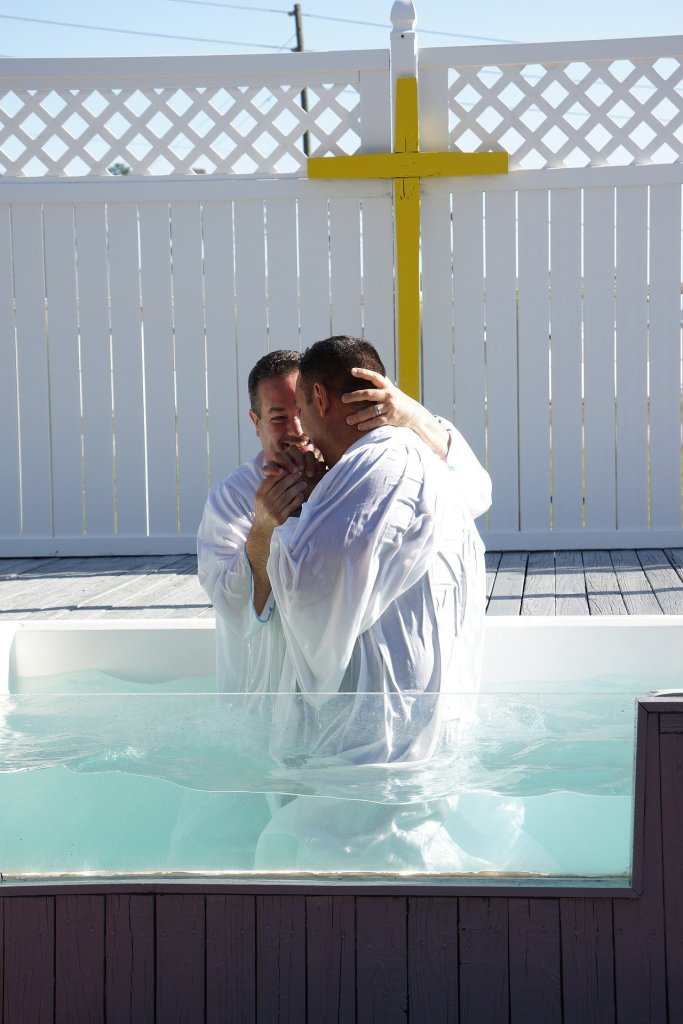
Baptism.
Apollos was teaching accurately and fervently about Jesus, “though he knew only the baptism of John”. What background could he have had that would have left him not knowing about baptism in the name of Jesus?
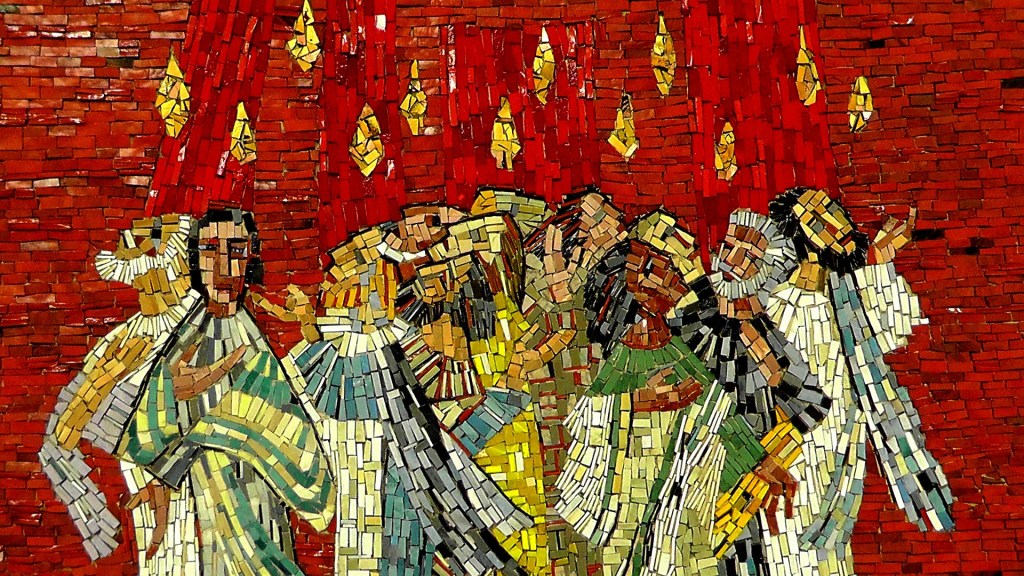
It was Pentecost when the Holy Spirit was first poured out: “When the day of Pentecost came, they were all together in one place. Suddenly a sound like the blowing of a violent wind came from heaven and filled the whole house where they were sitting. They saw what seemed to be tongues of fire that separated and came to rest on each of them. All of them were filled with the Holy Spirit and began to speak in other tongues as the Spirit enabled them.” (Acts 2: 1 – 4)
All the apostles were together when this happened, and – presumably – all subsequent teaching about Jesus came through the apostles and those close to them. And yet here we find Apollos lacking knowledge of the Holy Spirit.
Perhaps one lesson from this is that God uses anyone who is willing to obey him. Apollos was eager to tell people about Jesus, so God let him. Indeed, he encouraged him and sent him to the place and the people (Priscilla and Aquila) where his knowledge and experience of the faith could be both enhanced and used.
Prayer
Heavenly Father
Thank you that anyone who trusts Jesus, no matter how weak and insignificant we are, can witness to him.
After this, Paul left Athens and went to Corinth. There he met a Jew named Aquila, a native of Pontus, who had recently come from Italy with his wife Priscilla, because Claudius had ordered all Jews to leave Rome. Paul went to see them, and because he was a tent-maker as they were, he stayed and worked with them. Every Sabbath he reasoned in the synagogue, trying to persuade Jews and Greeks.
When Silas and Timothy came from Macedonia, Paul devoted himself exclusively to preaching, testifying that Jesus was the Messiah. But when they opposed Paul and became abusive, he shook out his clothes in protest and said to them, ‘Your blood be on your own heads! I am innocent of it. From now on I will go to the Gentiles.’
Then Paul left the synagogue and went next door to the house of Titius Justus, a worshipper of God. Crispus, the synagogue leader and his entire household believed in the Lord; and many of the Corinthians who heard Paul believed and were baptised.
One night the Lord spoke to Paul in a vision: ‘Do not be afraid; keep on speaking, do not be silent. For I am with you, and no one is going to attack and harm you, because I have many people in this city.’ So Paul stayed in Corinth for a year and a half, teaching them the word of God.
While Gallio was proconsul of Achaia, the Jews of Corinth made a united attack on Paul and brought him to the place of judgment. ‘This man,’ they charged, ‘is persuading the people to worship God in ways contrary to the law.’
Just as Paul was about to speak, Gallio said to them, ‘If you Jews were making a complaint about some misdemeanour or serious crime, it would be reasonable for me to listen to you. But since it involves questions about words and names and your own law – settle the matter yourselves. I will not be a judge of such things.’ So he drove them off. Then the crowd there turned on Sosthenes the synagogue leader and beat him in front of the proconsul; and Gallio showed no concern whatever.
* * *
Yet again we see Paul facing conflict and rejection from many of those to whom he preaches. “But when they opposed Paul and became abusive, he shook out his clothes in protest and said to them, ‘Your blood be on your own heads! I am innocent of it. From now on I will go to the Gentiles.’”
Why did the Jews of Corinth become abusive? It may have been as simple as the feeling, ‘Oh, no, not again!’ as Paul stands up in the synagogue. “Every Sabbath he reasoned in the synagogue, trying to persuade Jews and Greeks.”
What was Paul teaching so persistently and forcefully?
He was teaching that the Messiah spoken of by the Jewish Scriptures had to suffer before his kingdom could come. He was teaching that if you compared the life, death and resurrection of Jesus of Nazareth against the Scriptures you found that he fulfilled every prophecy of the Messiah. He was teaching that this was God’s plan to save mankind from sin, and that it was a free gift from God.
Paul believed this message was the most important good news he could give anybody; the most important good news anybody could receive. Of course he was forceful!
In Corinth, he persisted with the Jews in the synagogue until they became abusive; until they made it perfectly clear that they rejected his message. By that point it was obvious that nothing that Paul said to them would convince them. He would have been wasting his time.
So he went next door to the house of Titius Justus and won many for Jesus.
We know the nature of Paul’s message to the Corinthians, and the urgency he felt about it, because he wrote letters to them. This is what he says in the first letter:
“For what I received I passed on to you as of first importance; that Christ died for our sins according to the Scriptures, that he was buried, that he was raised on the third day according to the Scriptures, and that he appeared to Cephas, and then to the twelve.” (1 Corinthians 15: 3 – 5)
Prayer
Heavenly Father
Thank you for the witness of your saints in every age. Thank you especially for St Paul, who brought your good news to the Gentiles.
While Paul was waiting for them in Athens, he was greatly distressed to see that the city was full of idols. So he reasoned in the synagogue with both Jews and God-fearing Greeks, as well as in the market place day by day with those who happened to be there. A group of Epicurean and Stoic philosophers began to debate with him. Some of them asked, ‘What is this babbler trying to say?’ Others remarked, ‘He seems to be advocating foreign gods.’ They said this because Paul was preaching the good news about Jesus and the resurrection. Then they took him and brought him to a meeting of the Areopagus, where they said to him, ‘May we know what this new teaching is that you are presenting? You are bringing some strange ideas to our ears, and we would like to know what they mean.’ (All the Athenians and the foreigners who lived there spent their time doing nothing but talking about and listening to the latest ideas.)
Paul then stood up in the meeting of the Areopagus and said: ‘People of Athens! I see that in every way you are very religious. For as I walked around and looked carefully at your objects of worship, I even found an altar with this inscription: TO AN UNKNOWN GOD. So you are ignorant of the very thing that you worship – and this is what I am going to proclaim to you.
‘The God who made the world and everything in it is the Lord of heaven and earth and does not live in temples built by human hands. And he is not served by human hands, as if he needed anything. Rather, he himself gives everyone life and breath and everything else. From one man he made all the nations, that they should inhabit the whole earth; and he marked out their appointed times in history and the boundaries of their lands. God did this so that they would seek him and perhaps reach out for him and find him. Though he is not far from any one of us. “For in him we live and move and have our being.” As some of your own poets have said, “We are his offspring.”
‘Therefore since we are God’s offspring, we should not think that the divine being is like gold or silver or stone – an image made by human design and skill. In the past, God overlooked such ignorance, but now he commands all people everywhere to repent. For he has set a day when he will judge the world with justice by the man he has appointed. He has given proof of this to everyone by raising him from the dead.
When they heard about the resurrection of the dead, some of them sneered, but others said, ‘We want to hear you again on this subject.’ At that, Paul left the Council. Some of the people became followers of Paul and believed. Among them was Dionysius, a member of the Areopagus, also a woman named Damaris, and a number of others.
* * *
As Rome was the centre of civil power in the pagan world in the 1st century AD, Athens was its spiritual heart. The Athenians had a long tradition of intellectual enquiry, which, at the time of Paul’s visit, dated back at least 500 years. St Luke describes it rather scornfully – “All the Athenians and the foreigners who lived there spent their time doing nothing but talking about and listening to the latest ideas.”
Paul started his visit by going to the synagogue where he would doubtless have used the Scriptures to show the significance of Jesus as the Messiah. However, he also went to the market and spoke to the people there.
It wasn’t long before a group of Epicurean and Stoic philosophers began to debate with him. Epicurean philosophers were materialists, rejecting superstition and divine intervention. They thought that the greatest good was to seek modest sustainable pleasures through knowing the workings of the world and limiting desires. Stoic philosophy, by contrast, held that one should accept the moment, not allowing oneself to be controlled by the desire for pleasure or the fear of pain. One should use one’s mind to understand the world, do one’s part in nature’s plan, and work together, treating others fairly and justly.
At first there was mockery: “What is this babbler trying to say?” – but it wasn’t long before Paul was invited to speak in a formal meeting of the Areopagus.
He started from an observation he’d made while walking around the city. He had found an altar inscribed “TO AN UNKNOWN GOD”. Paul tells his listeners that this refers to God the Creator. He works from there, via quotations from Greek writers, to proclaiming the good news of Jesus. He then says that God has proved the significance of Jesus by raising him from the dead.
For most of them, this was a step too far. Some sneered openly, while others said ‘We want to hear you again on this subject.’ (with an implied – “but not right now” added silently). Nevertheless, even from this sophisticated group of intellectuals, Paul found some who were receptive to what he had to teach them.
I want now to look a little at Stoic philosophy. It’s an admirable set of principles. If you suspected that Christianity has something in common with its teaching, you would be right. Stoicism has informed Christian ethical teaching in many ways.
But – and it’s a big but – Stoicism gravely underestimates the strength of sinfulness in human beings. None of us are exempt from sin, and sin damages individuals, families and society. The judgment on sin is here and now; we see how it damages others; we feel how it damages us.
It is only the love of God that can overcome sin, and even then the struggle is mortal. God loves each one of us far more than we can comprehend. As we start to experience that love, we are strengthened to do his will. As we learn how to listen to him, we know better what it is he wants us to do.
And God has given us a supreme example to follow, the example of Jesus. His death on the cross is a statement of the worst that sin can do. Betrayed, abandoned, unjustly condemned, tortured, humiliated and killed. It is God saying, “I know this is what the world is like, I know this is what you humans do to each other and to the world…BUT…
…nevertheless, I love you, and I have overcome the world.” And there is the empty tomb, and the resurrected Jesus greeting his disciples, and the flames of the Holy Spirit dancing on the foreheads of the believers, and the love of God in our hearts as we pray in the Spirit. How could we not want to do his will?
Prayer
Heavenly Father
Thank you for your love. Thank you that you answer prayer. Thank you for faithful witnesses to your love.
As soon as it was night, the believers sent Paul and Silas away to Berea. On arriving there, they went to the Jewish synagogue. Now the Berean Jews were of more noble character than those in Thessalonica, for they received the message with great eagerness and examined the Scriptures every day to see if what Paul said was true. As a result, many of them believed, as did also a number of prominent Greek women and many Greek men.
But when the Jews in Thessalonica learned that Paul was preaching the word of God at Berea, some of them went there too, agitating the crowds and stirring them up. The believers immediately sent Paul to the coast, but Silas and Timothy stayed at Berea. Those who escorted Paul brought him to Athens and then left with instructions for Silas and Timothy to join him as soon as possible.
* * *
Was it only the gospel provoking opposition or did Paul contribute? The Berean believers sent Paul away out of trouble, but kept Silas and Timothy.
Paul was an abrasive character; earlier in Acts 15: 39, we read that he quarrelled with Barnabas to the extent that they parted company.
Look back at Acts 16: 37. “But Paul said to the officers: ‘they beat us publicly without a trial, even though we are Roman citizens, and threw us into prison. And now do they want to get rid of us quietly? No! Let them come themselves and escort us out.’”
Paul was fully justified in terms of demanding reparation for his ill-treatment. He and Silas were Roman citizens and as such were protected against arbitrary detention and punishment. The magistrates had broken Roman law by beating and imprisoning them.
But to demand the magistrates came in person and escorted Paul and Silas was a humiliation for them. It would have made them angry. It would have made them enemies. What about “A gentle answer turns away wrath, but a harsh word stirs up anger” (Proverbs 15: 1)?
The towns in Macedonia were in contact with each other, as we see in Acts 17:13 “But when the Jews in Thessalonica learned that Paul was preaching the word of God at Berea, some of them went there too, agitating the crowds and stirring them up.” I wonder whether the magistrates in Philippi also played a part in this?
There is no doubt that Paul was a dynamic man, with great personal courage, a deep knowledge of the Scriptures and a fierce intellect. Maybe the abrasive nature of his personality was an unavoidable consequence of its strengths? Maybe it was one of the reasons God picked him for the task of spreading the gospel?
I suggest, though, that it’s worth thinking about. Paul’s epistles are the earliest written records we have of the Christian faith. They pre-date the gospels, and a great deal of church doctrine is based on them. To what extent should we consider Paul’s character when we seek to understand the epistles that he wrote?
Maybe the answer to that is that we shouldn’t consider it at all. Maybe I should simply work to show as much zeal as I can for spreading the good news of Jesus. For there is no doubt at all that Paul was exemplary in his zeal.
Prayer
Heavenly Father
I’m sorry that I am so slow to spread the good news of Jesus. Please stir up the Holy Spirit in me. Please increase my love for you and for those around me.
When Paul and his companions had passed through Amphipolis and Apollonia, they came to Thessalonica, where there was a Jewish synagogue. As was his custom, Paul went into the synagogue, and on three Sabbath days he reasoned with them from the Scriptures, explaining and proving that the Messiah had to suffer and rise from the dead. ‘This Jesus I am proclaiming to you is the Messiah,’ he said. Some of the Jews were persuaded and joined Paul and Silas, as did a large number of God-fearing Greeks and quite a few prominent women.
But other Jews were jealous; so they rounded up some bad characters from the market-place, formed a mob and started a riot in the city. They rushed to Jason’s house in search of Paul and Silas in order to bring them out to the crowd. But when they did not find them, they dragged Jason and some other believers before the city officials, shouting: ‘These men, who have caused trouble all over the world have now come here, and Jason has welcomed them into his house. They are all defying Caesar’s decrees, saying that there is another king, one called Jesus.’ When they heard this, the crowd and the city officials were thrown into turmoil. Then they put Jason and the others on bail and let them go.
* * *
Both support and opposition came from the Jews. Luke writes as though there was some support from the Jews – “Some of the Jews were persuaded,” – but considerable opposition – “But other Jews were jealous”. There was more support from God-fearing Greeks, and a large number joined Paul and Silas. Luke feels it is important to mention that “quite a few prominent women” joined Paul and Silas; it’s important to remember that women played an active role in the faith throughout Jesus’ earthly ministry. Here, Luke is emphasising once more that women were important in the early church.
“But other Jews were jealous”. What was the cause of the jealousy? Luke tells us that “Some of the Jews were persuaded and joined Paul and Silas, as did a large number of God-fearing Greeks and quite a few prominent women.” It had been clear for several years that Christianity was becoming separate from Judaism. These influential people, who had discarded paganism in favour of Judaism, were moving away and joining the new religion – and no doubt all their energy and their material contributions went with them. Judaism was losing power, influence and cash.
The jealous Jews were unscrupulous in their tactics. Luke says “so they rounded up some bad characters from the market-place, formed a mob and started a riot in the city”. This puts the Jews of Thessalonica in a very poor light. Christianity was meeting political, as well as religious, opposition.
Those instigating the disorder knew where to find Paul; at Jason’s house. By God’s providence Paul wasn’t there; perhaps word reached him from a supporter. Not to be denied, the crowd seized Jason and some others and dragged them before city officials. What was the accusation? Jason has allowed his house to be used by men “who have caused trouble all over the world” And then, very tellingly, “They are all defying Caesar’s decrees, saying that there is another king, one called Jesus.”
What an echo! “We have no king but Caesar!” (John 19: 16) said the chief priests as they put pressure on Pilate to have Jesus crucified.
Truly, we must be very careful that we speak only the good news of Jesus, and don’t become trapped by the political system!
Prayer
Heavenly Father
Thank you for sending Jesus as our king. Please help us to truly acknowledge him as Lord, to listen to his voice, and to do his will.
Acts 16: 25 – 40 Paul and Silas in prison – part 2
About midnight Paul and Silas were praying and singing hymns to God, and the other prisoners were listening to them. Suddenly there was such a violent earthquake that the foundations of the prison were shaken. At once all the prison doors flew open, and everyone’s chains came loose. The jailer woke up, and when he saw the prison doors open, he drew his sword and was about to kill himself because he thought the prisoners had escaped. But Paul shouted, ‘Don’t harm yourself! We are all here!’
The jailer called for lights, rushed in and fell trembling before Paul and Silas. He then brought them out and asked, ‘Sirs, what must I do to be saved?’
They replied, ‘Believe in the Lord Jesus, and you will be saved – you and your household.’ Then they spoke the word of the Lord to him and to all the others in his house. At that hour of the night the jailer took them and washed their wounds; then immediately he and all his household were baptised. The jailer brought them into his house and set a meal before them; he was filled with joy because he had come to believe in God – he and his whole household.
When it was daylight, the magistrates sent their officers to the jailer with the order: ‘Release those men.’ The jailer told Paul, ‘The magistrates have ordered that you and Silas be released. Now you can leave. Go in peace.’
But Paul said to the officers: ‘They beat us publicly without a trial, even though we are Roman citizens, and threw us into prison. And now do they want to get rid of us quietly? No! Let them come themselves and escort us out.’
The officers reported this to the magistrates, and when they heard that Paul and Silas were Roman citizens, they were alarmed. They came to appease them and escorted them from the prison, requesting them to leave the city. After Paul and Silas came out of the prison, they went to Lydia’s house, where they met with the brothers and sisters and encouraged them. Then they left.
* * *
When Paul and Silas were in prison, God worked a miracle. It was not, however, the miracle you might expect, because he didn’t save Paul and Silas – he saved the jailer and his household.
The jailer had seen how Paul and Silas had acted when they were imprisoned; they had praised God with prayer and singing. Injured, in pain, imprisoned and seemingly at the mercy of the authorities, you would expect them to be cowed, terrified even. And yet they praised God openly, so that the other prisoners could hear.
Knowing the prisoners were in the stocks, and locked up, the jailer dozed off – and then came the miracle. There was an earthquake, the prison doors flew open and everyone’s chains came loose.
“The jailer woke up, and when he saw the prison doors open, he drew his sword and was about to kill himself because he thought the prisoners had escaped.”
Philippi was a Roman city. Both law and custom said that a jailer who let a prisoner escape would suffer the punishment to which the escaped prisoner had been sentenced. What a graphic demonstration of the cruelty and brutality of that pagan society! Death by impaling himself on his sword was preferable to what he was completely certain would happen to him.
But Paul shouted, ‘Don’t harm yourself! We are all here!’
What an astonishing act of witness Paul makes! Instead of fleeing the prison, he chose to stay. He was prepared to risk everything, even his life, to bring the good news of Jesus to the jailer.
The jailer was so shaken by the events, and by Paul’s actions, that he “called for lights, rushed in and fell trembling before Paul and Silas. He then brought them out and asked, ‘Sirs, what must I do to be saved?’”
Paul and Silas explained the good news of Jesus, and God moved the heart of the jailer to respond and accept Jesus as his Lord. His immediate reaction was to treat the wounds of Paul and Silas, and then he and his household were baptised. In the joy of his new-found faith in God, he brought Paul and Silas to his house, and served them a meal.
Luke tells us this story to inspire us to act like Paul and to praise God in all circumstances.
But the story about the jailer is also a metaphor. Society only valued him as a jailer. If he failed in that task, he had no function and his life was worthless. God acted through Paul to tell him about Jesus, who would awaken him to his value in God’s eyes. His life needn’t be defined by his social function; its value was intrinsic, given by God. God loved him.
And that’s a message that is very much relevant today. No matter what happens and no matter what we do, God loves each and every one of us. That, ultimately, is why we are more than our social role, more than the success or failure of our daily life. Each of us is a precious child of God. That is the message that saved the jailer and made him joyful. That is the truth that had Paul and Silas singing in the prison.
That is our truth.
Prayer
Heavenly Father
Thank you for loving me. Thank you that I am one of your children. Please help me to witness to you.
Acts 16: 16 – 24 Paul and Silas in prison – part 1
Once when we were going to the place of prayer, we were met by a female slave who had a spirit by which she predicted the future. She earned a great deal of money for her owners by fortune-telling. She followed Paul and the rest of us, shouting, ‘These men are servants of the Most High God, who are telling you the way to be saved.’ She kept this up for many days. Finally Paul became so annoyed that he turned round and said to the spirit, ‘In the name of Jesus Christ I command you to come out of her!’ At that moment the spirit left her.
When her owners realised that their hope of making money was gone, they seized Paul and Silas and dragged them into the market-place to face the authorities. They brought them before the magistrates and said, ‘These men are Jews, and are throwing our city into an uproar by advocating customs unlawful for us Romans to accept or practice.’
The crowd joined in the attack against Paul and Silas, and the magistrates ordered them to be stripped and beaten with rods. After they had been severely flogged, they were thrown into prison, and the jailer was commanded to guard them carefully. When he received these orders, he put them in the inner cell and fastened their feet in the stocks.
* * *
This passage is about conflict, the conflict of the church of Jesus with a secular world which cares little for human life or dignity.
As we saw yesterday, Philippi was a very Roman city. It was also heavily influenced by Greek culture. It had many wealthy and powerful citizens. Among those citizens were some who owned a young girl slave with a remarkable ability; she could speak in oracles.
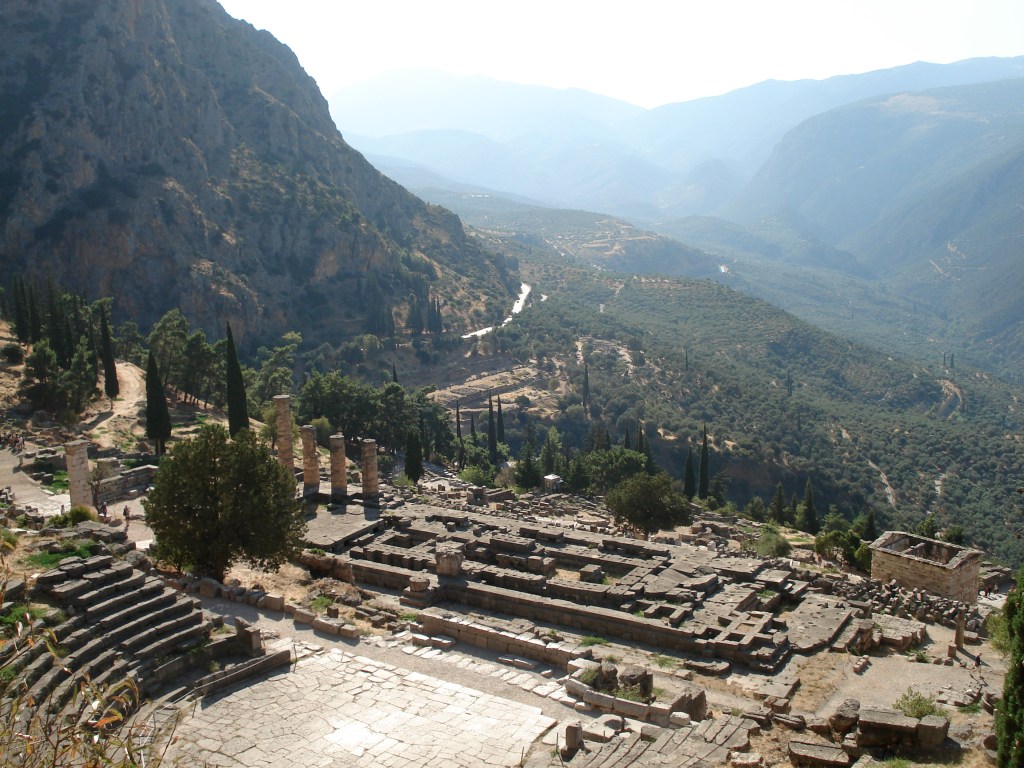
The NIV says she “had a spirit by which she predicted the future”, but the Greek words it’s translating are “pnevma pythona”, which means “a spirit of a python”. This was the same term that was used for the oracle at Delphi. Her ability was probably no more than wise insight into affairs dressed up in language that could be interpreted in several ways. However, it would also have been tied into pagan worship, most probably the worship of Apollo as practised at Delphi.
This girl took to doing something rather remarkable; she started to follow Paul and his companions obsessively, shouting “These men are servants of the Most High God, who are telling you the way to be saved.”
Perhaps she was already coming to faith in Jesus?
At all events “Finally Paul became so annoyed that he turned round and said to the spirit, ‘In the name of Jesus Christ I command you to come out of her!’” I’m not at all sure that “annoyed” is a good translation. The King James bible translates the Greek as “Paul being grieved.” A literal translation of the Greek might be “becoming greatly troubled” – and that seems about right. Confronted by someone trapped in pagan practices who is nevertheless witnessing to Jesus, Paul probably would feel “greatly troubled”.
Paul heals her.
And we hear no more of her. Did she come to the place of prayer? Was she baptised? It would be fascinating to know, but Luke has a different story that he wants to tell us.
The kingdom of God has moved in power against the pagan world, which loses no time in striking back.
The owners of the young slave find that she can no longer act as an oracle. They had been earning a great deal of money from this ability of hers, and they’re furious at losing it. They seize Paul and Silas and drag them into the market place to face the authorities. They accuse them of “advocating customs unlawful for us Romans to accept or practice”. And this may well be true. Paul would probably have warned new Christians against eating food sacrificed to idols, and against worshipping the Roman emperor as a god.
This accusation of advocating different customs was clever. Human nature can easily be roused to reject the stranger, the non-conformist – the different. We see it today in racism, and in the fear of immigrants and in homophobia. Paul and Silas had no sympathisers in the crowd.
The magistrates had them stripped, flogged with rods and jailed. Humiliating, extremely painful, physically damaging and a situation where they were entirely at the mercy of the authorities.
When you witness against powerful vested interests, you can expect to pay a price.
Prayer
Heavenly Father
Help us to show love in all that we do, so that our lives witness to you.
From Troas we put out to sea and sailed straight for Samothrace, and the next day we went on to Neapolis. From there we travelled to Philippi, a Roman colony and the leading city of that district of Macedonia. And we stayed there several days.
On the Sabbath we went outside the city gate to the river, where we expected to find a place of prayer. We sat down and began to speak to the women who had gathered there. One of those listening was a woman from the city of Thyatira named Lydia, a dealer in purple cloth. She was a worshipper of God. The Lord opened her heart to respond to Paul’s message. When she and the members of her household were baptised, she invited us to her home. ‘If you consider me a believer in the Lord,’ she said, ‘come and stay at my house.’ And she persuaded us.
* * *
Unlike the attempts by Paul and his party to enter Asia and Bithynia, where the Holy Spirit prevented them, the journey to Macedonia went very smoothly. They travelled a day’s sailing to the island of Samothrace, another day on the water to Neapolis, and then overland to Philippi.
The city of Philippi was a Roman colony. Many legionaries, veterans, had settled there, and it was run by a duumvirate (rule by two men) who were directly appointed by Rome. It was rich and important because there were gold mines in its territory, and because it was located on an important trade route, the Via Egnatia.
This meant firstly it was very pagan, and secondly there were many wealthy and powerful interests which would not want anybody to rock the boat. We’re given a measure of how pagan the city was by the implication in our passage that there was no synagogue. To meet the few people who believed in God, Paul and his team had to go outside the city gate to the river “to find a place of prayer”. It takes a minimum of ten men to legally start a synagogue; the absence of a synagogue in the city suggests that there were fewer than ten Jewish worshippers.
As usual, Paul seeks out those who believe in God to be the first to hear the good news of Jesus. He found out where they were likely to meet, and on the Sabbath, he went to their meeting place outside the city gates. The people who had gathered there were women, among them Lydia, a dealer in purple cloth. Purple cloth was highly prized, and very expensive; Lydia would have been a wealthy and influential person. Luke reports that she was a worshipper of God and that “The Lord opened her heart to respond to Paul’s message.”
The first thing that Lydia did after she and her household were baptised was to invite Paul and his companions to her home. This was a very strong public statement that she was a follower of Jesus. The values of the Christians were very different from the pragmatic ethics of the Romans, and her support of the new faith could have cost her business, reputation and more. But she didn’t hesitate; she more or less coerced Paul into basing his ministry around her house.
And with that, the first church in Europe was planted. Despite the hostile environment, and despite the lack of a Jewish contingent as a starting point, the church thrived; so much so that in his letter to the church at Philippi many years later, Paul wrote “I thank my God every time I remember you. In all my prayers for all of you, I always pray with joy because of your partnership in the gospel from the first day until now, being confident of this, that he who began a good work in you will carry it on to completion until the day of Christ Jesus.” (Philippians 1: 3 – 6).
Prayer
Heavenly Father
Thank you for the direction and encouragement that you give us through your Holy Spirit. May our lives be fruitful in your service.
Acts 16: 6 – 10 Paul’s vision of the man of Macedonia
Paul and his companions travelled throughout the region of Phrygia and Galatia, having been kept by the Holy Spirit from preaching the word in the province of Asia. When they came to the border of Mysia, they tried to enter Bithynia, but the spirit of Jesus would not allow them to. So they passed by Mysia and went down to Troas. During the night Paul had a vision of a man of Macedonia standing up and begging him, ‘Come over to Macedonia and help us.’ After Paul had seen the vision, we got ready at once to leave for Macedonia, concluding that God had called us to preach the gospel to them
* * *
The first thing I noticed about this passage was the change in status of the author of “Acts” (presumed to be St Luke). This is shown by the change in pronoun, from “they” to “we”.
“So they passed by Mysia and went down to Troas.”
“we got ready at once to leave for Macedonia.”
Somewhere between Mysia and Troas, Luke has become an eye-witness of Paul’s ministry, and this increases the credibility of what he writes.
The second thing I noticed was that Paul and his companions had been “kept by the Holy Spirit from preaching the word in the province of Asia,” and “they tried to enter Bithynia, but the spirit of Jesus would not allow them to”.
How did they know this?
There are several ways in which the Holy Spirit communicates. There is prophecy, when somebody speaks words directly given by the Holy Spirit. There is the ‘still, small voice’ that Elijah heard (1 Kings 19: 11 – 13). And sometimes a coincidence of events convinces.
Let me tell you a true story.
I used to be the organist at my parish church. One day, as I was walking down to practice music for Sunday, I was praying, “I really want to do something for you, Lord.” I’m not sure why I prayed that, but that’s what I said.
I went round to the vestry door, for which I had a key. I put the key into the lock, but it wouldn’t turn. I tried repeatedly, because I didn’t have a key to the main door. ‘Bother! Somebody must have dropped the latch. Why on earth would they do that?’ I’d never found that door locked before.
Although I didn’t have a key to the main door, I walked round there anyway – sometimes it wasn’t locked. I walked into the porch and almost tripped over a rough sleeper. Ah! The light dawned. This was the answer to my prayer. With the help of another member of the congregation we settled him in a folding bed in the church hall, fed him, listened to him, and the next day I took him back to where his parents lived.
I checked the lock on the vestry door as soon as I could. It wasn’t locked, and now my key worked perfectly…
So the Holy Spirit sometimes answers prayers with action.
And that’s what Luke may mean here, when he says that they were “kept by the Holy Spirit from preaching the word in the province of Asia,” and “they tried to enter Bithynia, but the spirit of Jesus would not allow them to”.
And then, having been kept from following his own plans, Paul has a dream that he is to go to Macedonia to help them. He recognised the prompting of the Spirit, and it was supported by events. They had been prevented from preaching in Asia; they had been prevented from visiting Bithynia; the calling was to Macedonia.
They went to Macedonia!
Prayer
Heavenly Father
Thank you for answering prayer. Thank you for guiding us by your Holy Spirit. Please help us to learn to listen more attentively, and with complete trust in your love.





 Seeking the Light