Reflection on the conversion of Cornelius

Acts 10 tells a story that is very significant to any non-Jewish Christian. It describes how God made it crystal clear that we Gentiles are forgiven our sins through belief in Jesus. Today’s post reflects on that story.

Acts 10: 1 – 8

Let’s start by looking at Cornelius. He was not a Jew by birth. He was not a Jew by conversion. He was a God-fearing person. This meant that he acknowledged the Jewish God as the one, true God, and he obeyed a number of Jewish laws. The Hellenistic Jews of the first to third centuries A.D. recognised such people and welcomed them into the synagogue.

Being a God-fearer made a real difference to Cornelius’ life. He prayed regularly to God, and gave generously to those in need. Furthermore, his example was such that his whole family were God-fearing.

Nevertheless, because Cornelius was not a convert, he remained a Gentile. This meant that any Jew entering his house would become ritually unclean.

Having been introduced to Cornelius, we are told that one day, “He distinctly saw an angel of God.” Furthermore “Cornelius stared at him in fear.” Now Cornelius was a centurion. He would not have been easily frightened. There must have been something very striking about the angel to frighten him.

What is it, Lord?’ he asked.

The angel instructed Cornelius to “send men to Joppa to bring back a man named Simon, who is called Peter. He is staying with Simon the tanner, whose house is by the sea.”

Cornelius obeyed; and it’s a good thing that he did, because over in Joppa, another part of God’s plan was being brought to fruition…

Acts 10: 9 – 23

Judaism in first century Palestine was based on a minutely detailed set of rules that governed every part of life. The idea was that because God is holy, his believers should also be holy. Holiness demanded the avoidance of impurity, and the Jewish Law specified literally hundreds of things that would make you ritually unclean. This included many animals; it included corpses, animal as well as human; and, of course, it included Gentiles. You will remember from yesterday that we noted that Cornelius, although a man who feared God, was still a Gentile.

One day, Peter the Apostle was in Joppa staying with Simon the Tanner. He had a vision in which he was confronted with an assortment of unclean creatures, and told to kill and eat. As a Jew – because at that time Christianity wasn’t a religion, it was a sect within Judaism – Peter felt bound by the purity laws.

‘Surely not, Lord,’ Peter replied. ‘I have never eaten anything impure or unclean.’

Oops! Wrong answer!

The voice spoke to him a second time, ‘Do not call anything impure that God has made clean.’

Despite this, Peter still wasn’t convinced. Three times the vision repeated the instruction to kill and eat, before it ended.

Peter sat there and wondered about the vision. What on earth could it mean? He’d observed Jewish dietary laws since he was a small child. Why did God seem to be telling him to break the rules? Was it some kind of test?

While he was sitting thinking, the Holy Spirit said to him ‘Simon, three men are looking for you. So get up and go downstairs. Do not hesitate to go with them, for I have sent them.’

Peter went down to them. He was beginning to understand. The men introduced themselves and told him that they had been sent by Cornelius the centurion, a Gentile, for, ‘A holy angel told him to ask you to come to his house so that he could hear what you have to say.’

Peter saw how God had spoken both to Cornelius, and to him, and had sent him this puzzling vision of unclean animals. Perhaps God was telling him that Gentiles were no longer unclean?

At all events, Peter knew what he had to do next.

Then Peter invited the men into the house to be his guests.

And tomorrow he must go with the men to Caesarea.

Acts 10: 23 – 48

Even before Peter had arrived, Cornelius had been telling all his friends. He was very excited by the visit. His house was packed with people. Peter introduces himself, and has Cornelius explain why he asked him to visit. Cornelius’ account confirms the revelations that the Holy Spirit had given Peter. Peter now knows that the vision he saw was an instruction from God to treat Gentiles in exactly the same way as he treats Jews. He understands fully that Gentiles are not a source of ritual impurity.

He responds with a speech to the assembled crowd.

Peter’s speech is a précis of the beliefs of the early church. Luke wasn’t present when Peter spoke the words, so they may not be verbatim, but that doesn’t really matter; this passage is an account of how God makes it known to the early church that Gentiles are acceptable. The speech encapsulates what a Gentile should believe as a follower of Jesus. Indeed, you might call it a creed.

Peter spoke the words “All the prophets testify about him that everyone who believes in him receives forgiveness of sins through his name.”

I wonder if there was a pause, while the implications of that statement sank in?

Everyone? Gentiles too?

Everyone who believes in Jesus receives forgiveness of sins through his name.

Peter spoke these words of forgiveness and the Holy Spirit was poured out on all who heard the message. The assembly of new, Gentile followers of Jesus started to speak in tongues and praise the Lord. What an astonishing validation of Peter’s vision! How could there be any doubt that Gentiles were accepted by God just as much as followers of Judaism?

One final thought. The “creed” that Peter preaches is simple. Your sins are forgiven if you believe in Jesus of Nazareth, who healed the sick, died on the cross, and was raised to life. There are no difficult theological concepts, like the Trinity, holiness, purity, or atonement. The creed Peter spoke is as valid today as it was then.

PRAISE THE LORD!
Reflections on Acts – chapters 8 & 9

Reflections on Acts – chapters 8 & 9

Acts 8: 1 – 8

The first thing I personally have to come to terms with is that God allowed Stephen to be brutally murdered. That’s not to say God was responsible, because he wasn’t; the responsibility lies firmly with those who killed Stephen. But God, knowing what was to happen, let it happen. Stephen didn’t even seem to get the chance to decide whether he was prepared to be martyred; once he’d started preaching to the Sanhedrin his martyrdom was pretty much inevitable.

But, actually, his decision to be prepared to be martyred was made considerably earlier, right from the moment he decided to follow Jesus.

“Then Jesus said to his disciples, ‘Whoever wants to be my disciple must deny themselves and take up their cross and follow me.’ ” (Matthew 16: 24)

“Then he called the crowd to him along with his disciples and said: ‘Whoever wants to be my disciple must deny themselves and take up their cross and follow me.’ ” (Mark 8: 34)

“Then he said to them all: ‘Whoever wants to be my disciple must deny themselves and take up their cross daily and follow me.’ ” (Luke 9: 23)

All three of the synoptic gospels spell out Jesus’ statement of the cost of being a disciple. We need to be prepared to give up possessions, reputation, comfort and even life itself, if we are to be a disciple of Jesus. The possibility of martyrdom isn’t something covered in the small print – it’s in bold print, and worded in the strongest way possible.

Stephen had accepted that possibility, had opened himself to the Holy Spirit, who had used him powerfully.

Acts 8: 9 – 25

“When Simon (the sorcerer) saw that the Spirit was given at the laying on of the apostles’ hands, he offered them money and said, ‘Give me also this ability so that everyone on whom I lay my hands may receive the Holy Spirit.’ ”

Peter’s reply bears close study.

“ ‘May your money perish with you, because you thought you could buy the gift of God with money!’ ”

The gift of God is the forgiveness of sins. It is free; it can’t be bought, or earned, or in any way deserved. Belief in Jesus is all that you need.

“You have no part or share in this ministry, because your heart is not right before God.”

Simon had seen that the presence of the Holy Spirit had brought power, and he desired that power. But he hadn’t realised that the real gift of God wasn’t the power, but the forgiveness of his sins. He didn’t believe in Jesus, he believed in the power he saw. Simon had not sought and received forgiveness; how, then, could he have any share in the ministry?

“Repent of this wickedness and pray to the Lord in the hope that he may forgive you for having such a thought in your heart.”

What was the sin that needed repentance? Well, it was actually a very common sin, the one that underlies most sin. Simon wanted to retain control of his life. He wanted God’s power, but not God’s direction. He had been through the ritual of baptism but had not surrendered his life to Jesus.

“For I see that you are full of bitterness and captive to sin.’ ”

Peter could see clearly that Simon wanted to retain control of his life and was therefore captive to sin.

Simon’s reply to Peter is intriguing

“ ‘Pray to the Lord for me so that nothing you have said may happen to me.’ ”

He clearly trusts what Peter has told him. He fears the consequences of his sin. He’s some way short of repentance and belief, but he’s moving in the right direction, I think.

Acts 8: 26 – 40

Prayer

Heavenly Father,

Thank you for all those who, like Philip, witness to your love. Please help me to be more eager to share my faith in Jesus with those around me.

In Jesus’ name, Amen

Acts 9: 1 – 19

The difference between Saul’s dreadful mistakes before conversion and his powerful witness for Jesus afterwards is down to the work of the Holy Spirit. Before conversion Paul had the Mosaic law to guide his behaviour, and sacrifice in the temple to demonstrate atonement for sin. After conversion he had the indwelling Holy Spirit.

The difference between the Christian experience of God and the Jewish experience of God is down to the presence of the Holy Spirit in our lives.

Our actions must be guided by the Holy Spirit. We must be obedient to what he tells us. We should expect God to work miracles today, if we listen and obey.

I will add a cautionary note. Our listening to the Holy Spirit must be done with great care. We must test revelations against Scripture. We must pray diligently. We must trust God to teach us how to listen and how to understand, and how to obey.

Acts 9: 19 – 31

Saul spent a few days with the disciples in Damascus and then began to preach in the synagogues that Jesus is the Son of God.

How could he do this? He hadn’t been a witness to the earthly ministry of Jesus. What did he know of the Way? It had taken Jesus years to train the Twelve, and even then their understanding was imperfect. Look, for example at Luke 22: 24 “A dispute also arose among them as to which of them was considered to be the greatest.” This happened at the Last Supper, the last occasion when the earthly Jesus taught his disciples.

How could Saul, lacking that training, preach about Jesus in the synagogues?

There were three things in his favour. Firstly, he was very well trained in the Scriptures, and would have been completely familiar with the prophecies about the Messiah. Secondly, as he persecuted the church, he would have wrestled with what he heard of Jesus. He would have set what he learned of Jesus in the context of his understanding of the prophecies, to try and twist it against Jesus’ followers. And thirdly, he had the prompting of the Holy Spirit.

Saul’s motivation and competence are important questions, because he played a pivotal role in what the early church believed. After becoming known as Paul, he travelled widely, and established churches in many places. He wrote letters to them which form a part of our bible. And, since the final versions of the gospels are known to have been written after St Paul’s epistles, the theology of the epistles, and of the man who wrote them, must have seeped into the gospels too.

Acts 9: 32 – 43

Prayer for healing shouldn’t be treated as a process for meeting human needs. It’s not what we want that matters, but what God wants. That said, I’m sure that God welcomes our prayers for the sick as expressions of our human love for the sick person.

I suggest, too, that there is one time when we can actively look for healings, and that is when the church is being renewed. Under those circumstances, a healing ministry may well be what God wants. However, it will require much prayer, and much sensitivity to the Holy Spirit, and much obedience if it is to happen. It will also require the church to proclaim the healings. Then, and only then, might we be able to say “This became known all over my home town, and many people believed in the Lord!”

Prayer

Heavenly Father

Thank you that life and healing and goodness flow from you, through your Holy Spirit. Help us, please, to listen to you, and to obey you, that your will may be done on earth, as it is in heaven.

In Jesus’ name, Amen


Acts of the Apostles chapters 6 & 7

Over the last few months I have been studying the Acts of the Apostles. I thought it might be helpful if I were to pick out the most important things I learned from each day’s study. To make it less daunting, I’m going to do this over the course of the next week.

Acts 6: 1 – 7 The choosing of the seven

The distribution of food to widows had become contentious. Worse, there were factions within the body of believers. “The Hellenistic Jews among them complained against the Hebraic Jews because their widows were being overlooked in the daily distribution of food.” The apostles were being distracted from what they saw as their primary task of prayer and the ministry of the word.

In short, human sinfulness was starting to disrupt the work of God.

To solve the problem, the Twelve proposed to the disciples that they should choose men to be responsible for food distribution. The only qualification needed was to be full of the Spirit and wisdom. The disciples chose seven, and the Twelve prayed and laid hands on them. Problem solved.

Actually, I wonder whether it was.

It’s a pragmatic solution to a human problem, and it’s a solution that has had consequences. The church became split into an ordained, spiritual leadership focussed on prayer and the ministry of the word, administrators who deal with the daily running of activities like food distribution, and the body of believers. We still have that structure today.

Acts 6: 8 – 15 Stephen seized

The early church still identified itself as Jewish. The disciples spent many hours worshipping in the temple. Peter and the apostles taught and healed in Solomon’s Colonnade, in the temple. The early church looked at the Jewish Law and Prophets and saw Jesus as the Messiah, the one who fulfilled what was written there. And their message was getting through. “The numbers of disciples in Jerusalem increased rapidly, and a large number of priests became obedient to the faith.” (Acts 6: 7)

The established leadership of the Israelites saw this as a threat. They failed to defeat Stephen in debate, so they made out he was a law-breaker, and had him seized and dragged before the Sanhedrin. The charge was revealing. “…we have heard him say that this Jesus of Nazareth will destroy this place and change the customs Moses handed down to us.”

Temple worship would disappear. The customs handed down from Moses would be changed. These were the things that gave the chief priests and teachers of the law their power, status and wealth. They weren’t going to let that happen without a fight. The infant church was about to face the might of the established religion.

Prayer

Heavenly Father

Please inspire your church today to pray for your Holy Spirit to be poured out on us, so that we may be true to your vision of the kingdom of heaven, and not trapped by custom and self-interest.

In Jesus’ name, Amen

Acts 7: 1 – 16 Stephen’s speech to the Sanhedrin – Part 1

To summarise the first part of Stephen’s defence, he’s establishing the common ground between what he’s been preaching, and what the Jewish scriptures say.

What lessons can we learn from this passage?

I think for me the main lesson is to listen to the prompting of the Holy Spirit. Different circumstances call for different responses. Stephen was charged with the same offence as Jesus. Jesus remained silent; Stephen was prompted to speak eloquently. Both responses were right; they were what was needed by God.

How do we know what the Holy Spirit is saying? We pray. We consider scripture. We repent so that we can hear God speak. We consciously place ourselves in God’s hands – and in doing so we are only doing what God wants for us. For what could be better than to be in the hands of Jesus?

Prayer

Heavenly Father

Thank you for loving all humanity. Thank you for loving me. Please make me ever more alert to the prompting of your Holy Spirit, and ever more obedient.

In Jesus’ name, Amen

Acts 7: 17 – 29 Stephen’s speech to the Sanhedrin – Part 2

Stephen reminds the Sanhedrin that when Moses tried to intercede between two Israelites who were fighting, he was rejected with the words, “Who made you ruler and judge over us? Are you thinking of killing me as you killed the Egyptian yesterday?”

Stephen is making the point that the Israelites, despite their loud protestations of faith in Moses as prophet and Law-giver, actually rejected him when he first took up their cause. Every member of the Sanhedrin would have understood that Stephen was telling them that they had rejected Jesus just as their ancestors had rejected Moses.

Let’s not be like the Sanhedrin, antagonistic and feeling threatened. Let’s be like Stephen, full of faith. Let’s welcome the Holy Spirit into our lives with joy!

Acts 7: 30 – 43 Stephen’s speech to the Sanhedrin – Part 3

In today’s passage, the emphasis of Stephen’s speech changes; the focus moves from showing the orthodoxy of his preaching to an indictment of the Israelites. At present, he confines the indictment to the Israelites of Moses’ day, but the direction in which he is moving is clear.

Despite Moses’ anointing by God, despite the signs and wonders, the Israelites returned to idol worship.

This must have made uncomfortable listening for the Sanhedrin. They couldn’t argue with Stephen about the actions of the Israelites – it’s all there in their scriptures (Exodus 32: 1 – 35). Neither was Stephen a member of their elite; how dare he stand there lecturing them as though they were schoolboys!

And yet, if they had listened with hearts that were open to the truth, they could have heard the message that God was calling them to a higher service than that of Moses. What a missed opportunity!

Acts 7: 44 – 60, 8: 1 Stephen’s speech to the Sanhedrin – Part 4

What Stephen meant here is that the temple is unnecessary. It hasn’t always existed, and it isn’t essential because God is everywhere – and can thus be worshipped anywhere.

The temple was central to the worship of the Jews of Jesus’ day. Every adult male was supposed to go there for the major festivals, and many did. At Passover, for instance, tens of thousands would flock to Jerusalem and the temple. And they brought sacrifices and offerings. This was where the wealth and power of the chief priests and teachers of the law came from. Custom, reinforced by self-interest made the abandonment of temple worship unthinkable for the Sanhedrin.

“But Stephen, full of the Holy Spirit, looked up to heaven and saw the glory of God, and Jesus standing at the right hand of God. ‘Look,’ he said, ‘I see heaven open and the Son of Man standing at the right hand of God.’”

For a mere mortal to claim to see God was intolerable. It outraged everything the members of the Sanhedrin had been taught, every value they had lived by.

“At this they covered their ears and, yelling at the top of their voices, they all rushed at him, dragged him out of the city and began to stone him.”

How revealing. They covered their ears. They yelled at the top of their voices. This is what children do when they don’t want to hear something. The members of the Sanhedrin didn’t want to hear the message of Jesus, they didn’t want to be obedient. They wanted their own way.

I find this scene quite appalling. These men, leaders of the nation, wealthy, powerful, and learned were transformed into a murderous mob. And that the transformation was triggered by a desperate urge to reject the message of Jesus is absolutely chilling.

Stephen, as he was being stoned, commits his spirit to Jesus, and he forgives the men who are murdering him.

We shall see later that God did indeed forgive that sin, for, “the witnesses laid their coats at the feet of a young man named Saul.” We meet that young man again.

Acts chapters 1 – 5

Over the last few months I have been studying the Acts of the Apostles. I thought it might be helpful if I were to pick out the most important things I learned from each day’s study. To make it less daunting, I’m going to do this over the course of the next week.

Over the last few months I have been studying the Acts of the Apostles. I thought it might be helpful if I were to pick out the most important things I learned from each day’s study. To make it less daunting, I’m going to do this over the course of the next week.

Acts 1: 12 – 26

If God has given us the privilege of doing something for him, we don’t need to know anything beyond that. The Holy Spirit will give us what we need to carry out the task.

Acts 2: 1 – 13

The disciples were praying because, having lived with Jesus, having been used to his guidance, they desperately wanted to know what to do next. Prayer is how Jesus can talk to us – provided we listen as well as talk. And if there’s one important lesson for me to learn from today’s reading, it is that God can and will answer prayers for guidance.

Heavenly Father

Thank you that through Jesus I can approach you in prayer. Please help me to listen more than I speak, and to take to heart what you tell me.

In Jesus’ name, Amen

Acts 2: 14 – 21

God loves it when we ask to serve him; he loves to equip us with the gifts we need. But most wonderful of all, he just loves us for who we are.

Thank you, Lord, for loving me!

Acts 2: 22 – 41

We all fall short. It’s part of our human nature. God doesn’t hate us for it, but he does want us to work as hard as we can to overcome our sin. And that is because sin harms us, and harms those around us. God loves us; he doesn’t want us harmed, and he doesn’t want us to harm others. Once we have repented, we need to live in his love. We need to follow Jesus. We need to obey his command, ‘Love each other.’

Acts 2: 42 – 47

What are we going to have in heaven? Shared delight. Shared praise of God. The constant awareness of the Father, the Son, and the Holy Spirit, shared with everybody else.

It’s going to be different from this life, that’s for sure.

Maybe communal life offers a way to prepare ourselves for heaven? Dealing with human sin can only be done by love. The effort we will have to put into achieving a community life will make us readier to experience God’s love in heaven. All the worship we give in this life will make open our hearts to praise God.

Acts 3: 1 – 16

This (the healing of the beggar at the gate called Beautiful described in Acts 3: 1 – 16) was one of the ‘wonders and signs’ mentioned in yesterday’s passage. The purpose of this healing was to witness to Jesus, to increase the faith of believers and to build up the numbers of the church. From what I have read and experienced, this is often why God heals people.

Acts 3: 11 – 26

Despite our flaws, God loves all humanity. He wants to deal with our flaws both at the level of the individual and at the level of society.

This passage in Acts tells us how he is doing this. He has sent Jesus to us to heal us and to bring us life. We must allow Jesus to heal us of that sin that cripples us. Peter tells the Israelites who witnessed this healing: “Repent, then, and turn to God, so that your sins may be wiped out”.

Acts 4: 1 – 22

Most of the Sanhedrin were bitterly opposed to Jesus and his teaching. However, even they couldn’t deny the truth that these men had been with Jesus.

“But since they could see the man who had been healed standing there with them, there was nothing they could say.”

The evidence was there. A man that they’d all seen lame – he had sat every day at one of the gates to the temple, and they would all have walked past him day after day – and now he’s healed.

“Everyone living in Jerusalem knows they have performed a notable sign, and we cannot deny it.”

I find this one of the most compelling pieces of evidence in the whole bible. This is either true or it’s a complete fabrication.

Acts 4: 23 – 31

We need, today, to be aware that prayer is mostly about us learning from God what his will is for us. It is about trying to allow ourselves to be aligned with his plan through the power of the Holy Spirit.

Acts 4: 32 – 37

And God’s grace was so powerfully at work in them all that there was no needy person among them.

The key to living like this seems to be that we must continuously experience God’s love. To do that we need to pray, to seek to understand what God wants us to do, to step out in faith and try to do what he’s telling us. In short, we need to practise experiencing the love and leading of God.

Acts 5: 1 – 11

Heavenly Father

I find it difficult to believe that every word of the bible is literally true. If I am wrong about this, please forgive me and set me right. I trust you and accept that your will for me is sovereign.

In Jesus’ name, Amen

Acts 5: 12 – 21

Does miraculous healing in the name of Jesus take place today?

Do we see growth in church numbers?

Are there any credible reports of God intervening through angels in the present day?

Are we telling people about new life in Jesus?

If these things aren’t happening in my church, why not?

What should I do about it?

What is God’s will for his church today?

I don’t pretend to have reliable answers for any of these questions, but I certainly think we should be asking them, asking them of ourselves, asking them of each other and, above all, asking them of God in prayer.

 Acts 5: 21 – 42

After the apostles’ testimony, most of the Sanhedrin are outraged and want to put the apostles to death, but Gamaliel, a well-respected Pharisee, intervenes. He reminds them of some history, giving two examples where men claiming to be significant had attempted armed insurrection and failed. He points out, “For if their purpose or activity is of human origin, it will fail. But if it is from God, you will not be able to stop these men; you will only find yourselves fighting against God.’

Once upon a time, I thought that was wise counsel. Now I see it as being mistaken and woefully inadequate.

Gamaliel knew that Jesus had performed healings and miracles; everybody in Jerusalem knew that. Now the apostles were claiming that Jesus had risen from the dead, and that they were witnesses. Furthermore, Gamaliel knew they were healing the sick.

Gamaliel knew there was evidence that Jesus was the Messiah. Why didn’t he enquire further? Why didn’t he use his status as someone “honoured by all the people” to urge his colleagues to investigate matters with open minds and be prepared to acknowledge that Jesus is Lord?

Gamaliel’s words are human wisdom. What a contrast with God’s wisdom!

Acts 28: 17 – 31 Paul preaches at Rome under guard

Acts 28: 17 – 31 Paul preaches at Rome under guard

Three days later he called together the local Jewish leaders. When they had assembled, Paul said to them: ‘My brothers, although I have done nothing against our people or against the customs of our ancestors, I was arrested in Jerusalem and handed over to the Romans. They examined me and wanted to release me, because I was not guilty of any crime deserving death. The Jews objected, so I was compelled to make an appeal to Caesar. I certainly did not intend to bring any charge against my own people. For this reason I have asked to see you and talk with you. It is because of the hope of Israel that I am bound with this chain.’

They replied, ‘We have not received any letters from Judea concerning you, and none of our people who have come from there has reported or said anything bad about you. But we want to hear what your views are, for we know that people everywhere are talking against this sect.’

They arranged to meet Paul on a certain day, and came in even larger numbers to the place where he was staying. He witnessed to them from morning to evening, explaining about the kingdom of God, and from the law of Moses and the prophets he tried to persuade them about Jesus. Some were convinced by what he said but others would not believe. They disagreed among themselves and began to leave after Paul had made this final statement: ‘The Holy Spirit spoke the truth to your ancestors when he said through Isaiah the prophet:

‘ “Go to this people and say, ‘You will be ever hearing but never understanding; you will be ever seeing but never perceiving.’

For this people’s heart has become calloused; they hardly heaqr with their ears, and they have closed their eyes. Otherwise they might see with their eyes, hear with their ears and turn, and I would heal them.”

‘Therefore I want you to know that God’s salvation has been sent to the Gentiles, and they will listen!’

For two whole years Paul stayed there in his own rented house and welcomed all who came to see him. He proclaimed the kingdom of God and taught about the Lord Jesus Christ – with all boldness and without hindrance!

*       *       *

St Luke concludes Acts with yet another justification for Paul to preach the good news to the Gentiles rather than the Jews. He describes how Paul invites leaders of the Jewish community in Rome to the place where he is staying.

Now, the local Jews had not had specific reports from Judea about Paul, but they had heard rumours that many people had been criticising those who followed Jesus. “But we want to hear what your views are, for we know that people everywhere are talking against this sect.’” they said. They were going to give Paul a hearing, but gossip had already prejudiced them against the faith.

Paul carefully expounds the arguments from Scripture showing that Jesus is the Messiah. Some were convinced, others not.

Paul then warned them sternly, using the words of Isaiah; they were behaving like the Jewish leaders of Isaiah’s time, who were corrupt and hard-hearted. As they refused to accept Jesus as Lord, Paul would preach his message instead to the Gentiles instead; they would believe!

Luke concludes Acts triumphantly: “For two whole years Paul stayed there in his own rented house and welcomed all who came to see him. He proclaimed the kingdom of God and taught about the Lord Jesus Christ – with all boldness and without hindrance!”

Note that he “welcomed all who came to see him.”

I’m just going to meditate on that for a moment.

Salvation is a personal matter between God and an individual human. This is a different understanding from Judaism, where the covenant was between God and the descendants of Abraham. Speculating, this may well have been one of the big stumbling blocks for those Jews who rejected Jesus.

St Luke often records the violent rejection of the Jewish leadership to Paul’s message; does that mean that God then rejected all Jews? Well, we know he doesn’t.

“Now there was a Pharisee, a man named Nicodemus who was a member of the Jewish ruling council. He came to Jesus at night and said, ‘Rabbi, we know that you are a teacher who has come from God.” (John 3: 1 – 2) We see Nicodemus twice more, the last time helping Joseph of Arimathea lay Jesus’ body in the tomb.

I feel confident that when St Luke says that Paul “welcomed all who came to see him,” he means Jews and Gentiles without distinction.

Prayer

Heavenly Father

Thank you for loving me. Thank you for Jesus. Thank you for my brothers and sisters in Christ.

In Jesus’ name, Amen

Acts 28: 11 – 16 Paul’s arrival at Rome

Acts 28: 11 – 16 Paul’s arrival at Rome

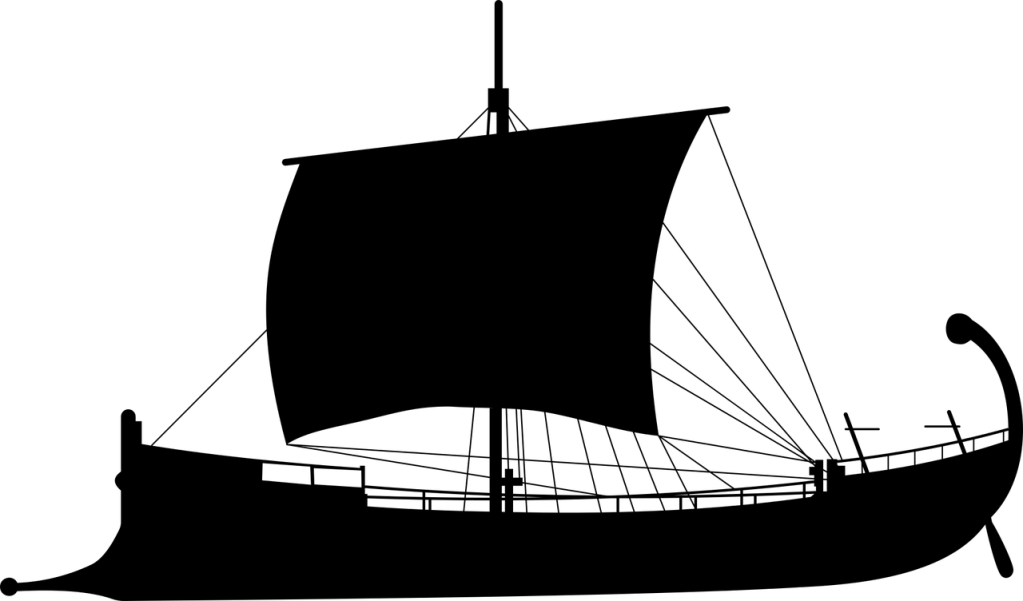
After three months we put out to sea in a ship that had wintered in the island – it was an Alexandrian ship with the figurehead of the twin gods Castor and Pollux. We put in at Syracuse and stayed there three days. From there we set sail and arrived at Rhegium. The next day the south wind came up, and on the following day we reached Puteoli. There we foud some brothers and sisters who invited us to spend a week with them. And so we came to Rome. The brothers and sisters there had heard that we were coming, and they travelled as far as the Forum of Appius and the Three Taverns to meet us. At the sight of these people Paul thanked God and was encouraged. When we got to Rome, Paul was allowed to live by himself, with a soldier to guard him.

*       *       *

“At the sight of these people Paul thanked God and was encouraged.”

In some ways it is a relief to know that Paul – that champion of the faith, that human dynamo, that brash, confrontational advocate – could feel the need of encouragement. Are there not times in the life of every Christian when we feel weary, or when we question the value of what we’re doing for Jesus? Perhaps we even wonder whether we’ve got it all wrong; wrong place, wrong time, wrong message?

I think Paul was suffering rather like that when he arrived in Rome.

Who could blame him? He’d strained every sinew to reach the heart of Empire, and now he faced an indefinite wait until Caesar was ready to judge his case. Was this really how he should be spending his time? Would it not have been better if the Jews had been allowed to spill his blood in Jerusalem? Had he run away from that confrontation?

Then Paul’s brothers and sisters in the faith turned up, having travelled many miles. Here was tangible proof that he had a role to play in this city. Here was the nucleus of a church whose people needed guiding and training, so that they in turn could tell the world about Jesus. Here was the need for Paul’s missionary and church-building skills.

Paul thanked God and was encouraged!

I suggest there are two lessons we can draw from this.

The first is that it was people who encouraged Paul. God’s encouragement comes so often through the support and love of our brothers and sisters in Christ. When we feel spiritually weary, we should remember this; talking to Christian friends can encourage us and keep us on track.

The second is that we can all give encouragement. It is good to be alert to the needs of those around us, whether members of our Christian fellowship or just neighbours. Encouragement is a gift we are all qualified to give!

And, whether we’re giving encouragement or receiving it, let’s remember to thank God!

“Do not be anxious about anything, but in every situation, by prayer and petition, with thanksgiving, present your requests to God. And the peace of God, which transcends all understanding, will guard your hearts and your minds in Christ Jesus.” (Philippians 4: 6 – 7)   

Prayer

Heavenly Father

Thank you for the encouragement of our brothers and sisters in Jesus. Help us to be faithful in prayer and steadfast in love for each other.

In Jesus name, Amen

Acts 28: 1 – 10 Paul ashore on Malta

Acts 28: 1 – 10 Paul ashore on Malta

Once safely on shore, we found out that the island was called Malta. The islanders showed us unusual kindness. They built a fire and welcomed us all because it was raining and cold. Paul gathered a pile of brushwood and, as he put it on the fire, a viper, driven out by the heat, fastened itself on his hand. When the islanders saw the snake hanging from his hand, they said to each other, ‘This man must be a murderer; for though he escaped from the sea, the goddess Justice has not allowed him to live.’ But Paul shook the snake off into the fire and suffered no ill effects. The people expected him to swell up or suddenly fall dead; but after waiting a long time and seeing nothing unusual happen to him, they changed their minds and said he was a god.

There was an estate near by that belonged to Publius, the chief official of the island. He welcomed us to his home and showed us generous hospitality for three days. His father was ill in bed, suffering from fever and dysentery. Paul went in to see him and, after prayer, placed his hands on him and healed him. When this had happened, the rest of those on the island who were ill came and were cured. They honoured us in many ways; and when we were ready to sail, they furnished us with the supplies we needed.

*       *       *

This passage is controversial, because there are no dangerously venomous snakes in Malta. There is one venomous snake, the European Cat Snake, but its venom is weak; the only way a human would die from its bite would be if they suffered anaphylactic shock. Would the islanders have known this?

Perhaps the islanders had a general fear of snakes? Even though they weren’t used to casualties on the island, they would doubtless have heard tales of deadly snakes – they were, after all, part of the Roman Empire.

One suggestion for the islanders’ expectation that the snake-bite would be mortal is that the shipwreck wasn’t on Malta at all. It was on the island of Melita (which is how it was spelled in the Greek). There was an island of that name in the Adriatic Sea, off the coast of what is now Croatia (the island is now named Mljet). This island was notorious for its deadly vipers. For me, the difficulty with that suggestion is that in Acts 28: 12 we’re told that Paul’s onward journey was via Syracuse. Why would you make a long and perilous sea journey when you could cross to Italy and travel by road to Rome?

However, it’s what Luke doesn’t say about this ‘miracle’ that I find controversial: “they changed their minds and said he was a god.” When Paul and Barnabas were mistaken for gods in Lystra, Luke tells us that they tore their clothes and rushed into the crowd, desperate to convince them they were only human. Why doesn’t Luke tell us that this time?

And that points me to another ‘omission’. Very often in Acts, when Paul and his co-workers left a city, Luke says something like, “And many came to believe in the Lord.” For example, in Pisidian Antioch, “…and all who were appointed for eternal life believed.” (Acts 13: 48). And at Iconium “There they spoke so effectively that a great number of Jews and Greeks believed.” (Acts 14:1). And in the vicinity of Lystra, “So the churches were strengthened in the faith and grew daily in numbers.” Or in Athens, “Some of the people became followers of Paul and believed.”

In Malta, the ship’s company were miraculously saved, Paul appeared to survive a snake bite, Paul healed Publius’s father, and many others – and yet it would seem that no one was brought to faith in Jesus.

I have no answers to these conundrums.

Prayer

Heavenly Father

Thank you for the chance to spend time with you, studying the bible and in prayer. I don’t understand what you want me to learn from today’s reading. Please make it clearer as I reflect on it, and as I open my heart to feel Jesus near me.

In Jesus’ name, Amen

Acts 27: 27 – 44 The shipwreck

Acts 27: 27 – 44 The shipwreck

On the fourteenth night we were still being driven across the Adriatic Sea, when about midnight the sailors sensed they were approaching land. They took soundings and found that the water was forty metres deep. A short time later they took soundings again and found it was thirty metres deep. Fearing that we would be dashed against the rocks, they dropped four anchors from the stern and prayed for daylight. In an attempt to escape from the ship, the sailors let the lifeboat down into the sea, pretending they were going to lower some anchors from the bow. Then Paul said to the centurion and the soldiers, ‘Unless these men stay with the ship, you cannot be saved.’ So the soldiers cut the ropes that held the lifeboat and let it drift away.

Just before dawn Paul urged them all to eat. ‘For the last fourteen days,’ he said, ‘you have been in constant suspense and have gone without food – you haven’t eaten anything. Now I urge you to take some food. You need it to survive. Not one of you will lose a single hair from his head.’ After he said this, he took some bread and gave thanks to God in front of them all. Then he broke it and began to eat. They were all encouraged and ate some food themselves. Altogether there were 276 on us on board. When they had eaten as much as they wanted, they lightened the ship by throwing the grain into the sea.

When daylight came, they did not recognise the land, but they saw a bay with a sandy beach, where they decided to run the ship aground if they could. Cutting loose the anchors, they left them in the sea and at the same time untied the ropes that held the rudders. Then they hoisted the foresail to the wind and made for the beach. But the ship struck a sand-bar and ran aground. The bow stuck fast and would not move, and the stern was broken to pieces by the pounding of the surf.

The soldiers planned to kill the prisoners to prevent any of them from swimming away and escaping. But the centurion wanted to spare Paul’s life and kept them from carrying out their plan. He ordered those who could swim to jump overboard first and get to land. The rest were to get there on planks or on other pieces of the ship. In this way everyone reached land safely.

*       *       *

This passage shows Paul in charge. Although he’s a prisoner, guarded by a centurion, and merely a paying passenger in a vessel run by an expert master and experienced seamen, he is in charge.

Look at what he did:

  • he prevented the sailors from abandoning the ship and its passengers;
  • he encouraged everybody to eat so they were ready for the ordeal of struggling ashore when the vessel was run aground;
  • his influence on the centurion was such that the prisoners were spared from death at the hands of the soldiers.

Paul was watching everybody and every action, and thinking about what he observed. He was both an intellectual and a man of action.

In fact, this voyage to Rome is quite a good metaphor for Paul’s life. At first the journey had fair wind (Acts 27: 2 – 3). This rapidly changed, with the wind becoming more and more adverse (Acts 27: 4 and Acts 27: 6). Briefly, it looked as though they would have fair weather (Acts 27: 13) and then the hurricane struck. They were blown west, helpless for days, finally making landfall on Malta – 2000 kilometres away from where the hurricane hit them.

Malta is not a large island. They could easily have been blown past it, but it was where God wanted them to be. The shipwreck was very damaging, with the vessel breaking up; but God ordained that everyone should be saved, and they were.

Paul was a tempestuous man, stirring up controversy wherever he went, but God channelled his combative personality into a powerful testimony to Jesus.

Whatever we face in life – and we all have tempests, we all have periods of being becalmed, we all (thank God!) have periods when both wind and weather are fair – whatever we face, we can be confident that through the power of God we will end up in the place he needs us to be.

Let us then remember to say, with Paul, “Keep up your courage – for I have faith in God that it will happen just as he told me.”  

Prayer

Heavenly Father

Thank you for the encouragement of this passage. Please help me to follow Jesus with all my heart.

In Jesus’ name, Amen

Acts 27: 13 – 26 The storm

Acts 27: 13 – 26 The storm

When a gentle south wind began to blow, they saw their opportunity; so they weighed anchor and sailed along the shore of Crete. Before very long, a wind of hurricane force, called the ‘North-Easter’, swept down from the island. The ship was caught by the storm and could not head into the wind; so we gave way to it and were driven along. As we passed to the lee of a small island called Cauda, we were hardly able to make the lifeboat secure, so the men hoisted it aboard. Then they passed ropes under the ship itself to hold it together. Because they were afraid they would run aground on the sand-bars of Syrtis, they lowered the sea anchor and let the ship be driven along. We took such a violent battering from the storm that the next day they began to throw the cargo overboard. On the third day, they threw the ship’s tackle overboard with their own hands. When neither sun nor stars appeared for many days and the storm continued raging, we finally gave up all hope of being saved.

After they had gone a long time without food, Paul stood before them and said: ‘Men, you should have taken my advice not to sail from Crete; then you would have spared yourself this damage and loss. But now I urge you to keep up your courage, because not one of you will be lost; only the ship will be destroyed. Last night and angel of the God to whom I belong and whom I serve stood beside me and said, “Do not be afraid, Paul. You must stand trial before Caesar; and God has graciously given you the lives of all who sail with you.” So keep up your courage, men, for I have faith in God that it will happen just as he told me. Nevertheless, we must run aground on some island.’

*       *       *

“When a gentle south wind began to blow, they saw their opportunity; so they weighed anchor and sailed along the shore of Crete.”

The plan was to sail to Phoenix and spend the winter there. With the onset of a gentle southerly wind, they slipped out of Fair Havens and sailed westwards, hugging the coast. The vessel’s master and the centurion in charge of the prisoners agreed that this was a prudent course of action; they gambled on fair weather, in which case a day’s sailing would see them make harbour at Phoenix.

Unfortunately, they lost their gamble; they were caught by a North-Easter. Nowadays we would call it a Medicane, a Mediterranean hurricane. The period of September to January is the season for these storms, and many of them start in the Ionian Sea.

The wind struck them from the north, completely preventing them from running for shelter on the coast of Crete. All they could do was run before the storm.

The human direction of the vessel by the master and the sailors was expert; they took all the precautions they could. They secured the lifeboat on board. The sea was so rough that the flexing of the ship threatened to spring planks from its hull, so they passed ropes underneath the vessel to hold it together. They lowered a sea anchor to try to keep the vessel pointing into the wind, so that it didn’t go broadside on to the waves and become swamped. They jettisoned the cargo and the ship’s tackle.

Without these actions the ship would have foundered and all the 276 souls on board would have drowned. And still the storm blew and blew, and they drifted helplessly for day after day.

Then, one night, Paul had a vision of an angel, who said, “Do not be afraid, Paul. You must stand trial before Caesar; and God has graciously given you the lives of all who sail with you.”

Luke does not describe this as an answer to prayers of intercession, although I’ve little doubt they were many and heartfelt. No, it’s very matter-of-fact, just, “This is what God’s going to do, and this is why.” Paul simply reports the message to the others. He doesn’t urge them to repent; he just tells them to keep up their courage. He says “I have faith in God that it will happen just as he told me.”

Human strength and expertise had been stretched to the utmost, and had sufficed to keep everybody alive. Now God was saying that he would make sure that everyone came safe to shore. Paul had faith that God’s word in this matter could be relied on absolutely, and he told his fellow travellers so.

We all live our lives using our own skills and strength. I believe that God wants us to do this, using the gifts that he gives us, and I think that this is part of the message of this passage. Equally, there comes a time when our efforts on their own fall pitifully short of what’s needed. God is there for us. He knows what’s best for us. May he grant that we all respond to him like Paul, and say, “I have faith in God that it will happen just as he told me.”

Prayer

Heavenly Father

Thank you that you love us at all times, and want the best for each one of us. As we learn to listen to you more attentively, please grant that we will say, “I have faith in God that it will happen just as he told me.”

In Jesus’ name, Amen

Acts 27: 1 – 12 Paul sails for Rome

Acts 27: 1 – 12 Paul sails for Rome

When it was decided that we would sail for Italy, Paul and some other prisoners were handed over to a centurion named Julius, who belonged to the Imperial Regiment. We boarded a ship from Adramyttium about to sail for ports along the coast of the province of Asia, and we put out to sea. Aristarchus, a Macedonian from Thessalonica, was with us.

The next day we landed at Sidon: and Julius, in kindness to Paul, allowed him to go to his friends so they might provide for his needs. From there we put out to sea again and passed to the lee of Cyprus because the winds were against us. When we had sailed across the open sea off the coast of Cilicia and Pamphylia, we landed at Myra in Lycia. There the centurion found an Alexandrian ship sailing for Italy and put us on board. We made slow headway for many days and had difficulty arriving off Cnidus. When the wind did not allow us to hold our course, we sailed to the lee of Crete, opposite Salmone. We moved along the coast with difficulty and came to a place called Fair Havens, near the town of Lasea.

Much time had been lost, and sailing had already become dangerous because by now it was after the Day of Atonement. So Paul warned them, ‘Men, I can see that our voyage is going to be disastrous and bring great loss to ship and cargo, and to our own lives also.’ But the centurion, instead of listening to what Paul said, followed the advice of the pilot and of the owner of the ship. Since the harbour was unsuitable to winter in, the majority decided that we should sail on, hoping to reach Phoenix and winter there. This was a harbour in Crete, facing both south-west and north-west.

*        *        *

The journey by boat to Italy did not go well. The wind was against them most of the time, and was sufficient to delay them beyond the period when it was safe to voyage in the Eastern Mediterranean. On previous occasions when journeys were unexpectedly difficult, the assumption was that God was guiding the missionaries (Acts 16: 6 – 7). I wonder why this journey was seen differently?

Once they reached Fair Havens, Luke seems to think that the centurion should have listened to Paul’s advice as to sailing. But what did Paul know of sailing? He’d often travelled by boat on his journeys, true, but that’s no substitute for the lifetime of experience brought to the journey by the ship’s master and crew. The decision to attempt to reach Phoenix was pragmatic, because Fair Havens was unsuitable to winter in. If they had tried to winter there, where would the 276 souls on board the vessel have lived? Would the ship itself have been safe in the harbour? You can see why the owner and the pilot were able to sway Julius, the centurion.

This is where we see the reality of Paul’s status as a prisoner. Although he has contributed to the discussion about the journey, ultimately it’s not his decision. As a free man, he would have been able to make his own choice as to whether or not to continue his journey by boat. As a prisoner he went where he was taken.

The decision was made. The ship’s company held themselves ready for departure as soon as conditions seemed favourable.

*        *        *

Prayer

Heavenly Father

Thank you for the readiness of Paul and Luke to face danger and hardship to bring us the good news of Jesus.

Amen